
Last updated November 15, 2026
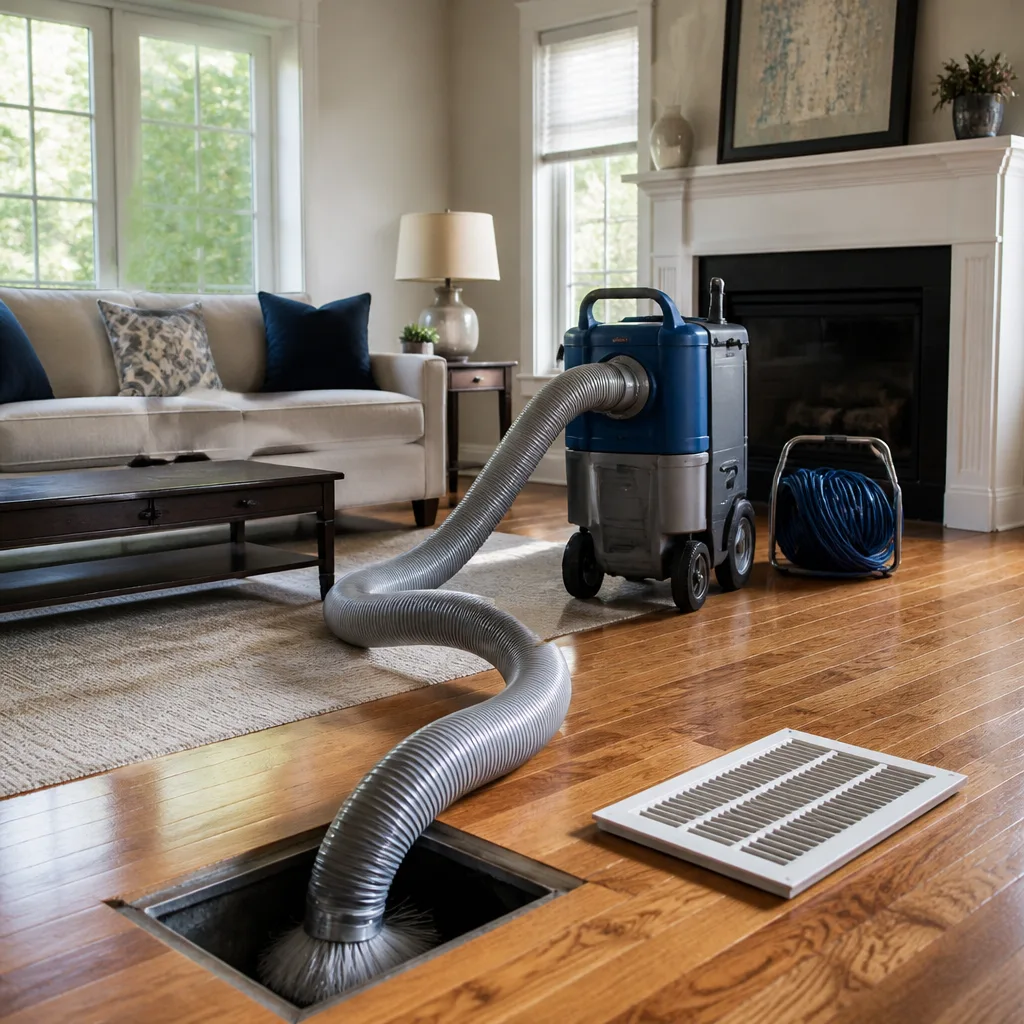 Whole-home duct cleaning
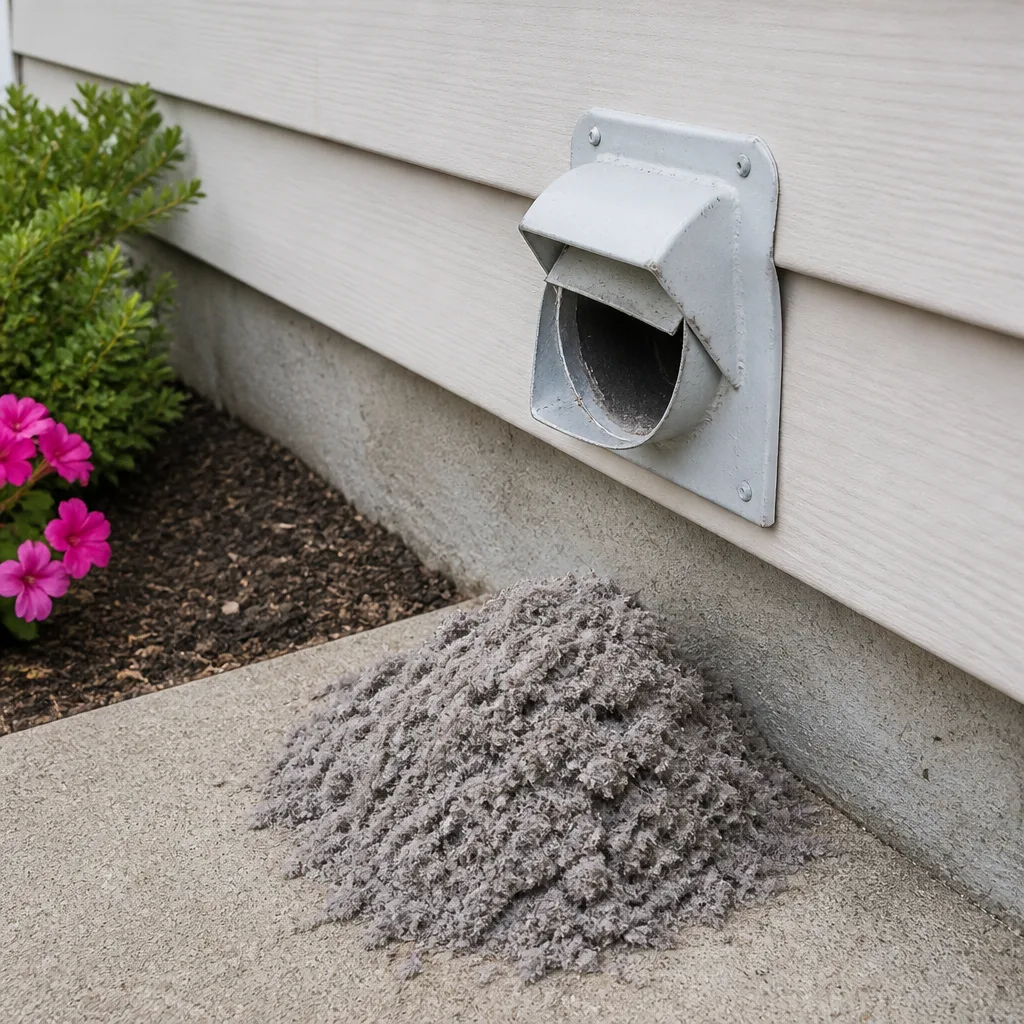 Dryer vent cleaning
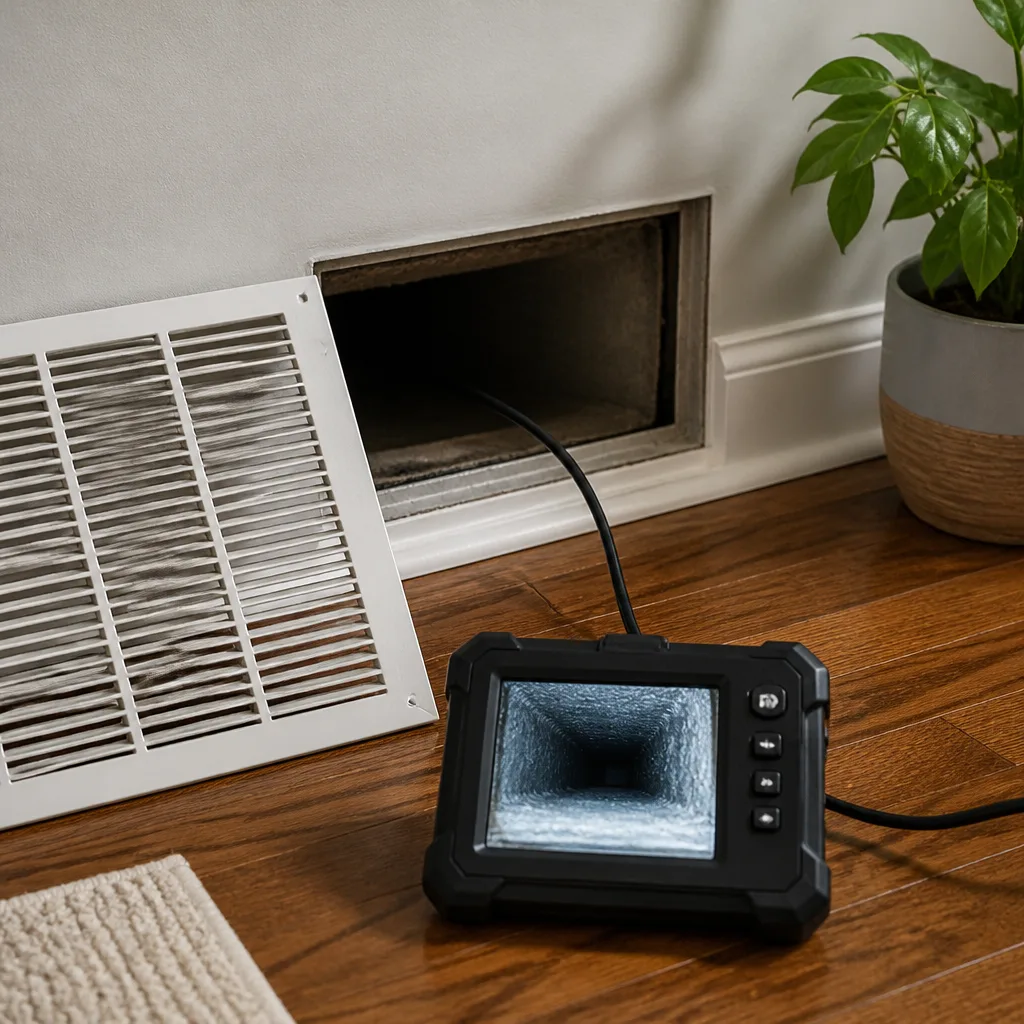 Camera inspection
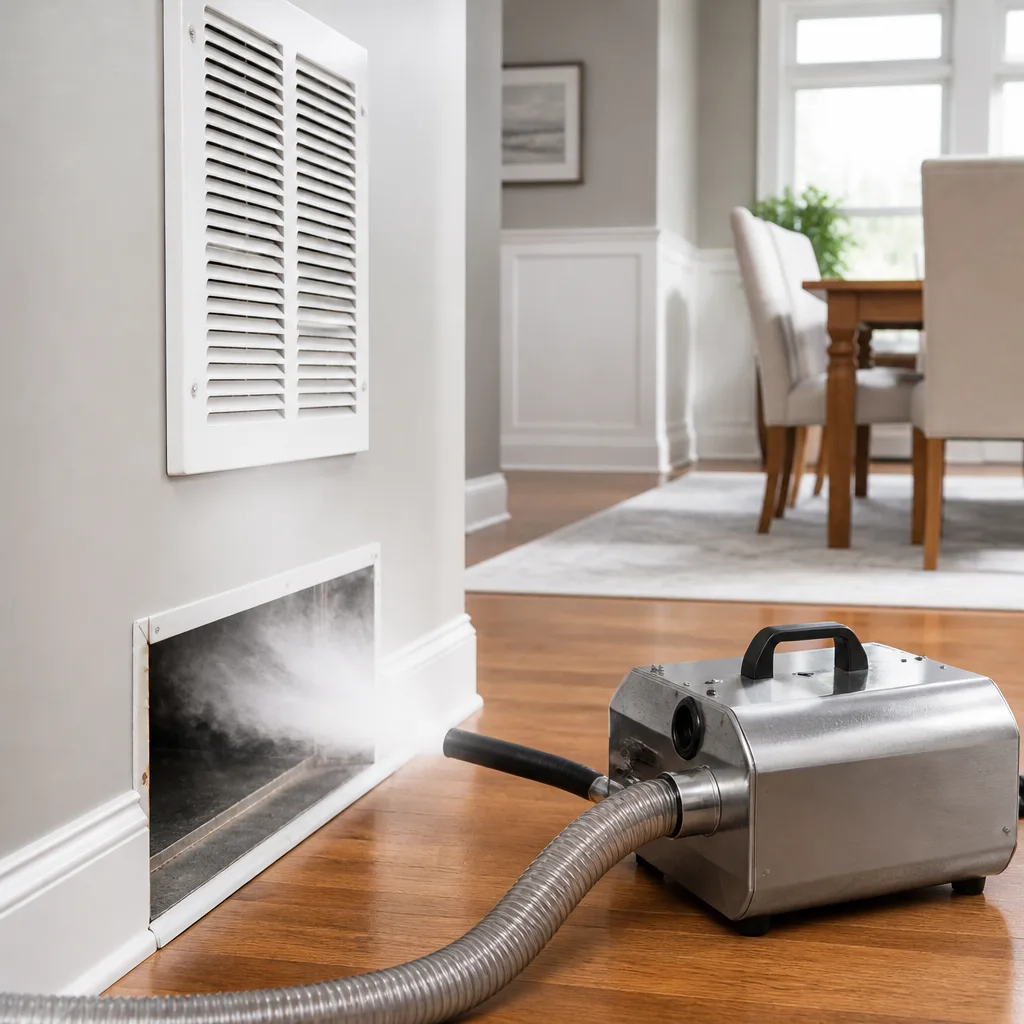 Sanitizing & deodorizing
Whole-system duct and dryer vent check with before-and-after photos - you see exactly what came out of your vents
That "$99 whole-house special" is a bait ad - the real number appears once they are in your hallway, or the "clean" is a shop-vac at the register. We photograph the inside of your ducts before and after instead.
Air Duct Cleaning Maintenance Schedule: What to Do and When
Most homeowners are told to clean their ducts every three to five years. That advice isn’t wrong so much as incomplete. Durham averages more than 100 high-pollen days per year, one of the highest counts in the Southeast, and a schedule copied from a Denver HVAC guide is working from the wrong data. Add heavy summer humidity, crawlspace foundations, and a steady stream of renovation dust from the older housing stock, and you get a picture where some Durham homes should be cleaned twice as often as the standard rule suggests while others can safely wait longer.
This guide walks through how to build a maintenance schedule from your house’s own risk profile rather than an industry average. You’ll get a scoring framework, Durham-specific seasonal timing, and the between-cleaning tasks that actually extend your interval versus the ones sold as helpful that don’t.
Quick Answer
The right air duct cleaning interval in Durham is usually two to four years, not a fixed five. Homes on crawlspace foundations, with pets, with recent renovation dust, or with allergy-sensitive occupants typically need cleaning every two to three years, while slab-foundation homes with good filtration and no pets can often stretch to five or six. The single most accurate way to set your own schedule is a short risk score of your house plus one annual register photograph you compare year to year.
Styles & brands we work with
- Whole-home duct cleaning
- Dryer vent cleaning
- Camera inspection
- Sanitizing & deodorizing
Table of Contents
- Why “Every 3 to 5 Years” Fails in Durham
- The Risk-Scoring Framework: Build Your Interval
- Durham’s Seasonal Triggers: The April to July Window
- What to Do Between Professional Cleanings
- Which Tasks Extend Your Interval and Which Don’t
- Documenting Duct Condition Over Time
- What a Professional Inspection Actually Checks
- Common Mistakes to Avoid
Why “Every 3 to 5 Years” Fails in Durham
The three-to-five-year rule comes from an average across every climate and construction type in the country. Durham sits in a very different operating environment. Our summers push humidity high for months at a stretch, which means condensation forms in and around duct systems more often than in drier regions. Our springs dump pine pollen across every surface that faces outside air, and that pollen rides straight into return grilles. Our crawlspace construction, common in older neighborhoods, pulls unconditioned, humid air into system components that a slab home never exposes.
What that adds up to: contamination in Durham ducts accumulates faster on the humid months side and slower in the dry stretches, so a single fixed interval misses both. A cleaning done in April sees a different system than the same system measured in September.
We’ve seen this pattern across enough homes to know the variables that actually drive contamination rate:
- Foundation type. Crawlspace homes pull in more soil, moisture, and debris than slab homes because the system shares space with unconditioned ground.
- Pets. Hair and dander shed continuously and settle deep in return trunks where your filter can’t reach.
- Home age and duct material. Older flexible duct with internal liner deteriorates, creating both airflow loss and particle shedding.
- Renovation history. Drywall dust, sawdust, and insulation fibers linger for years after a remodel if the system wasn’t sealed during the work.
- Occupant sensitivity. Allergy or asthma diagnoses change the acceptable contamination threshold, not just the physical rate.
- Filtration quality. A MERV 8 filter captures a fraction of what a MERV 13 captures, so the same house can load differently based on filter choice alone.
The right schedule is built from these variables, not a calendar reminder. The next section turns them into a score you can actually use.
The Risk-Scoring Framework: Build Your Interval
Assign points honestly to each factor below. The total lands you in one of three cleaning intervals. This isn’t a substitute for a professional inspection, but it’s a more useful starting point than a generic three-to-five.
Foundation
- Crawlspace: 3 points
- Basement: 2 points
- Slab-on-grade: 0 points
Pets
- Two or more indoor pets: 3 points
- One indoor pet: 2 points
- None: 0 points
Home age
- Over 40 years old: 3 points
- 20 to 40 years: 2 points
- Under 20 years: 0 points
Recent renovation
- Major renovation in the last 3 years: 3 points
- Minor renovation: 1 point
- None: 0 points
Allergy or asthma diagnosis in the household
- Yes, more than one person: 3 points
- Yes, one person: 2 points
- No: 0 points
Filter rating in regular use
- MERV 6 or lower: 3 points
- MERV 8 to 11: 1 point
- MERV 13 or higher: 0 points
Interpreting your score:
- 0 to 5 points. Clean roughly every 4 to 6 years. Your system loads slowly.
- 6 to 10 points. Clean every 3 to 4 years. This is the typical Durham middle case.
- 11 to 18 points. Clean every 2 to 3 years. Your house is loading faster than average and needs a shorter loop.
Whichever bracket you fall into, the score is a starting point that gets refined by what a qualified technician finds on the first inspection. If you want a baseline read on your own system, our air duct cleaning team can measure the actual debris load rather than guess at it.
Durham’s Seasonal Triggers: The April to July Window
Timing matters nearly as much as interval in Durham. The stretch between the April pine pollen peak and the July humidity peak is the best window of the year for most local homes to get inspected and, if needed, cleaned.
Here’s why that window works:
- Pollen load peaks in April. Pine pollen coats screens, windowsills, and return grilles. By late April the accumulated pollen that made it into the system either sits there all summer or gets captured by a cleaning done before the humid months.
- Humidity ramps in July. Once the air holds more moisture, dust and pollen that would otherwise be dry settle into a damp film inside duct surfaces, which is harder to move and stays longer.
- Cooling season starts pulling air. Your system runs hard from June through September. Cleaning right before that stretch means the air your household breathes for the hottest months is the cleanest it will be all year.
- Post-pollen inspections catch what you’d miss. A walkthrough after the pollen peak but before the first long humidity run is when surface buildup, condensation, and loose liner are easiest to spot and to fix without the humidity already having compounded it.
- Fall is the second-best window. If you miss the spring window, the dry weeks before heating season are a reasonable second choice. Avoid deep-summer cleaning unless there’s a specific problem like a musty smell or visible debris blowing from a register.
A common pitfall is treating the August allergen spike as a reason to schedule cleaning that same week. Cleaning at the peak of humidity is far less effective than catching the whole system three months earlier. If your score lands you at a two-year interval, both intervals should land in this spring-to-early-summer window rather than drifting to whenever the memory strikes.
We plan inspections and cleanings for Durham homeowners around this calendar, and any technician who does this work locally should understand why the timing matters. If yours doesn’t mention the pollen-then-humidity sequence, that’s a flag.
What to Do Between Professional Cleanings
The weeks and months between professional cleanings are where a good schedule is either protected or undermined. These are the maintenance habits that make the biggest difference.
Change your filter at intervals matched to its MERV rating.
- MERV 6 to 8: every 60 to 90 days, and more often during the pollen season. These filters are cheap and load fast.
- MERV 9 to 11: every 90 to 120 days under normal load; every 60 to 90 during the pollen window and any renovation.
- MERV 13 and higher: every 90 to 120 days, but watch pressure drop. High-MERV filters load faster and can starve airflow if left too long.
Write the change date on the filter edge. It’s the simplest memory aid and it makes future decisions concrete.
Inspect supply registers once a month during cooling season. Take the register cover off, look into the boot with a flashlight, and note whether you see loose debris, dark stains, or dust collecting on the boot walls. A register that was clean at the last cleaning and now shows a visible dust film is telling you the system is loading faster than you thought. Our guide to Duct Cleaning Durham covers what cleanliness actually looks like at the grille level, which helps you compare.
Run the fan without cooling on dry days to dry out condensation. If the system has been running hard in humidity and you notice a damp smell near any diffuser, run just the fan (no cooling call) for a couple of hours on a drier day. That moves air through and helps clear residual moisture. Don’t do this on a high-humidity day, when you’d be pulling damp air through rather than drying it.
Keep return grilles clear and vacuum them. Pets, dust, and pollen collect on return grille faces between cleanings. A quick vacuum every couple of weeks stops that material from being drawn further into the trunk.
Seal off returns during renovation. Plastic sheeting and painter’s tape across the return openings before demolition starts is the single best protection against renovation dust in a Durham home. Take it down only after the final sweep.
Which Tasks Extend Your Interval and Which Don’t
The duct-care market sells a lot of add-ons. Some genuinely help. Others sound promising and have no measurable effect on how often you actually need cleaning. Here’s the honest split.
Tasks that extend your cleaning interval:
- Consistent high-quality filtration. A properly sized MERV 11 to 13 filter, changed on schedule, removes a meaningful share of the particles that would otherwise deposit inside ducts.
- Return-side sealing. Gaps at return boots, plenum connections, and filter slots pull dirty attic or crawlspace air into the system. Sealing them removes a contamination pathway that no amount of cleaning addresses.
- Source control. Pets groomed regularly, pollen tracked in removed at the door, kitchen exhaust vented outdoors, and renovation dust contained at the source.
- Whole-home humidity management. Keeping indoor humidity in a moderate range reduces the damp-film problem that makes deposited dust stick and stay.
- Annual register inspection and photography. You can’t improve what you don’t measure. This is the cheap, high-leverage habit.
Tasks sold as helpful without measurable impact on cleanings:
- Duct “sprays” and antimicrobial fogging. These coat surfaces without removing debris. The debris is the problem; a coating that sits on top of it doesn’t change the cleaning interval and can add its own smell to the system.
- Ionizers and air “purifiers” installed in the plenum. Some are beneficial for odor control, none replace actual cleaning. Treat them as a separate layer.
- Per-vent “deodorizing” as a cleaning substitute. If the ducts are dirty, addressing the smell without addressing the source just resets the timer to zero.
- Enzyme treatments that promise to eat debris. No credible mechanism has been established for these inside a residential duct system with intermittent airflow. Thematic claims outrun the physics.
Where legitimate indoor air quality products earn their place is when the cleaning is done first and the equipment manages ongoing load. That’s why we supply and install Honeywell and Aprilaire filtration systems, and why we treat protection against recontamination with a Guardsman-grade treatment on request. Cleaning removes what’s there. Filtration and humidity control change how fast it comes back. Choose the second layer based on your risk score, not as a bundle.
Documenting Duct Condition Over Time
Most homeowners eventually face the same question: how do I know when I actually need cleaning again? The answer is to stop guessing and start comparing. A smartphone, a consistent register, and sixty seconds a year gives you objective data to work with.
Here’s the method:
- Pick one register. Choose a supply register visible from a fixed point in the room (for example, the ceiling register in a hallway or primary bedroom). Consistency is everything.
- Set up the shot. Stand at the same spot every time. Frame the register the same way. Include something nearby for reference so the photo is genuinely comparable year to year.
- Photograph four things. The register grille face, the cavity just inside the boot, the filter you just removed (before discarding), and one return grille face. Those four capture most of what changes between cleanings.
- Add a written note. In the phone’s notes app, record the date, whether a renovation happened, how many pets are in the house, the filter MERV rating, and any smells or new symptoms in the household. Photos without context lie by omission.
- Compare each year’s set side by side. Around March, pull last year’s photos next to this year’s. A gray film appearing deep in the boot, or visible debris on the register face, is your tell.
Doing this for two or three years gives you something no general guide can: your specific house’s accumulation curve. A home that shows visible register buildup in twelve months needs a shorter interval than the framework score suggested. A home that shows nearly no change over three years can safely stretch. When you do call a professional, having these photos makes the conversation sharper and the estimate smaller, because the technician already knows what to look at.
What a Professional Inspection Actually Checks
An inspection is not a sales visit if it’s done properly. Here’s what a qualified technician looks at, and what to expect when the visit is done by a company using commercial-grade equipment.
What gets checked:
- Return plenum and trunk for debris, moisture, and liner damage.
- Supply trunks and branches for loose liner, disconnected sections, and visible accumulation.
- Filter slot, filter box, and MERV rating in use, with a note on whether the filter is correctly sized for airflow.
- Registers and boots for separation from drywall, dust film, and pest entry points.
- Condensate pan and drain line for standing water that could be driving localized duct moisture.
- Dryer vent run, in cases where the home’s layout makes a vent problem relevant to the overall system picture.
What actual cleaning requires:
A shop vacuum and a brush on a cord isn’t a cleaning. It’s surface agitation that lifts dust into the room and redistributes the smaller particles through the house. Real cleaning depends on negative pressure. That means a commercial Rotobrush contact-cleaning system on the source and a Nikro industrial vacuum pulling the dislodged material out. Both are industry-standard in commercial duct cleaning; neither is a rebranded consumer unit.
Containment is the second half. Pulling debris out of ducts displaces some of it into the room unless the workspace is scrubbed. An Abatement Technologies air scrubber runs on-site through the job so what’s dislodged gets captured at the work area instead of drifting into your living room. Any duct cleaner who can’t name their equipment, or won’t describe their containment setup, should be replaced. Our Durham page gives a bit more of the local picture if you want to compare notes before booking.
If the inspection finds damaged duct sections, sealing problems at boots, or liner that has come loose from the duct wall, that’s a repair issue, not a cleaning issue. We handle both, which means anything found during cleaning can be fixed in the same visit rather than deferred to a second contractor.
Common Mistakes to Avoid
- Following the national “every 3 to 5 years” rule without adjusting for your house. In Durham’s pollen-and-humidity environment, a crawlspace home with pets and older ductwork is over that threshold in half the time, while a slab home with good filtration is under it. Score your house first.
- Cleaning at the peak of humidity or pollen instead of before them. A cleaning that happens in August is attempting to remove the film that formed in June and July. The optimal window is April through early July, before the worst of the loading season.
- Buying a duct “spray” or ionizer as a first-line treatment. These don’t remove debris. They may be worth adding after a proper cleaning, but buying them instead of cleaning undersells the problem and can add smell without solving it.
- Trusting a coupon price without asking what equipment shows up. The industry has a real bait-and-switch problem. If the visit arrives with portable units and no containment, you’re paying for a surface puff of air, not duct cleaning.
- Skipping register inspection because the last cleaning looked fine. Ducts don’t visibly degrade overnight; they load gradually. A monthly glance at one register catches the change before you’re scheduled for a cleaning you didn’t need.
- Painting or renovating with returns open. Drywall dust and insulation fibers pulled into returns during the work are the single most common cause of a mid-cycle cleaning in a Durham house that otherwise wouldn’t need one.
- Assuming “MERV 13 is best” without sizing the filter to airflow. Oversized filtration can starve airflow and shorten equipment life. Match the MERV rating to the system, and change it on schedule.
See the difference
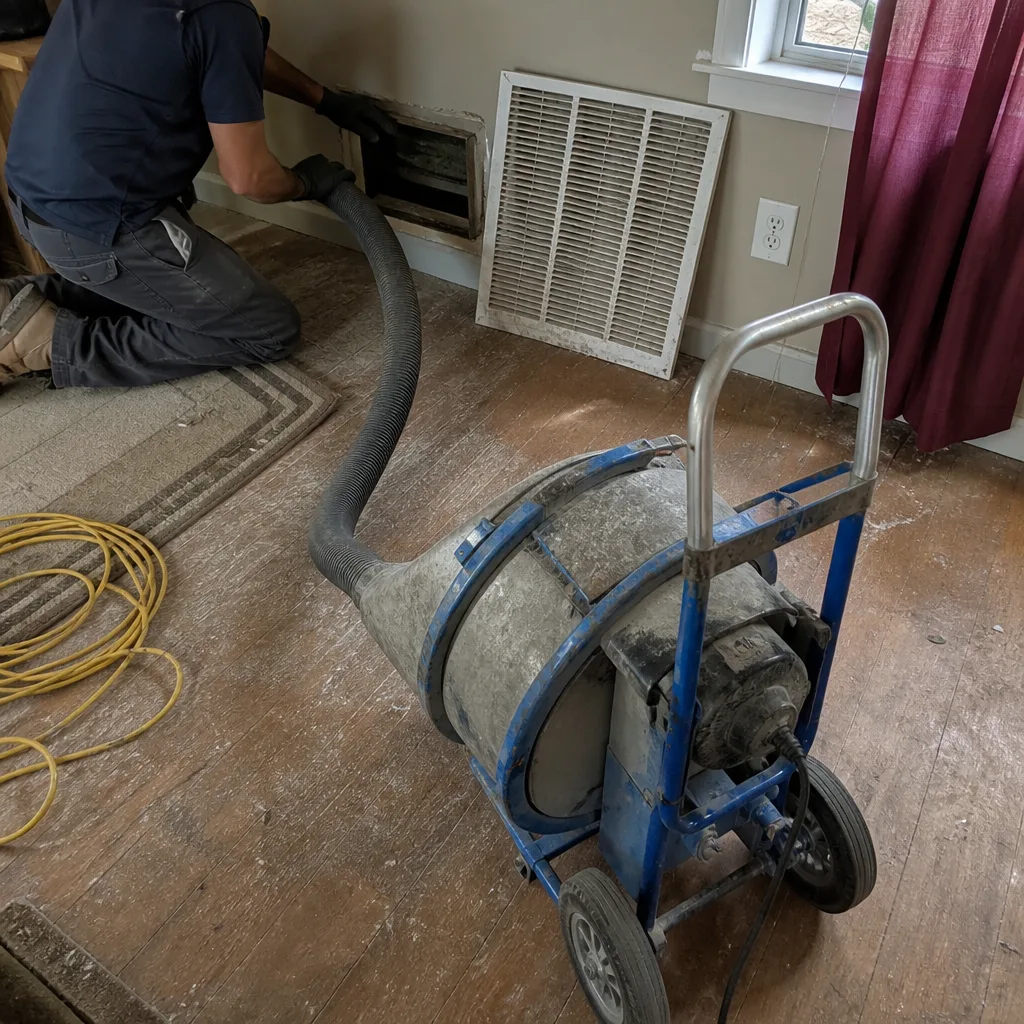 Before
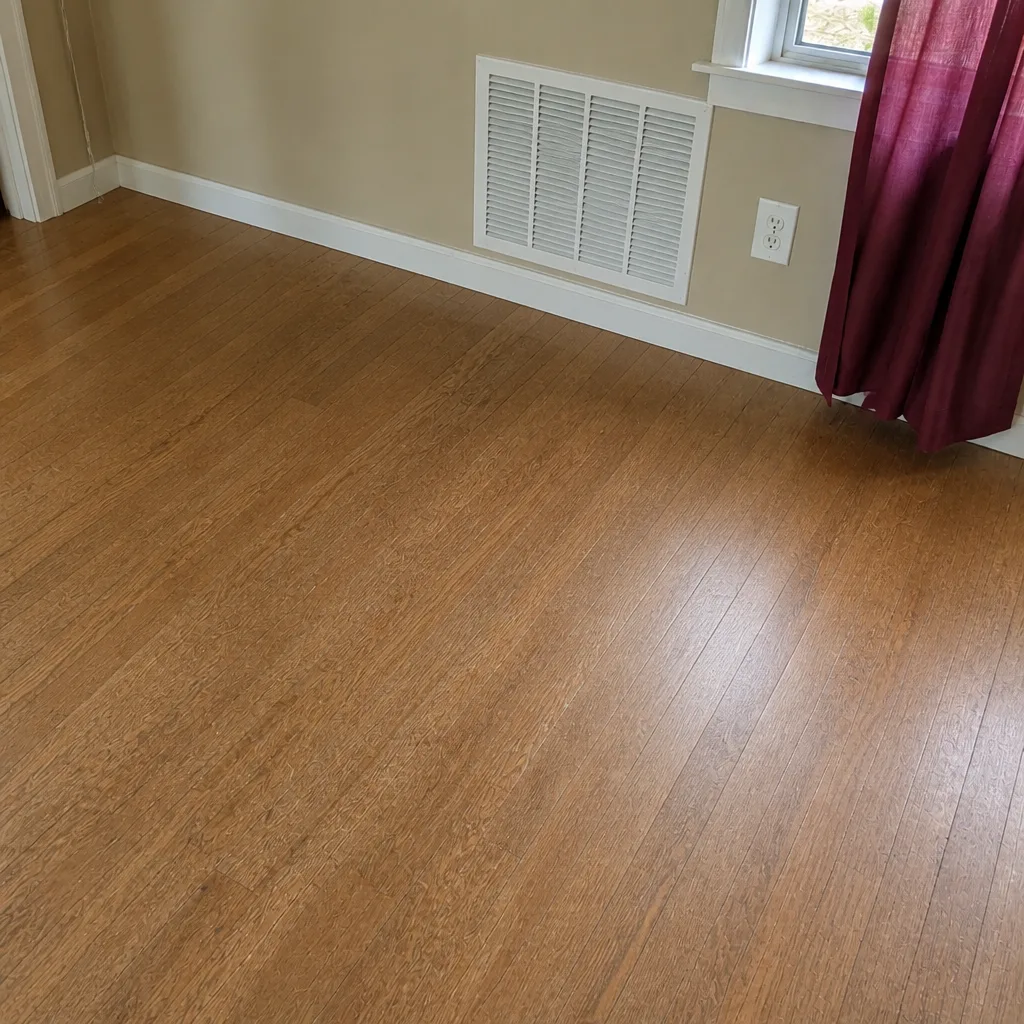 After
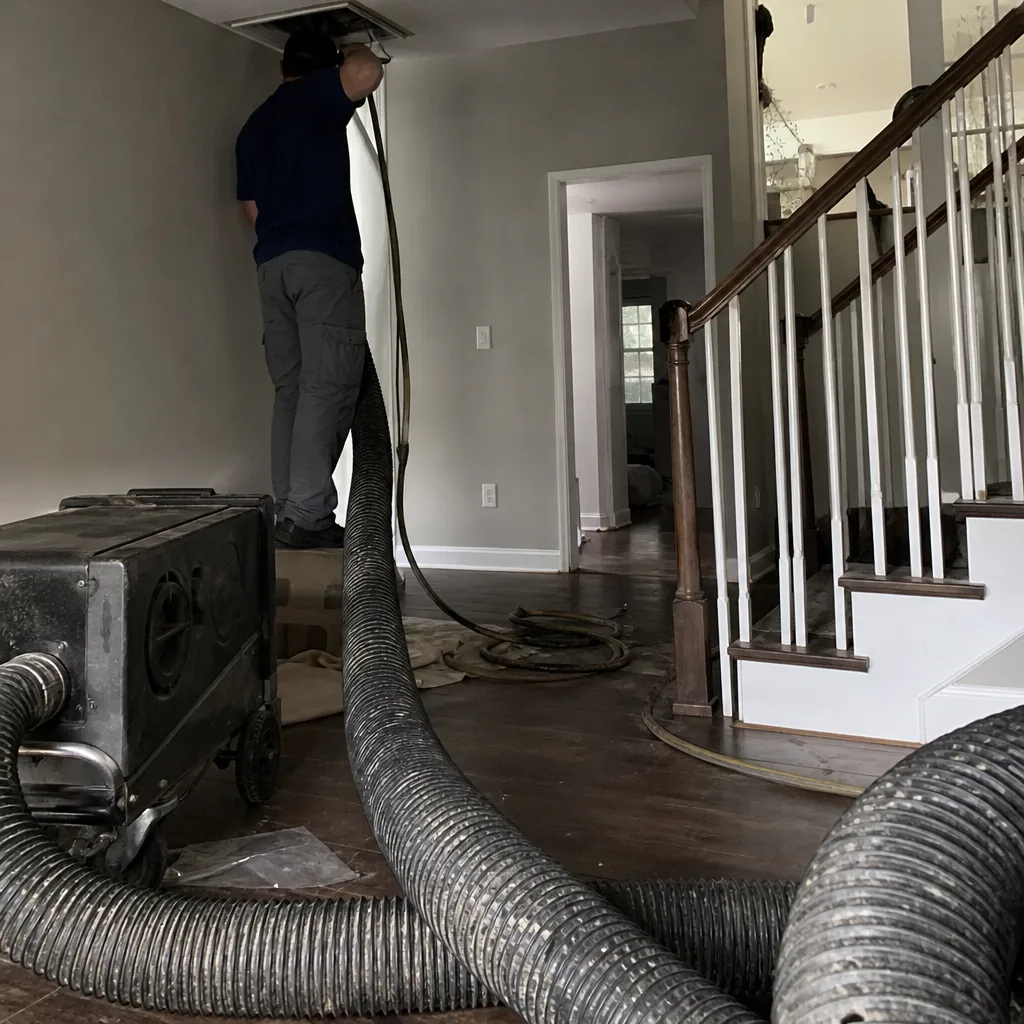 Before
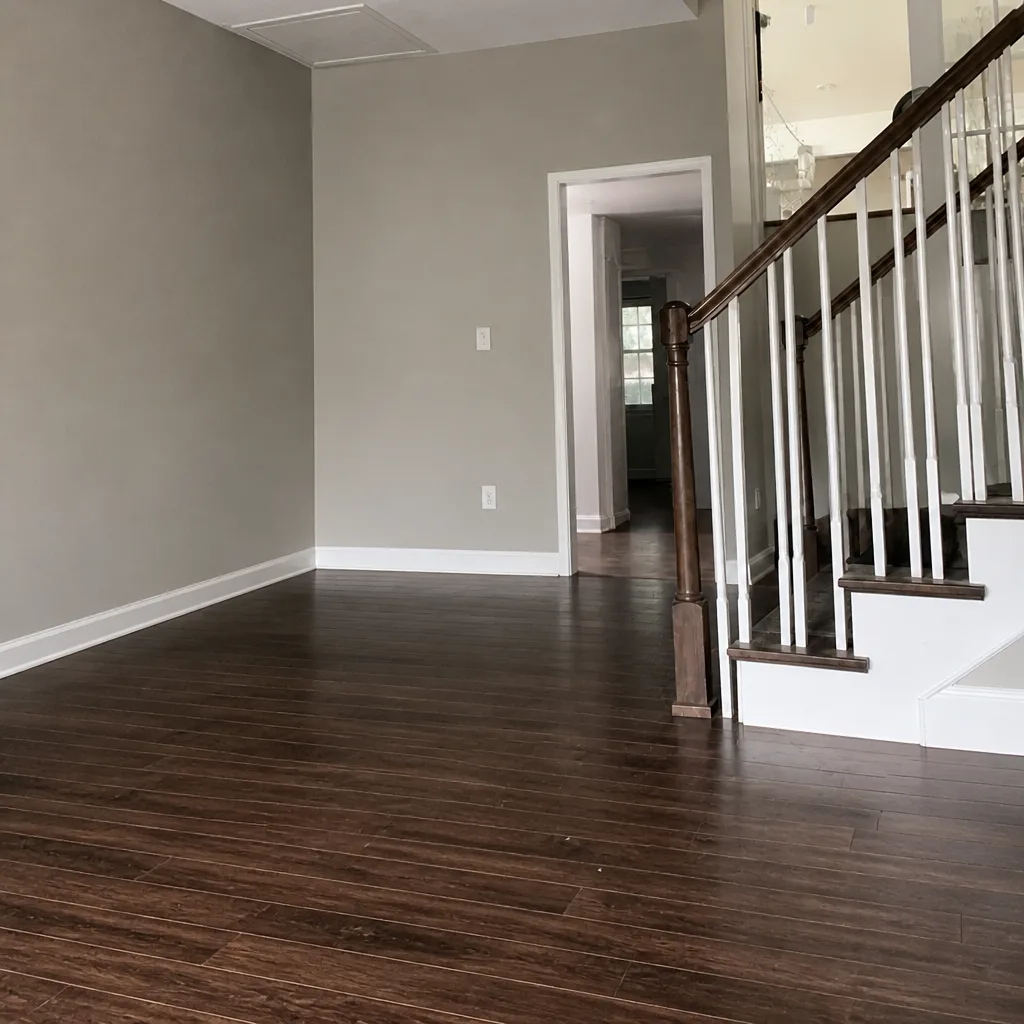 After
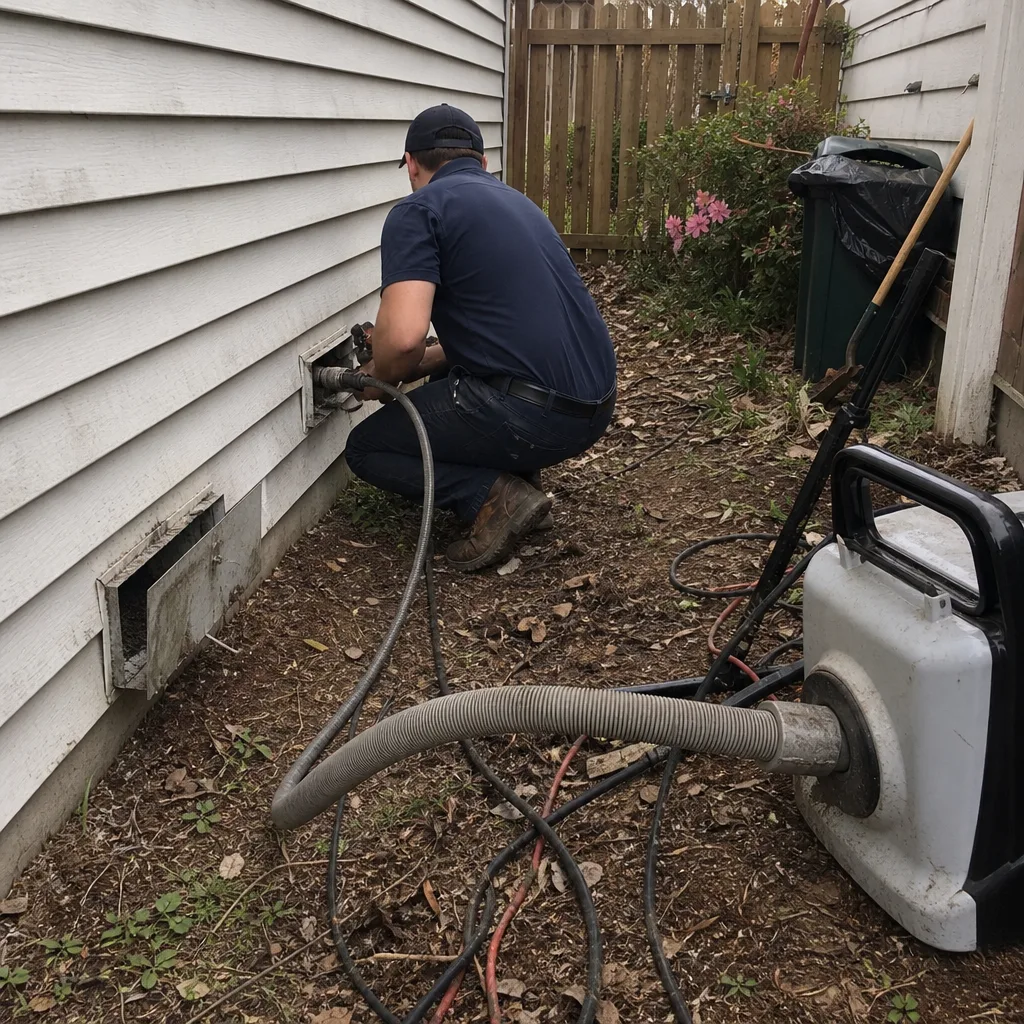 Before
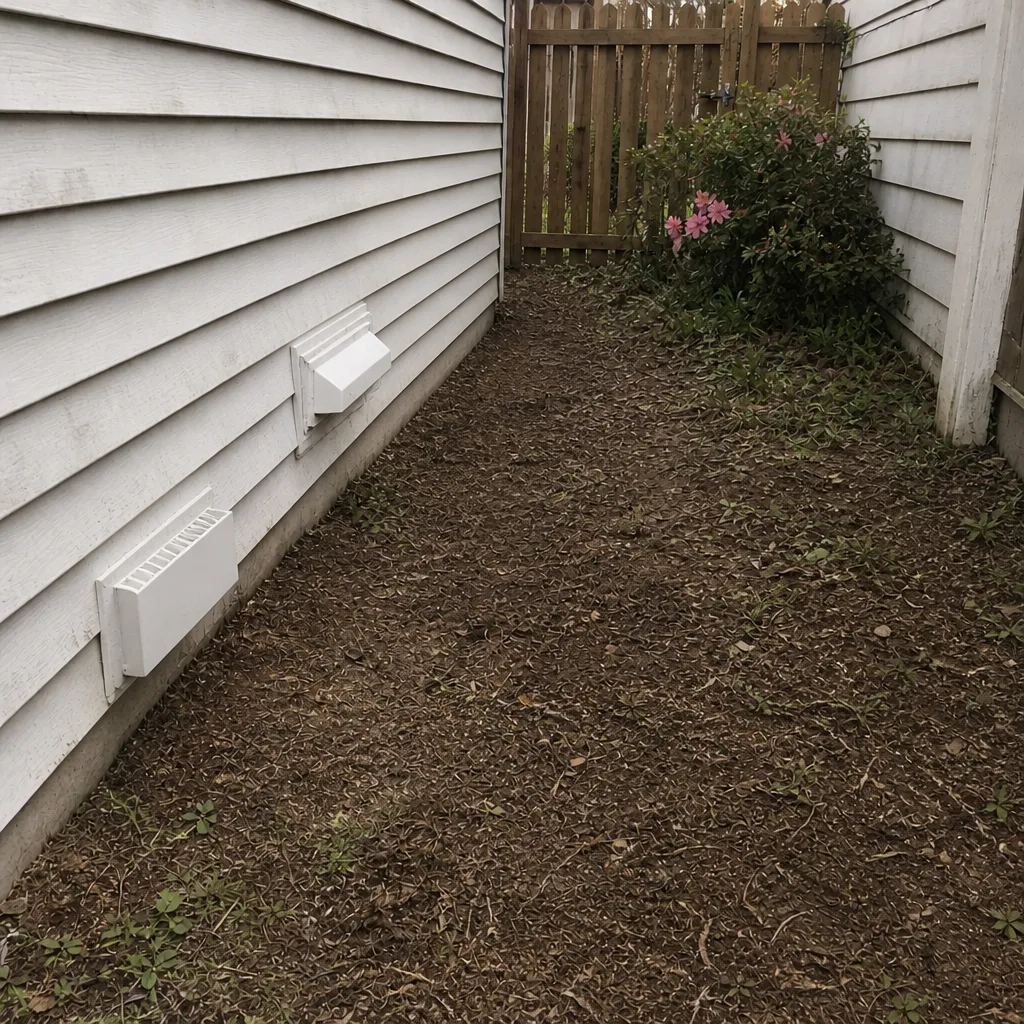 After
When to Call a Professional
Not every situation needs a professional visit, but some clearly do. Call a professional if you notice visible dust or debris blowing from a register shortly after the system starts, a persistent musty or damp smell with the fan running, condensation or standing water in or near the air handler, visible dust film building in a register cavity between cleaning cycles, or ductwork that has never been inspected in a home you’ve owned for several years. The same applies after a major renovation, after a pest issue in the attic or crawlspace, if your risk score lands at 11 or above, or if anyone in the house has been diagnosed with asthma or environmental allergies and wants a baseline measurement.
Duct Cleaning Durham offers free estimates in Durham, call (866) 486-6152. We answer 24/7, and fast dispatch from 7am to 7pm, Sunday through Friday. Our technicians have up to 13 years of experience and work with commercial-grade Rotobrush and Nikro equipment on every job, with Abatement Technologies containment on-site. Dryer vent work is available as part of the same visit, which matters because a clogged dryer vent is a leading house-fire cause, not a convenience item. If you want the schedule done right the first time, start with our dryer vent cleaning and air duct cleaning scope together.
Frequently Asked Questions
Most Durham homes should be cleaned every two to four years, not the national average of every three to five. Crawlspace foundations, indoor pets, older ductwork, recent renovations, and any allergy diagnosis in the house push the interval toward the shorter end. Slab homes with good filtration and no pets can often stretch to five or six years. The most reliable way to set your own number is a short risk score plus an annual register photograph. Call (866) 486-6152 for an exact estimate; estimates are free.
Yes. Durham’s high-pollen day count is one of the highest in the Southeast, and pine pollen lands on every surface that faces outside air during the April peak. Homes that run a lower-MERV filter or skip the spring filter change can accumulate a year’s worth of pollen load in a few weeks. Cleaning between April and early July, before the humidity peak, captures that load while it’s still dry and movable. Call (866) 486-6152 for an exact estimate.
Air duct cleaning in Durham typically falls in the range of a whole-system price agreed before work starts, not a per-vent rate. The exact number depends on the number of systems, the length of the duct run, foundation type, and whether any repair is needed. Treat any quote that is significantly below the local market as a warning sign, because the bait-and-switch model depends on a low teaser number that grows once the technician is on site. We quote one flat price per system, and that written estimate sets the final invoice. Call (866) 486-6152 for an exact quote; estimates are free.
Cheaper quotes usually involve portable consumer vacuums rather than commercial equipment, no containment, and a per-vent pricing model that pads out the invoice once the technician is inside. Real duct cleaning requires negative pressure from an industrial vacuum, contact agitation from a system like Rotobrush, and air scrubbing to contain the displaced debris. If a quote doesn’t mention any of that, the price reflects the service you’re actually getting. Call (866) 486-6152 for an exact quote.
Ask for before-and-after photographs of your own ducts and registers, taken the same day, and check them against what you saw when the technician arrived. A legitimate cleaning leaves visible improvement in the register boots and returns. Any duct-cleaning company that can’t produce photos of the work in your home, not stock photos, is not the one to hire. We take before-and-after photos on every job so you can verify the change. Call (866) 486-6152 for an exact quote.
Filter changes are the single most effective between-cleaning task. MERV 6 to 8 filters should be changed every 60 to 90 days, and more often during pollen season. MERV 9 to 11 filters handle 90 to 120 days under normal load. MERV 13 and higher filters last roughly 90 to 120 days but must be sized to your system’s airflow. Write the change date on the filter edge and photograph the removed filter each time so you have evidence rather than memory. Call (866) 486-6152 for an exact quote on a full inspection.
The Bottom Line
The right air duct cleaning schedule in Durham is built from your house’s risk profile, not a calendar rule. Score your foundation, pets, home age, renovation history, allergy diagnoses, and filter rating to land on an interval between roughly two and six years. Aim to schedule cleanings in the April-to-July window, before humidity turns pollen into a sticky film. Between cleanings, keep filter changes on schedule, glance at one register a month, and photograph four views once a year so you can compare year to year. Skip the sprays and ionizers, and require commercial equipment and containment on the job. When in doubt, get a professional inspection and let it refine the score.
Written by the team at Duct Cleaning Durham.