
Last updated November 15, 2026
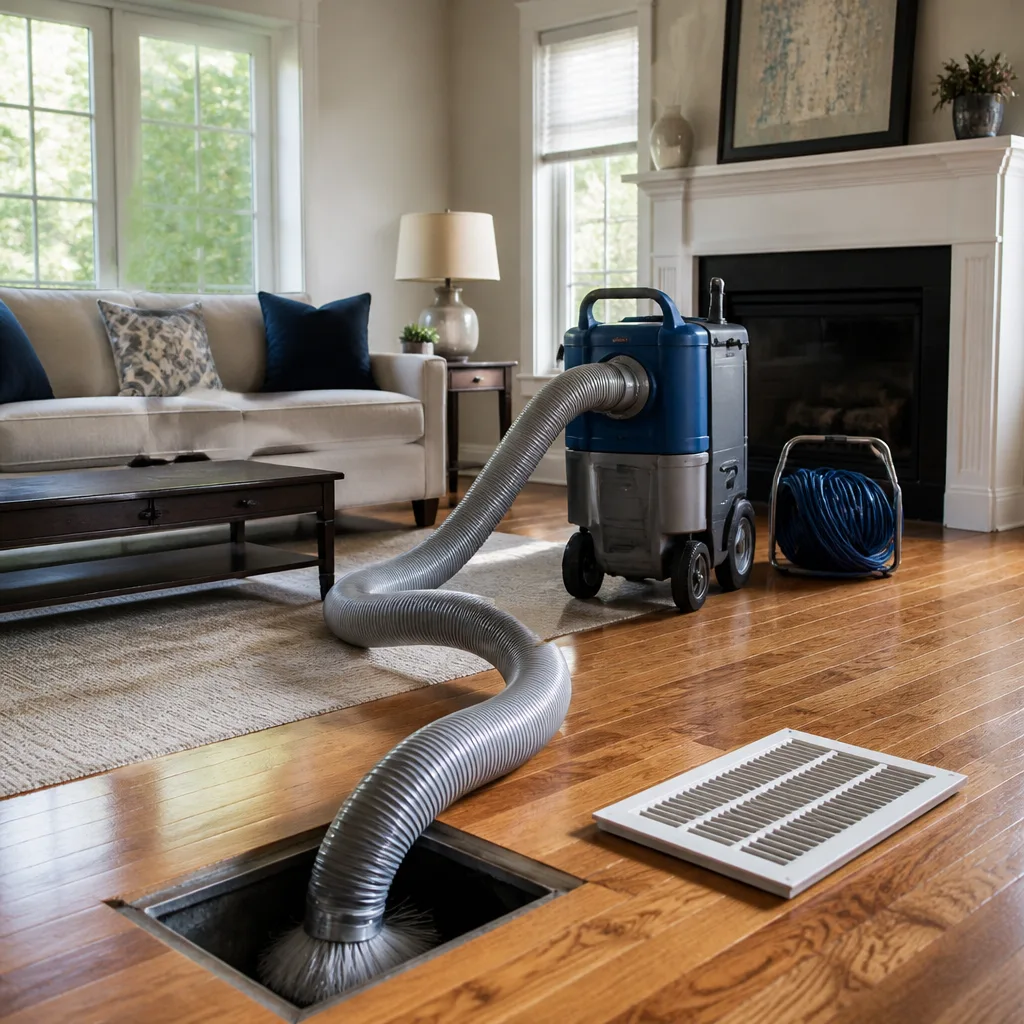 Whole-home duct cleaning
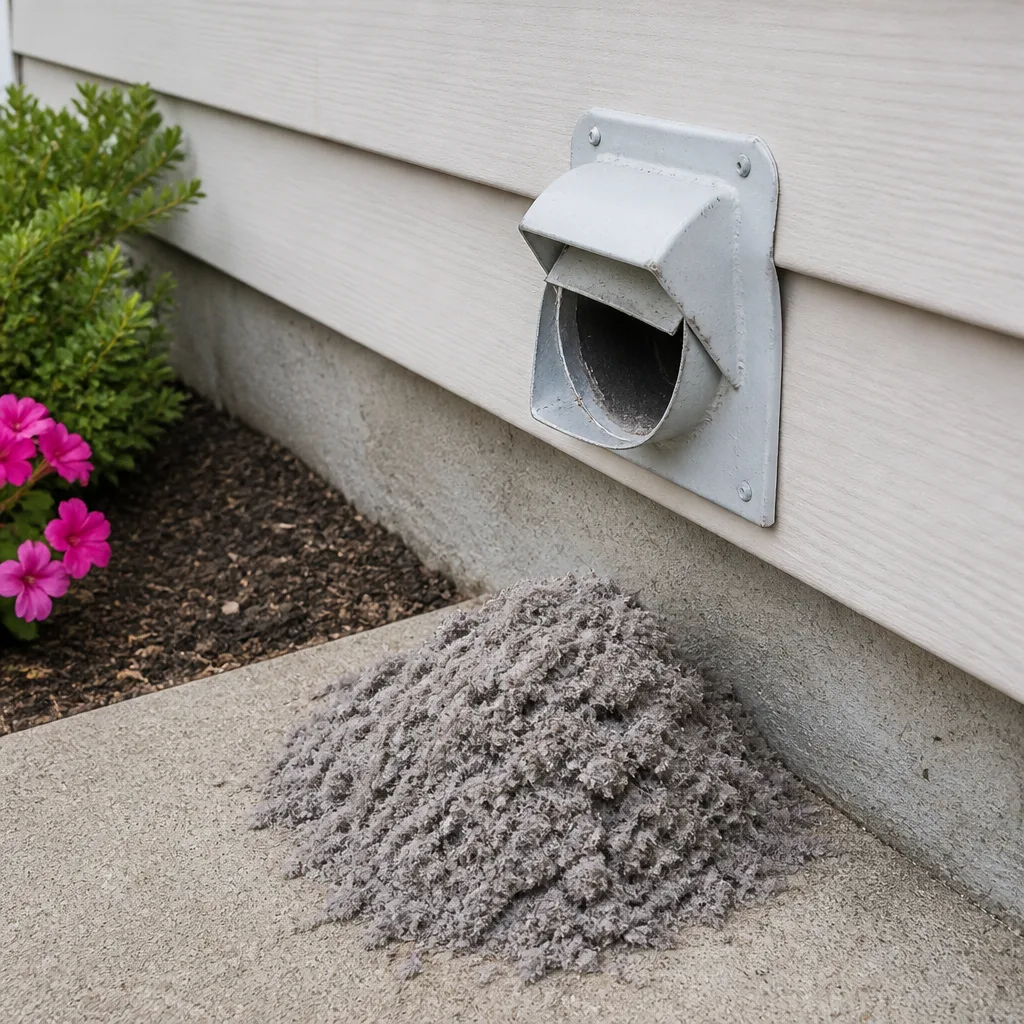 Dryer vent cleaning
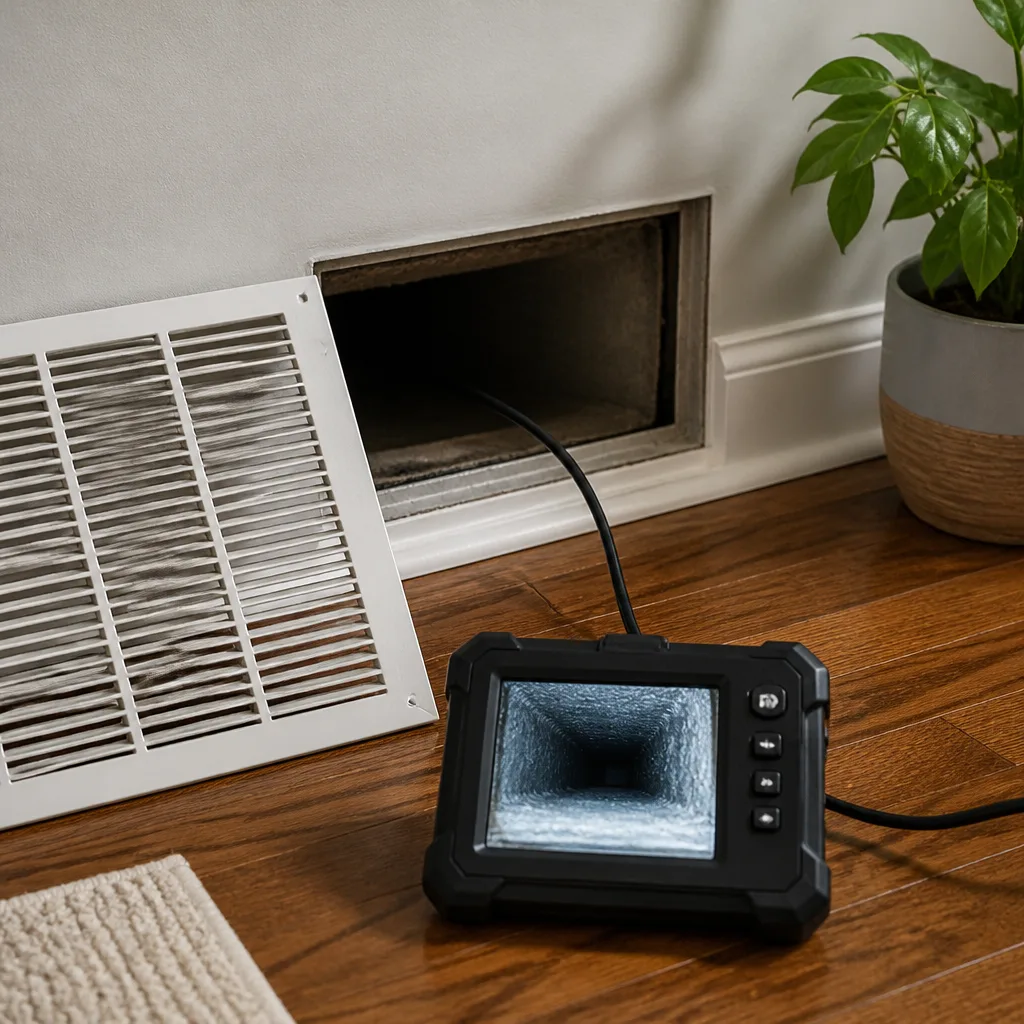 Camera inspection
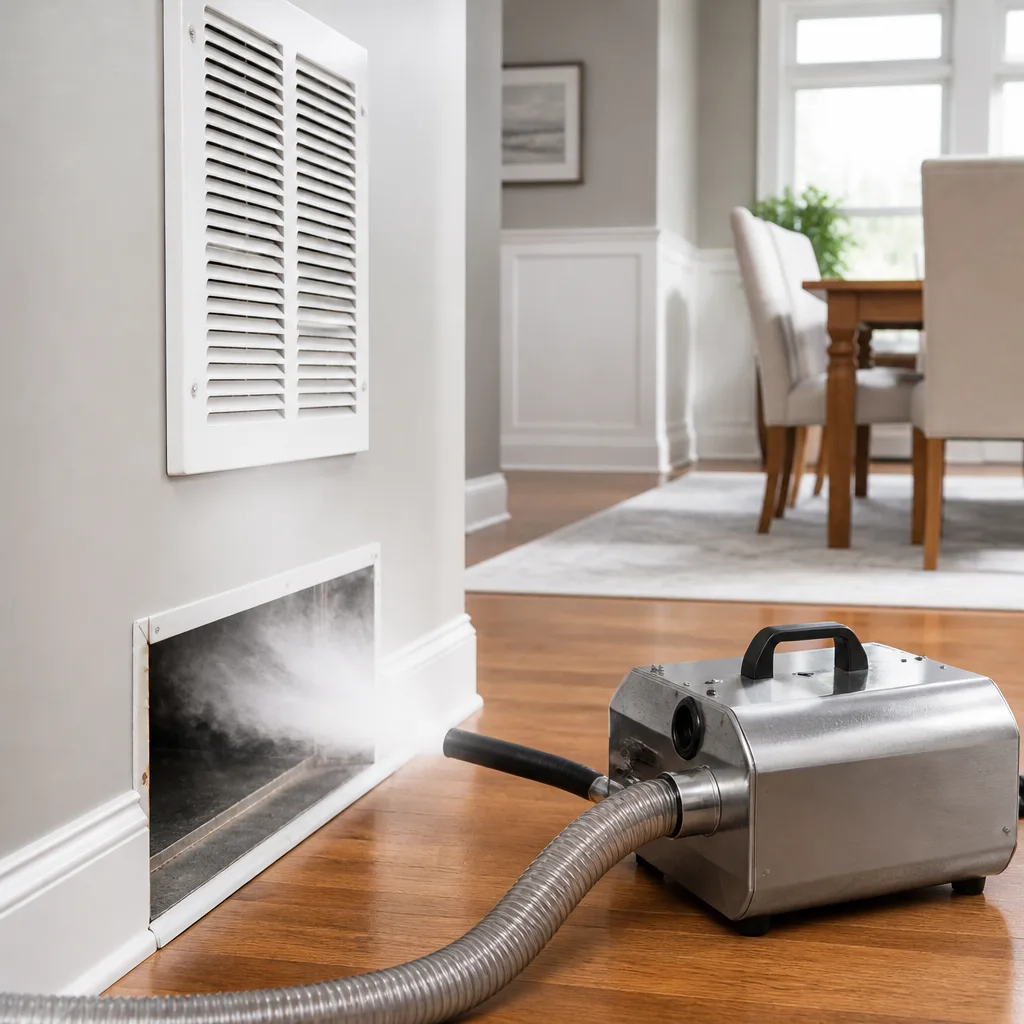 Sanitizing & deodorizing
Whole-system duct and dryer vent check with before-and-after photos - you see exactly what came out of your vents
That "$99 whole-house special" is a bait ad - the real number appears once they are in your hallway, or the "clean" is a shop-vac at the register. We photograph the inside of your ducts before and after instead.
Air Duct Cleaning Troubleshooting in Durham: Common Problems and How to Fix Them
Most homeowners in Durham diagnose their own duct system the same way: something feels off, so they assume the ducts are dirty and book a cleaning. That guess is wrong more often than it’s right. Weak airflow, musty smells and rooms that never quite match the thermostat are symptoms, and the same symptom can come from three completely different root causes – contamination, leakage, or a filtration problem. Fixing the wrong one changes nothing. This guide walks you through how to read your system like a technician, so you know which service you actually need before you book anything.
Quick Answer
Persistent dust, weak airflow, and musty odors are symptoms that point to one of three root causes: dirty ducts (contamination), leaking ducts (air escaping before it reaches the room), or filtration problems (a filter that’s clogged, wrong for the system, or missing). Diagnosis follows a simple order: check the filter and observe register airflow first, look for visual leaks at joints, and only then consider cleaning. A duct cleaning will not fix a leak, and a new filter will not fix microbial growth on the evaporator coil.
Styles & brands we work with
- Whole-home duct cleaning
- Dryer vent cleaning
- Camera inspection
- Sanitizing & deodorizing
Table of Contents
- The Three Root Causes Behind Almost Every Duct Complaint
- How to Identify Which Problem You Have
- What Musty Odors at Startup Actually Tell You
- Why Weak Airflow in One Room Is Almost Never a Cleaning Issue
- Rotobrush Agitation vs. Negative-Pressure Extraction: Which Job Needs Which
- Post-Cleaning Red Flags That Mean the Job Was Done Wrong
- When the Problem Isn’t the Ducts at All
- How Durham’s Climate and Housing Shape Duct Problems
The Three Root Causes Behind Almost Every Duct Complaint
Nearly every call we get about “dirty ducts” is really a question about one of three things. Knowing which one you’re dealing with is the difference between paying for the right service and paying for the wrong one twice.
Contamination means material has accumulated inside the duct system itself – dust, debris from a renovation, pet hair, or microbial growth on wet surfaces. The symptom is typically dust that settles quickly after cleaning, a noticeable musty smell, or visible debris at the registers. This is the one problem that air duct cleaning directly solves.
Leakage means conditioned air is escaping through gaps at joints, seams, or poorly connected boots before it reaches the room. The symptom looks like weak airflow and uneven temperatures, but the ducts may be perfectly clean. Cleaning a leaking system doesn’t fix the leak – it just cleans a system that will keep losing air.
Filtration means the air handler or return is being starved of air, or the filter isn’t catching what it should. A clogged filter, an undersized return, or a filter with the wrong MERV rating can mimic a duct problem precisely. The system runs longer, some rooms suffer, and the air stays dusty no matter how many times you clean the registers.
The distinction matters because these three problems have three different fixes and three different price points. Confusing them is the single most common way homeowners waste money on duct work. Here in Durham, where the summer humidity is heavy and the housing stock runs from mid-century ranches to newer builds, we see all three in roughly equal measure. The reading process below works the same regardless of your home’s age.
How to Identify Which Problem You Have
You can narrow down the cause with a few observations that don’t require tools, ladders, or a technician on site. Do these in order, because each step rules out a cause before you move to the next.
- Tissue test at the registers. Hold a single-ply tissue (or a strip of toilet paper) against each supply register while the system runs. Strong, steady pull means air is moving; a weak flutter or nothing at all means the register is starved. Try this in multiple rooms. If one room fails and the rest pass, the problem is local to that branch, not the whole system.
- Visual register inspection. Remove one or two grilles and look inside with a flashlight. A light film of dust is normal. Heavy dust buildup, visible debris, or dark staining on the duct interior points toward contamination. Clean, bright ductwork with weak airflow points toward leakage or a duct sizing issue.
- Temperature split check. Compare the air coming out of a supply register to the air going into the return, using a simple thermometer. A wide gap between supply and return temperatures with poor room comfort often means the system is losing air or working harder than it should. This is a rough field check, not a substitute for a technician’s measurements, but it tells you whether the system is moving air efficiently.
- Filter check. Look at the filter. If it’s dark, matted, or more than a few weeks overdue, replace it before you diagnose anything else. A clogged filter is the most common cause of the symptoms people blame on dirty ducts.
- Look for leaks at accessible joints. Where ductwork is visible in a basement, crawlspace, or attic, check the seams and connections. Gaps at joints, disconnected flex duct, or tape that’s peeling away all point to leakage, which cleaning won’t solve.
If steps one through five point to heavy debris inside the ducts, contamination is likely your issue and a cleaning is worth scheduling. If the ducts look clean but airflow is uneven, you’re dealing with leakage or sizing. If airflow is fine but the air stays dusty, filtration is the suspect.
What Musty Odors at Startup Actually Tell You
A musty smell that appears the moment the system kicks on is one of the most misdiagnosed problems in residential HVAC. The smell usually comes from one of two places, and cleaning the wrong component leaves the odor completely intact.
Microbial growth on the evaporator coil is the more common culprit. The coil sits wet for much of the cooling season, and in Durham’s humid summers it stays damp for long stretches. When air passes over that growth, it carries the smell into the house. Cleaning the ducts won’t touch it – the coil itself needs to be addressed, and that’s a separate service from duct cleaning.
Duct liner contamination is the second source. Older duct systems are often lined with fiberglass or insulated flex duct, and that material can trap moisture and harbor growth. Cleaning the coil won’t fix this one. If the liner itself is degraded or saturated, cleaning may help temporarily but won’t solve a material problem.
Here’s the practical distinction: if the smell appears only when the fan starts and fades within a minute, coil growth is the likely source. If the smell is persistent through the whole cycle and stronger near certain registers, liner or duct contamination is more likely. If you’ve had a cleaning and the smell returned within days, that’s a sign the cleaning didn’t address the actual source – probably the coil.
Ask any contractor you hire to walk you through what they found and where. A technician who checks the coil before recommending a cleaning is showing you they’ve diagnosed the cause rather than sold you a service.
Why Weak Airflow in One Room Is Almost Never a Cleaning Issue
Weak airflow to a single room is one of the most reliable signs that your problem is leakage, not contamination. Here’s why, and what a technician means when they measure static pressure.
Airflow is about pressure and resistance. The blower in your air handler pushes a fixed volume of air through the system, and that air finds the path of least resistance. If one branch of ductwork has a disconnected joint, a crushed section, or a poorly sealed boot at the register, air escapes there instead of reaching the room at the end of the run. Cleaning that run won’t send more air to it – sealing the leak will.
Static pressure is the resistance inside the duct system. A technician measures it at the air handler to determine whether the system is working against more resistance than it was designed for. High static pressure means the system is straining to push air through ducts that are too small, too long, or too restrictive. That’s a design or blockage problem, not a dirt problem. When static pressure is high, cleaning sometimes helps by removing buildup, but if the ducts are clean and pressure is still high, the issue is layout or restriction.
In Durham, some of the older homes west of downtown have duct systems that were retrofitted into attics or crawlspaces with long, convoluted runs. Those systems often develop weak airflow in far rooms simply because of distance and friction, not dirt. Newer construction sometimes uses flex duct with sharp bends or undersized returns. Both scenarios look identical from the register but need different solutions.
The tissue test tells you which rooms are affected. A technician’s static pressure reading tells you why. If cleaning doesn’t fix a weak-airflow complaint, ask what the static pressure reading shows – that’s the number that reveals the real problem.
Rotobrush Agitation vs. Negative-Pressure Extraction: Which Job Needs Which
This is where the equipment gap between contractors becomes visible, and where a homeowner who understands the difference can ask the right questions.
There are two main methods for cleaning a duct system. Contact cleaning with agitation uses a rotating brush or air whip that physically scrubs the duct walls while a vacuum pulls loosened material out. The Duct Cleaning Durham crew runs a Rotobrush system for this, which is the industry-standard tool for breaking loose the material that clings to duct surfaces. Negative-pressure extraction uses a high-powered HEPA vacuum to pull debris out of the system without contact cleaning. Nikro industrial vacuums are built for this and pull substantial suction.
Which one a job needs depends on the condition of the ducts. Heavily contaminated ducts, ducts with sticky or adhered debris, and systems returning to service after renovation need agitation first. Ducts with moderate, loose dust may only need negative-pressure extraction. Most professional cleanings combine both: agitate the duct walls, then extract everything with high-powered negative pressure.
Then there’s containment. Any cleaning will disturb and displace material in the air. Professional work uses an air scrubber to capture those displaced contaminants so they don’t redistribute through the house. We run Abatement Technologies air scrubbing on every job for exactly this reason – it’s not a luxury add-on, it’s what separates a contained cleaning from a dust event.
When you get quotes, ask three questions:
- Will you use contact agitation (a Rotobrush or equivalent), or extraction only?
- What HEPA vacuum are you using – a commercial unit or a portable consumer one?
- Are you running an air scrubber during the work, and what brand?
A contractor who can answer those in specifics is worth the higher price. One who can’t is likely running a shop vac and calling it professional.
Post-Cleaning Red Flags That Mean the Job Was Done Wrong
A bad cleaning is worse than no cleaning, because it costs money and leaves you with the same symptoms plus doubt. Watch for these signs in the days after the work:
- White dust reappearing within days. Fine white or light-gray dust settling on surfaces shortly after a cleaning means material was loosened but not fully extracted, or the crew didn’t contain the work area. The dirt either came back out or never left. A properly cleaned and contained system shouldn’t produce a fresh dust layer right away.
- Airflow that got worse. If rooms that had decent airflow now feel weaker, something is restricting the ducts – often a disconnected or collapsed section the cleaning disturbed, or a register grille put back wrong. This needs a follow-up inspection, not another cleaning.
- Odor that returned in under a week. Fast return of a musty smell is the clearest sign the cleaning didn’t touch the source. If the coil, liner, or a wet section of duct was the real problem, the smell comes back quickly.
- No before-and-after photos. A contractor who won’t show you the inside of your ducts before and after the work is asking you to take it on faith. Before-and-after documentation of your own system is basic.
- No containment and no visible vacuum equipment. If the crew showed up with handheld tools and no commercial vacuum or scrubber, they didn’t have the equipment to do the job properly.
Any one of these is worth a call back. If you hired a low-bid contractor and two or more show up, you’re not being picky – you’re seeing the results of a job done without commercial equipment.
When the Problem Isn’t the Ducts at All
Sometimes the answers to “what’s wrong with my ducts” live in the HVAC system itself, and honest diagnosis means saying so. Duct cleaning can’t fix a failing blower, an undersized return, or a coil that needs service. It also won’t fix a system that’s simply not balanced.
Here’s what we check for before recommending a cleaning:
- Filter and return sizing. A return that’s too small for the blower starves the system. Replaceable filter grilles in newer Durham homes often create more restriction than the system was designed for.
- Blower and air handler condition. A dirty blower wheel or a failing motor produces weak airflow that no duct cleaning will correct.
- Coil cleanliness. A fouled evaporator coil restricts airflow and produces the musty symptoms discussed earlier. Coil cleaning is a separate service.
- Duct design and layout. Long runs, sharp turns, and undersized branches create chronic pressure problems that cleaning can’t fix.
If you’re in an older home near downtown Durham and the duct system was retrofitted decades ago, a repair or redesign may be a better investment than repeated cleanings. A good technician will tell you that even when it means a smaller ticket.
How Durham’s Climate and Housing Shape Duct Problems
Duct problems aren’t the same everywhere, and Durham’s specific climate and housing stock shape which ones show up most.
The long, humid summers are the dominant factor. Warm, moist air and heavy cooling loads mean evaporator coils stay wet through much of the season, which creates the conditions for microbial growth on the coil. That drives most of the musty-startup complaints we hear about in Durham. It also means duct liner and insulation that get wet stay wet, so contamination that reaches insulation tends to persist.
Winter swings between mild and genuinely cold, so heating systems cycle on and off in ways that pull dust and debris through the ducts during startup season. Homes in neighborhoods like Watts-Hillandale, Trinity Park, and Forest Hills sit in a housing mix from early-1900s builds to mid-century ranches, many with duct systems retrofitted into crawlspaces or attics. Those retrofits are more prone to leakage at joints and boots than purpose-built duct chases. In newer development around Durham, flex duct dominates, and flex duct crushes easily and collects debris at low points.
Whatever the housing style, the diagnosis process is the same: filter, register airflow, temperature check, visual inspection. What changes is where technicians expect to find the problem.
Common Mistakes to Avoid
- Booking a cleaning to fix a single-room airflow problem. One weak room is almost always a leak, a disconnect, or a sizing issue at that branch.
- Assuming musty smell means dirty ducts. It’s more often the evaporator coil. Clean the ducts and the smell returns because the real source is untouched.
- Chasing the lowest quote. The gap between bids usually reflects the equipment gap. A contractor with a shop vac and no scrubber can’t deliver the job a commercial Rotobrush and HEPA vacuum can.
- Skipping the filter. A clogged filter produces the exact symptoms of dirty ducts. Replace it before you spend money on a diagnosis.
- Believing cleaning fixes leaks. A leaking duct system stays leaking after cleaning. Seal before you clean.
- Not asking for before-and-after photos. Documentation of your own ducts is how you know the work happened. No photos, no proof.
- Forgetting the dryer vent. The dryer vent is a fire-prevention item, not a maintenance convenience. Cleaning it isn’t the same as cleaning supply ducts, and a system that hasn’t had the vent cleared in years should have that checked regardless of what the supply ducts look like.
See the difference
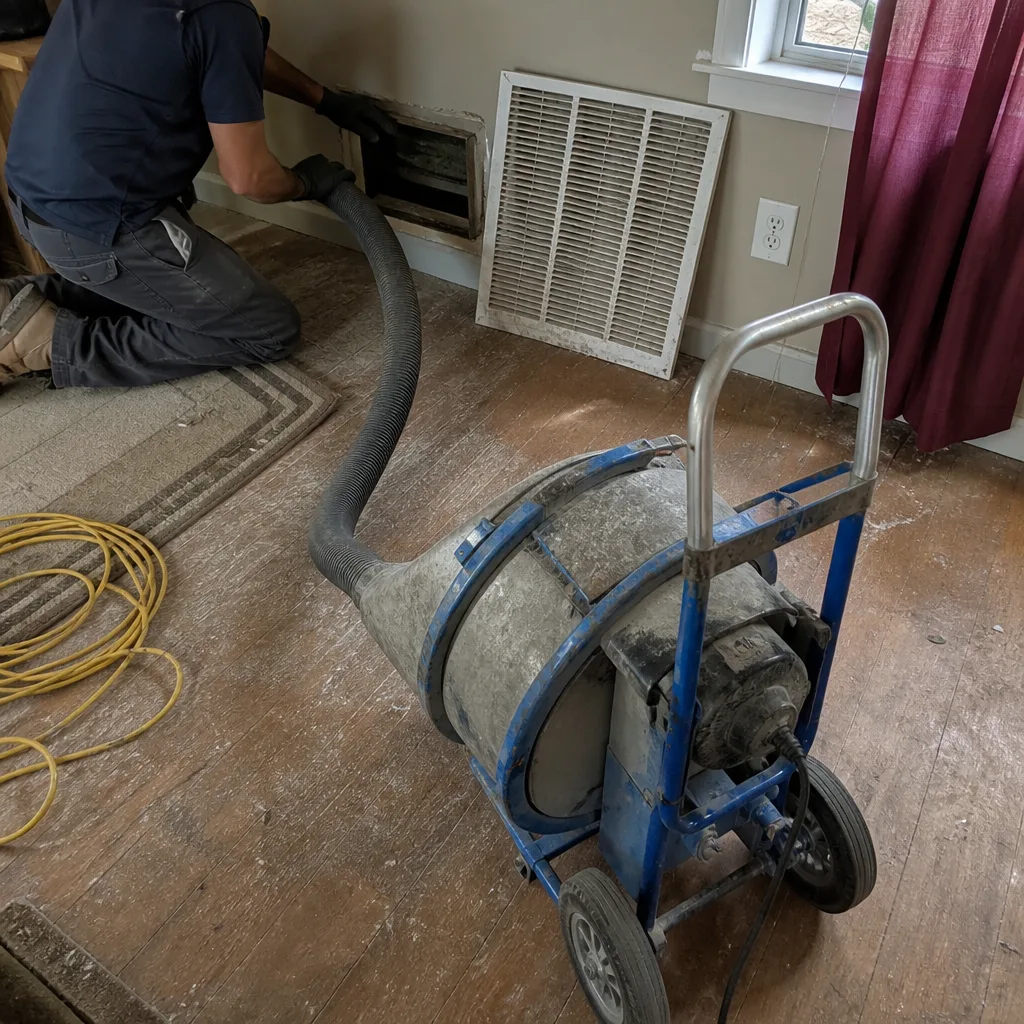 Before
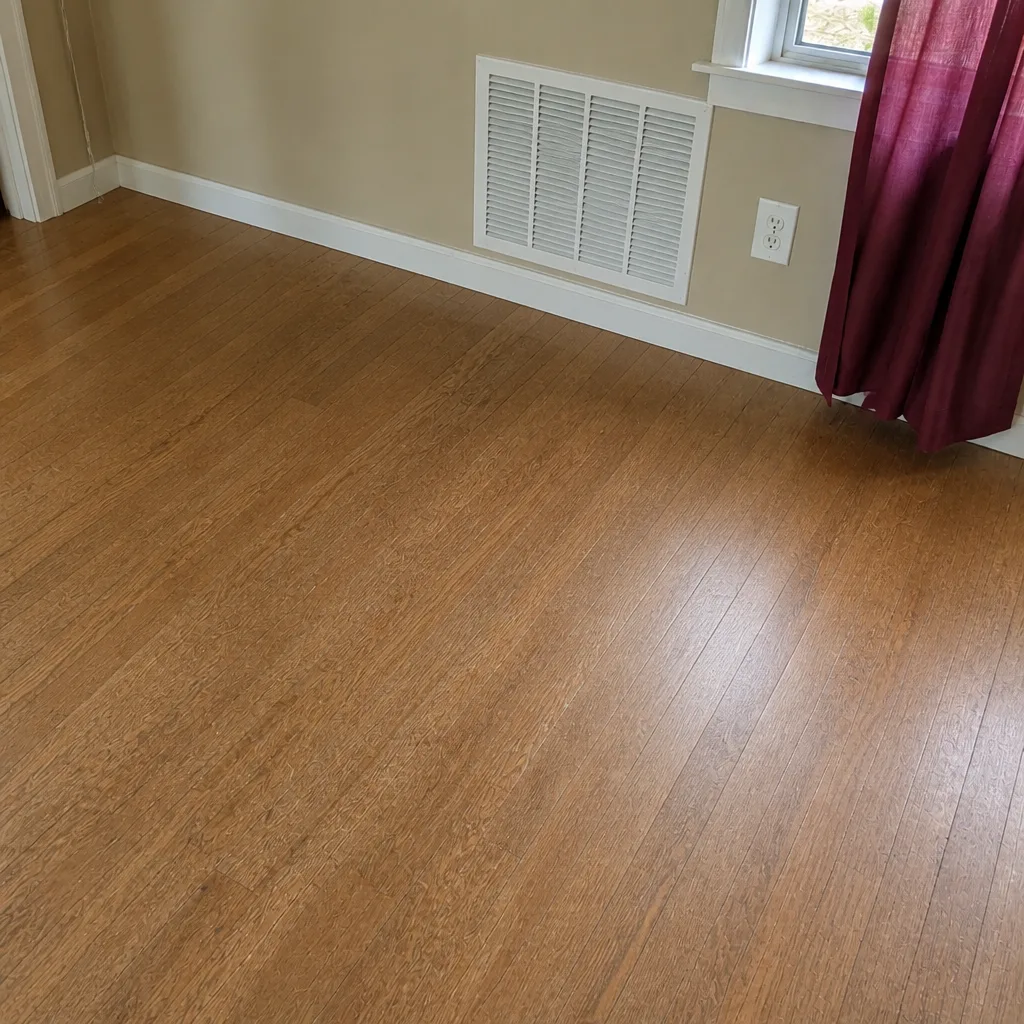 After
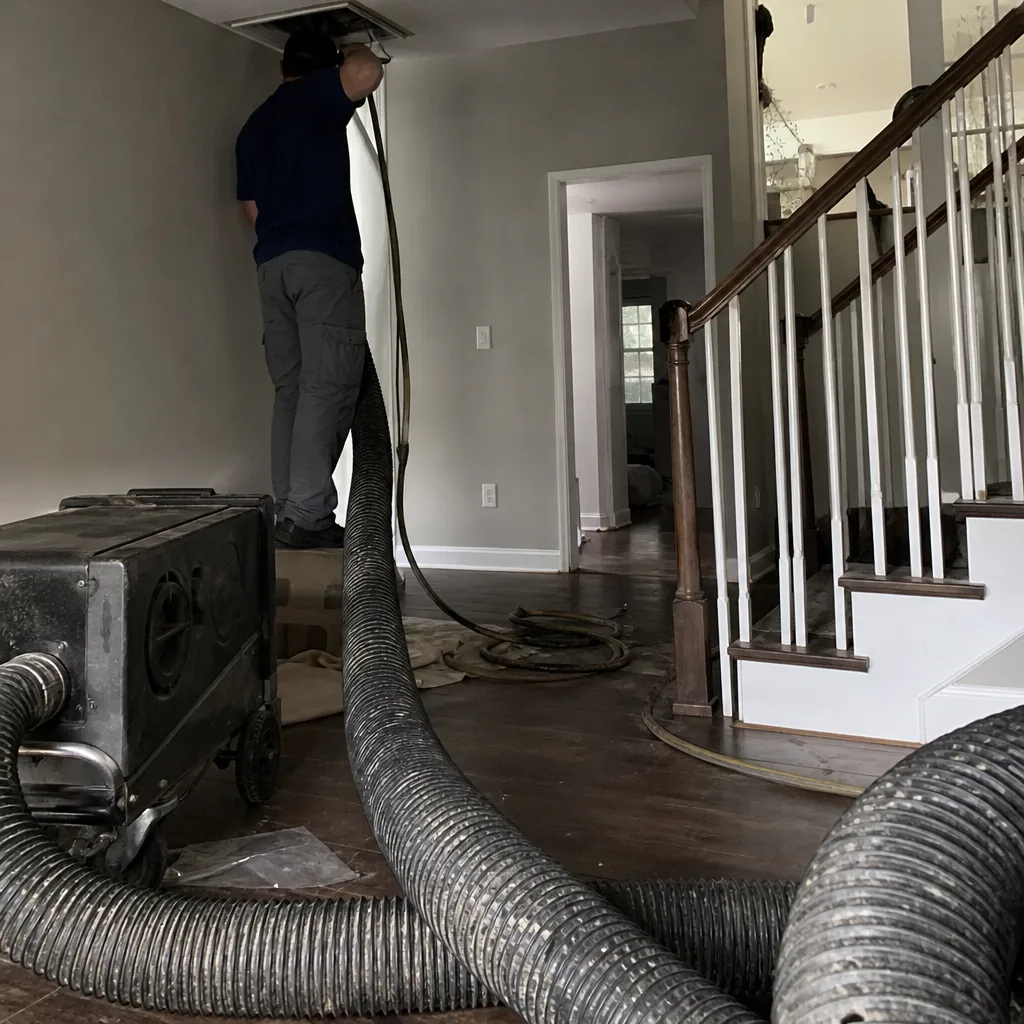 Before
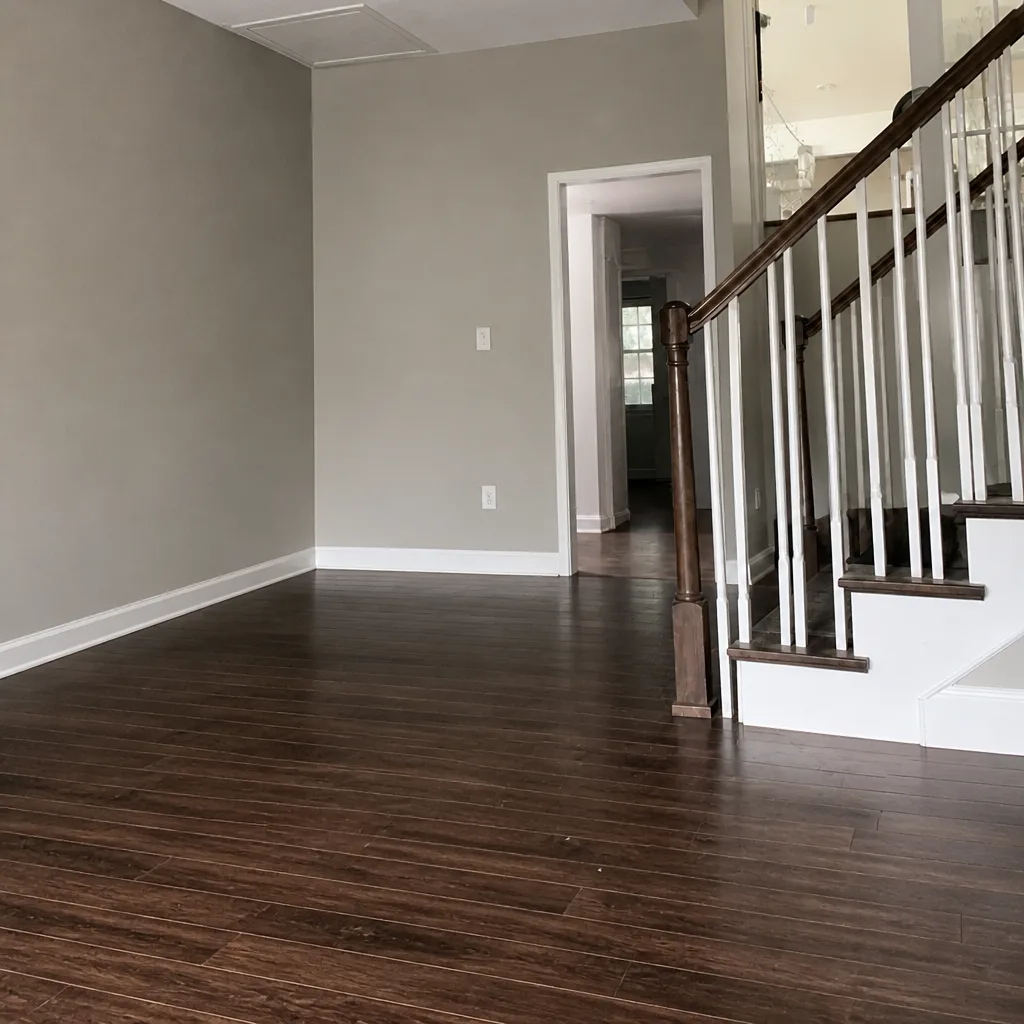 After
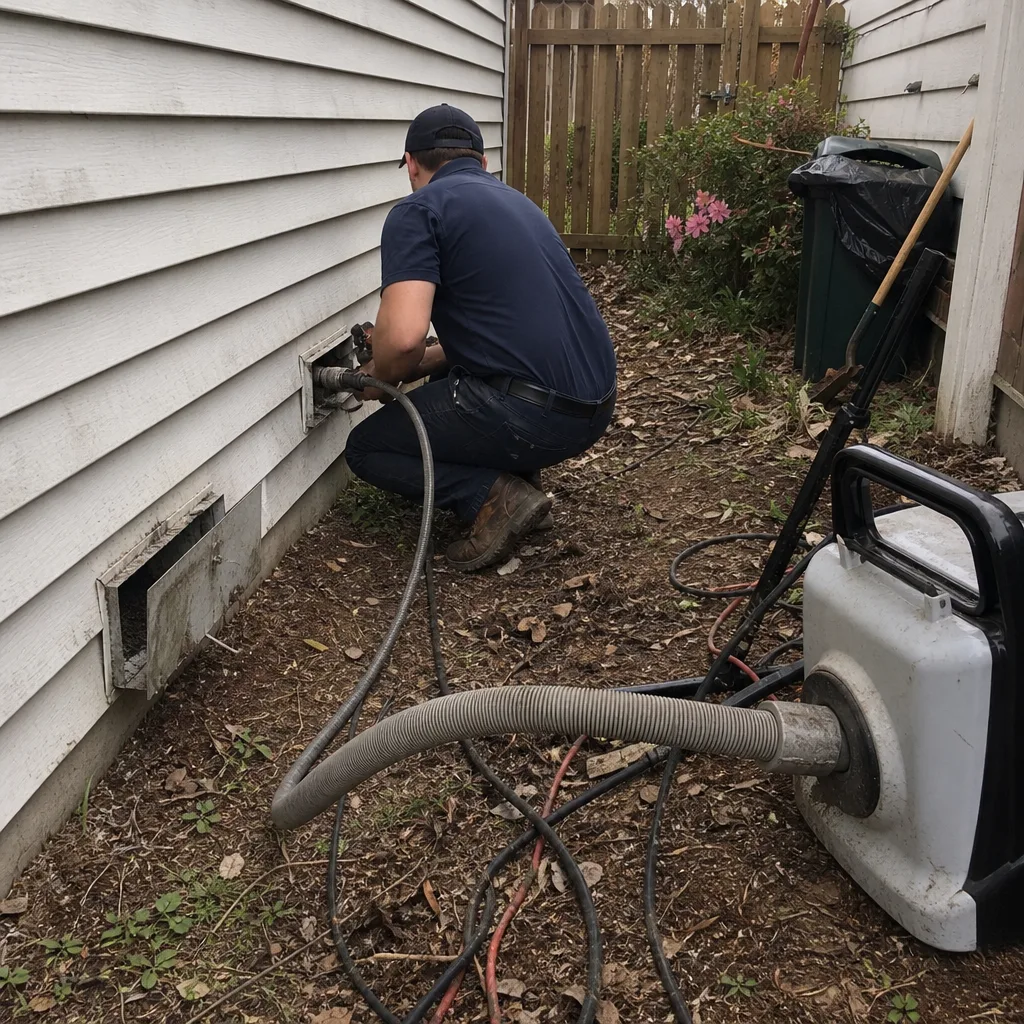 Before
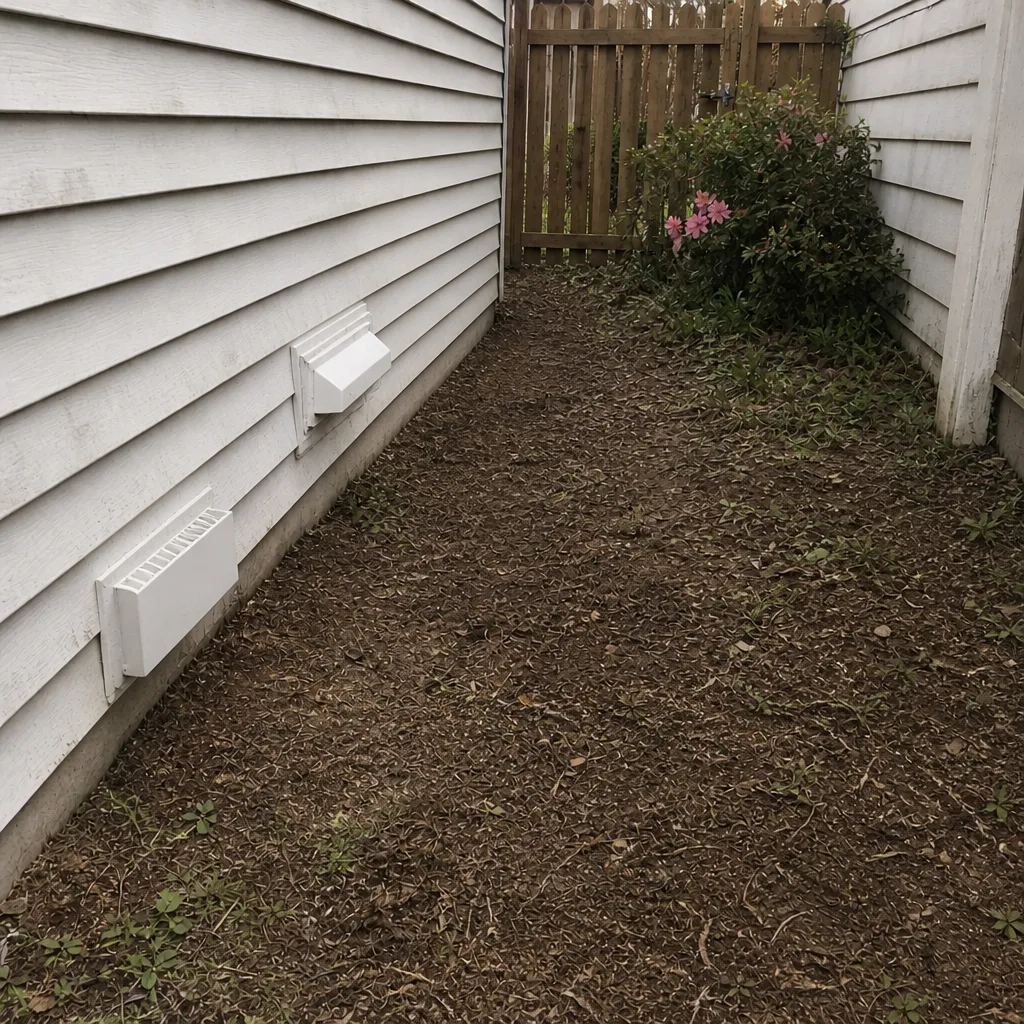 After
When to Call a Professional
Call a professional when the symptoms survive a filter change, when you see heavy debris or dark staining inside the registers, when a musty smell appears at every startup, when a single room stays weak despite the filter being clean, or when you’re buying a home and don’t know the duct history. Call before a remodel that will pull debris into the system. Call for the dryer vent, particularly if it has never been cleared or dries load slowly. Call after a low-cost cleaning elsewhere if any of the red flags above show up.
The right call isn’t always a cleaning. Sometimes it’s a repair, sometimes it’s a filter, and sometimes it’s an IAQ product like Honeywell or Aprilaire equipment added to keep the air cleaner over time.
Duct Cleaning Durham offers free estimates in Durham – call (866) 486-6152. Our technicians have up to 13 years of experience, and we run commercial-grade equipment on residential jobs.
Frequently Asked Questions
Pricing is per system, not per vent, and it’s set by a written estimate after we see the system. Whole-house cleanings vary widely based on system size, accessibility, and how much contamination is present. Ask for a flat price per system in writing, agreed before work starts. Call (866) 486-6152 for an exact quote – estimates are free.
Low quotes typically reflect low equipment: consumer vacuums, no contact agitation, no air scrubbing, no containment. The cleaning looks quick and costs less because it doesn’t remove what a commercial Rotobrush and Nikro HEPA system remove. The gap shows up in the results. Call (866) 486-6152 if you want a quote explained line by line.
Ask for before-and-after photos of your own ducts, taken on the same visit. A contractor running commercial equipment will produce visible before-and-after documentation of the duct interior and the register boots. If the photo record isn’t offered, ask for it.
There’s no fixed interval that fits every home. Homes with pets, recent renovations, or heavy dust loads typically benefit sooner than homes with clean filters and light occupancy. If dust returns within weeks of a cleaning, the interval isn’t the problem – the cause is. Call (866) 486-6152 and we’ll talk through whether it’s worth scheduling.
Only if the ducts are the source. If the smell comes from microbial growth on the evaporator coil, cleaning ducts doesn’t fix it, and the smell returns quickly. A technician should check the coil before recommending duct cleaning. Call (866) 486-6152 for an honest diagnosis.
Yes. We offer air duct repair as a separate service line, so a leak, a disconnected joint, or a crushed section found during a cleaning can be addressed rather than deferred to another contractor. It keeps the diagnosis and the fix in the same visit. Call (866) 486-6152 to discuss both.
Dryer vents should be treated as a safety service, not a convenience upsell. A clogged dryer vent is one of the leading causes of residential house fires, and it rarely shows symptoms until it matters. If the vent hasn’t been cleared in years, it’s worth scheduling dryer vent cleaning independent of any supply-duct work. Call (866) 486-6152 to book an estimate.
Rotobrush contact-cleaning systems, Nikro industrial vacuums, and Abatement Technologies air filtration on every job. For indoor air quality add-ons, we supply and install Honeywell and Aprilaire products. Ask any contractor the same question and compare the actual answers.
The Bottom Line
Duct problems are diagnosed, not guessed at. Dust, musty smells, and weak airflow look similar from the register but trace back to three different causes: contamination, leakage, and filtration. Read your system in that order – filter, tissue test, visual inspection – and you’ll know which service you actually need before you pay for the wrong one. If you’re in Durham, the humid summers and older housing stock make coil growth and duct leakage common enough that it’s worth asking before assuming. When a cleaning is the answer, ask about equipment. Rotobrush and commercial HEPA are the difference between a real job and a quick one. Call (866) 486-6152. We answer 24/7. Fast dispatch from 7am to 7pm, Sunday through Friday, with free estimates.
Written by the team at Duct Cleaning Durham.