
Last updated November 15, 2026
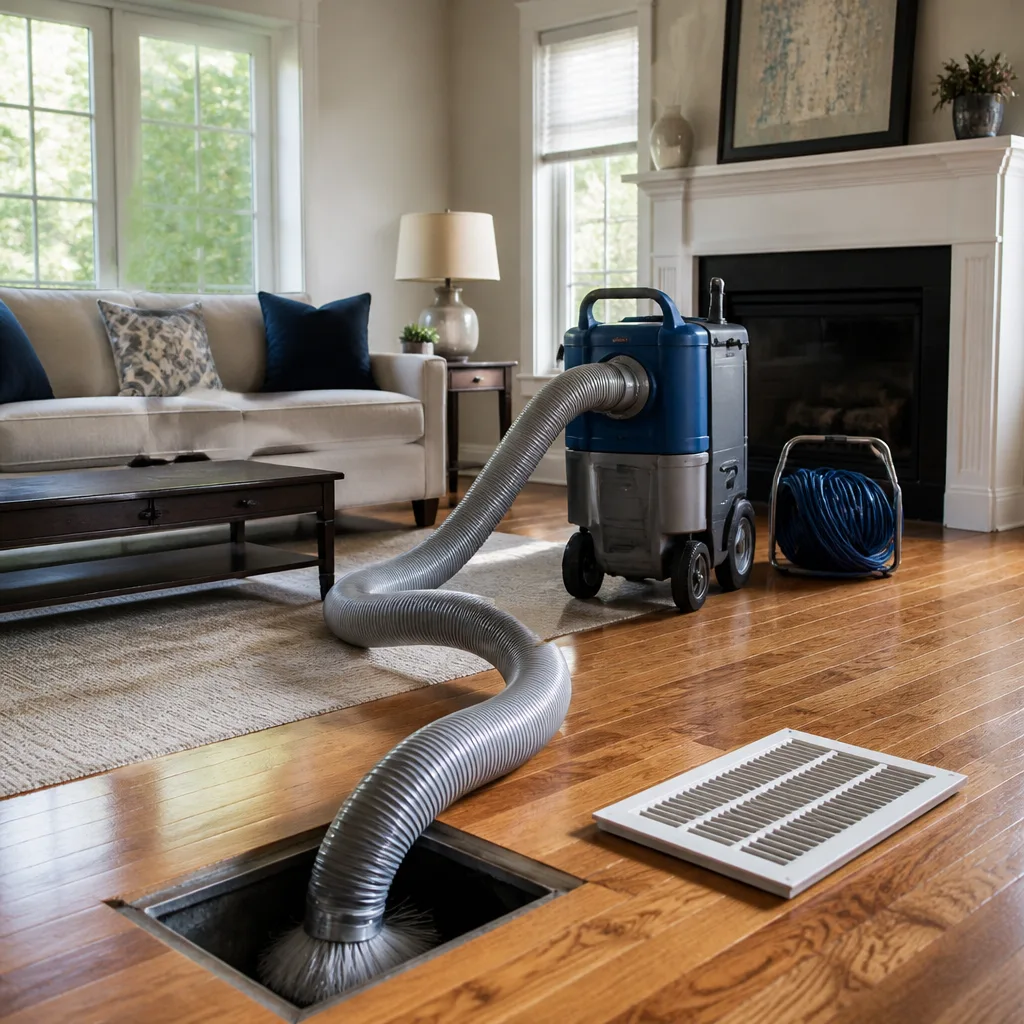 Whole-home duct cleaning
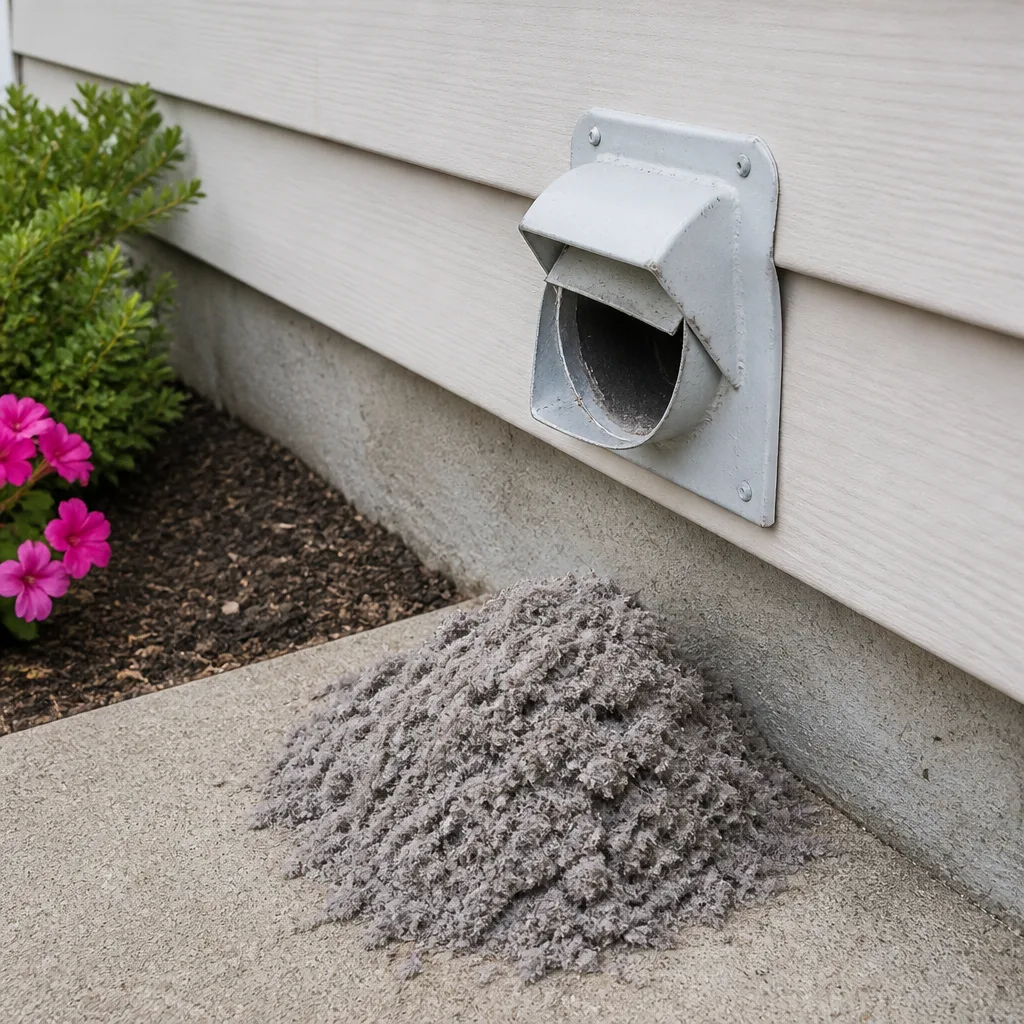 Dryer vent cleaning
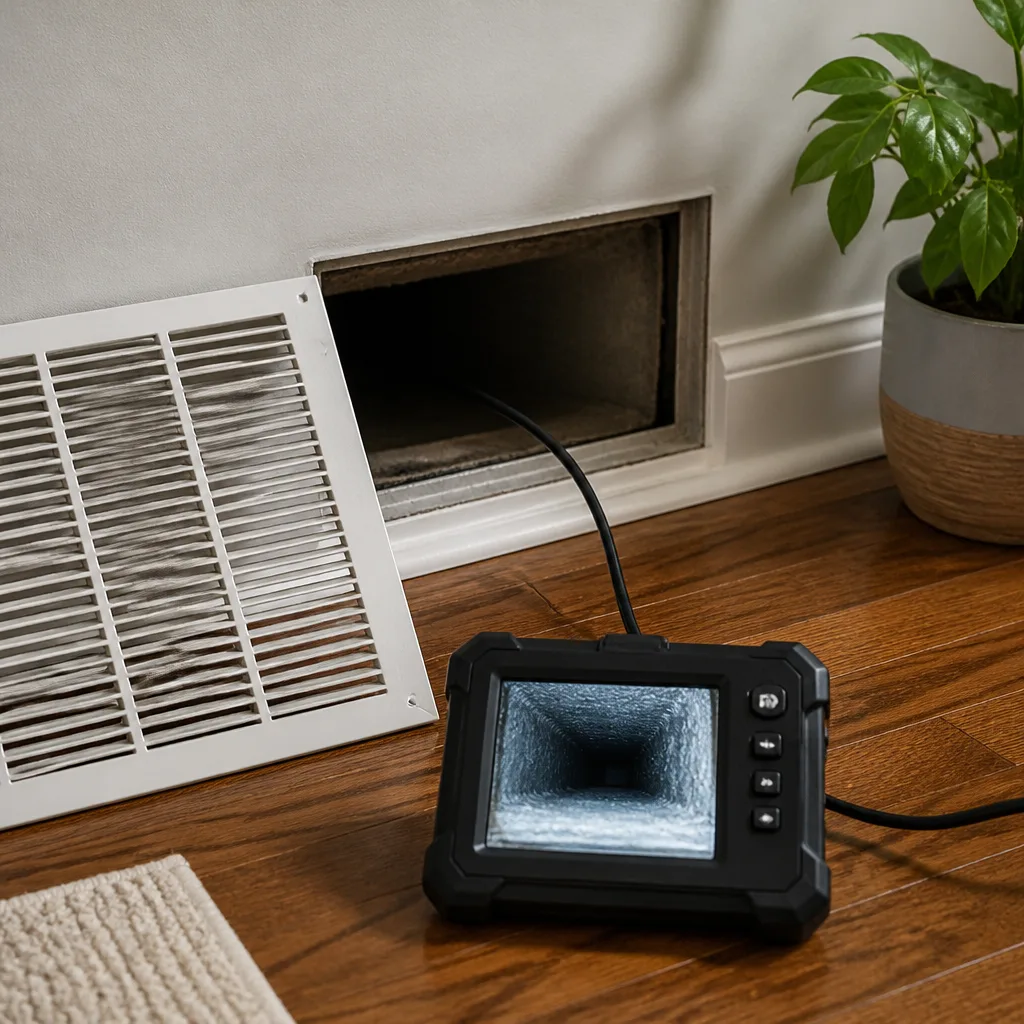 Camera inspection
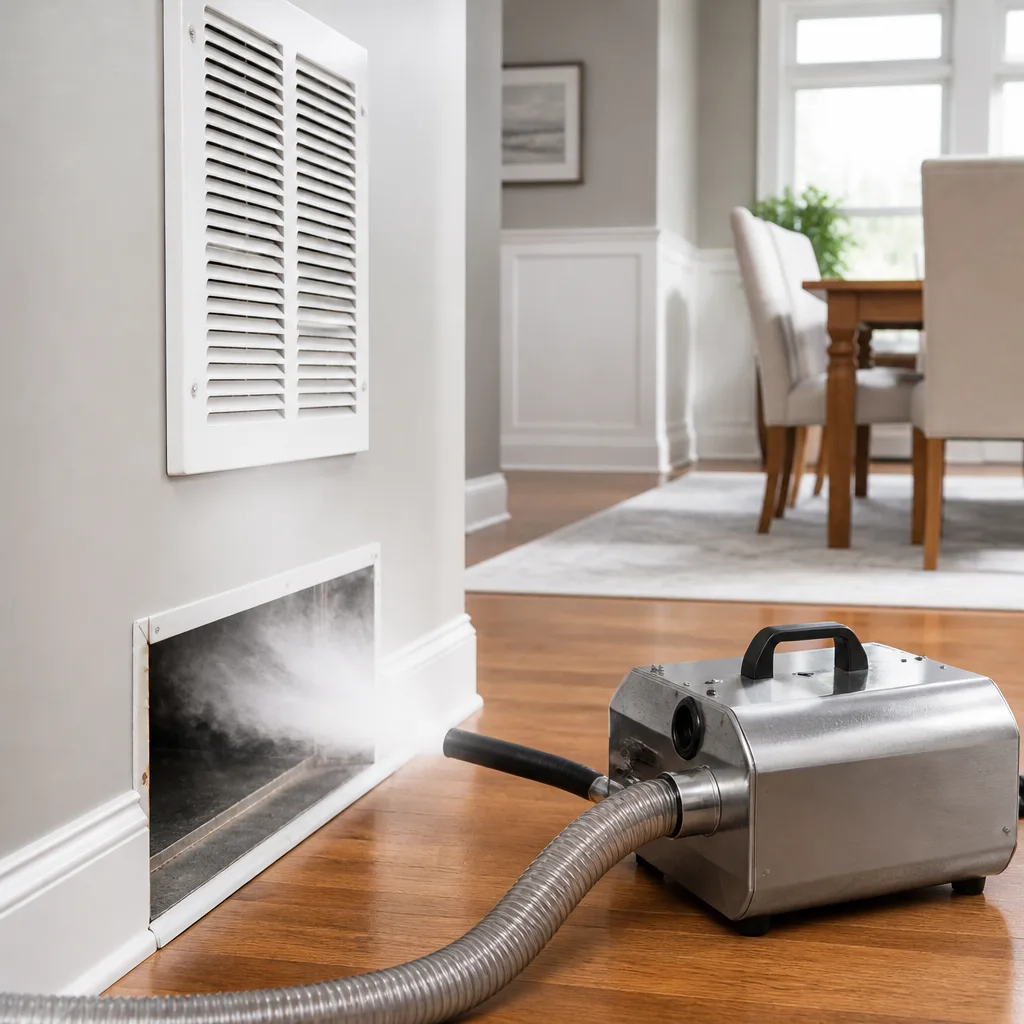 Sanitizing & deodorizing
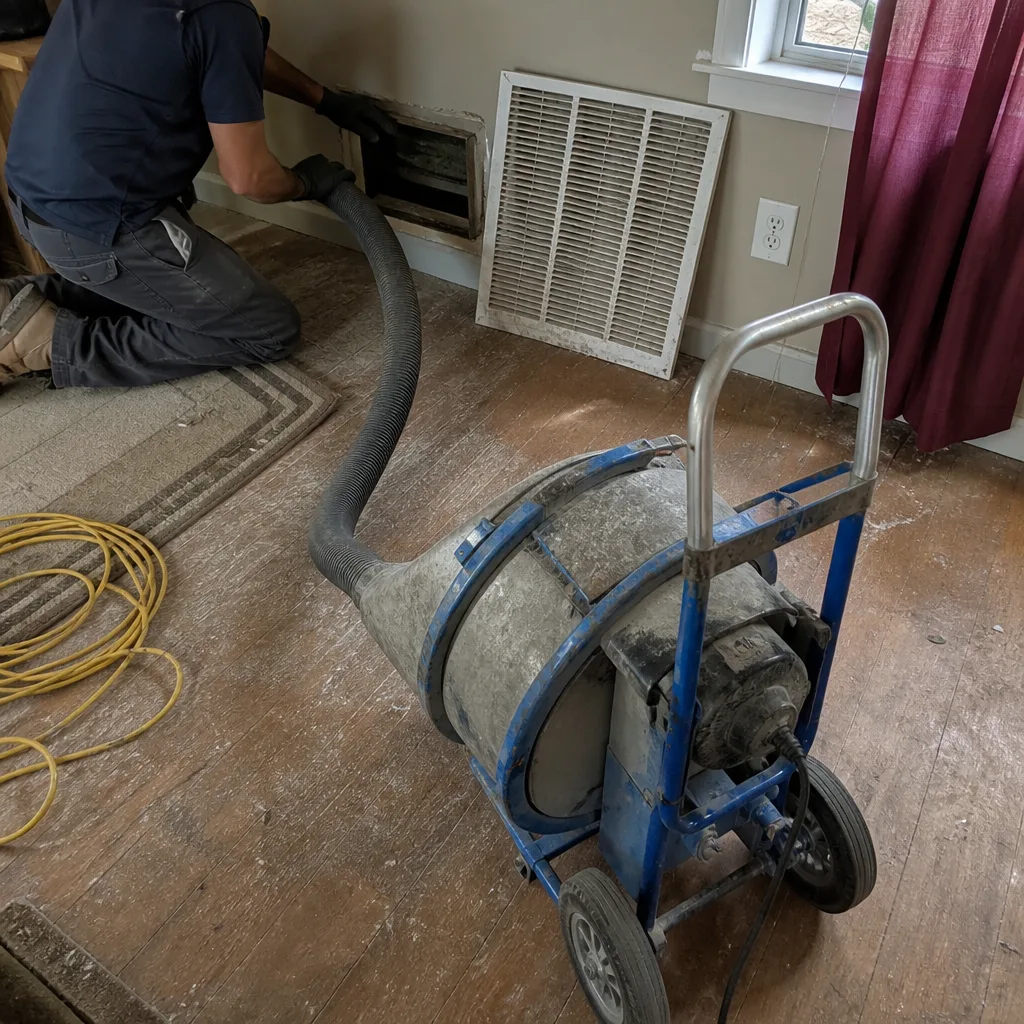
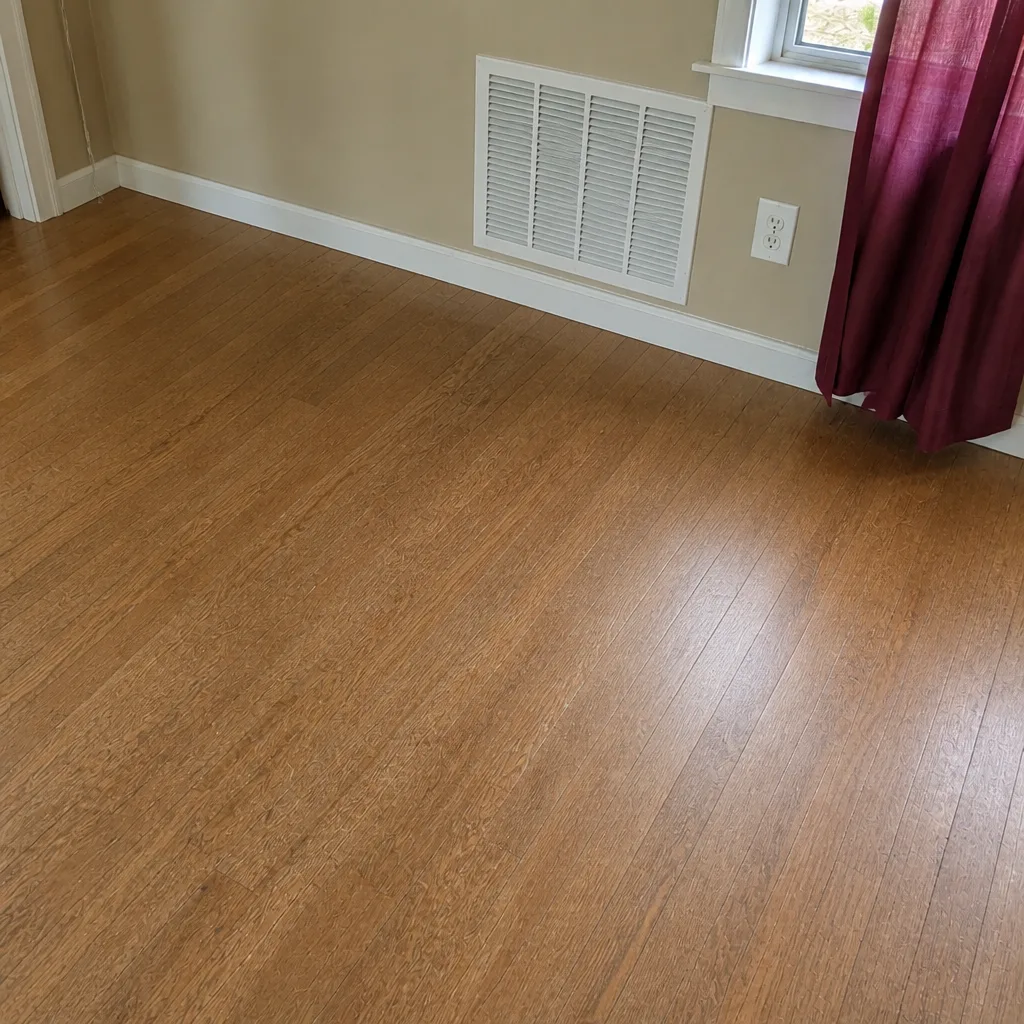
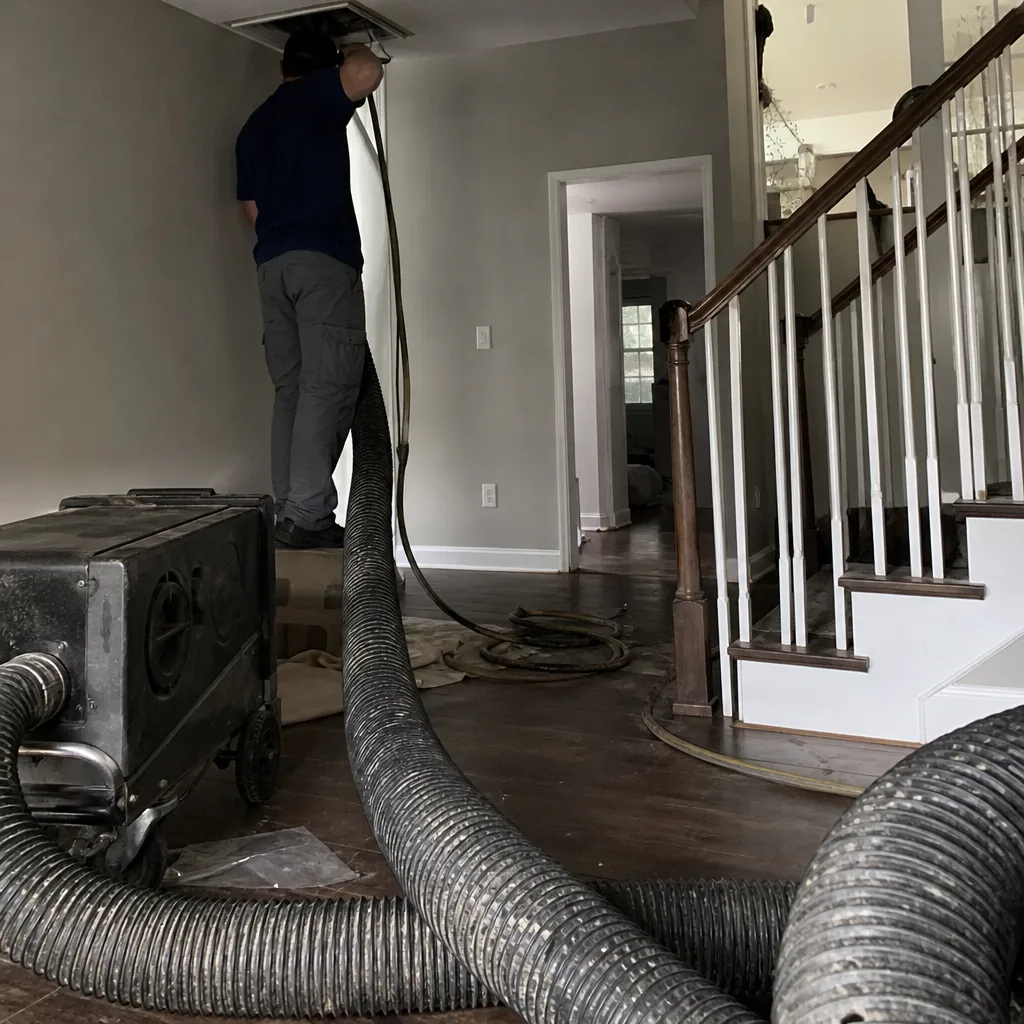
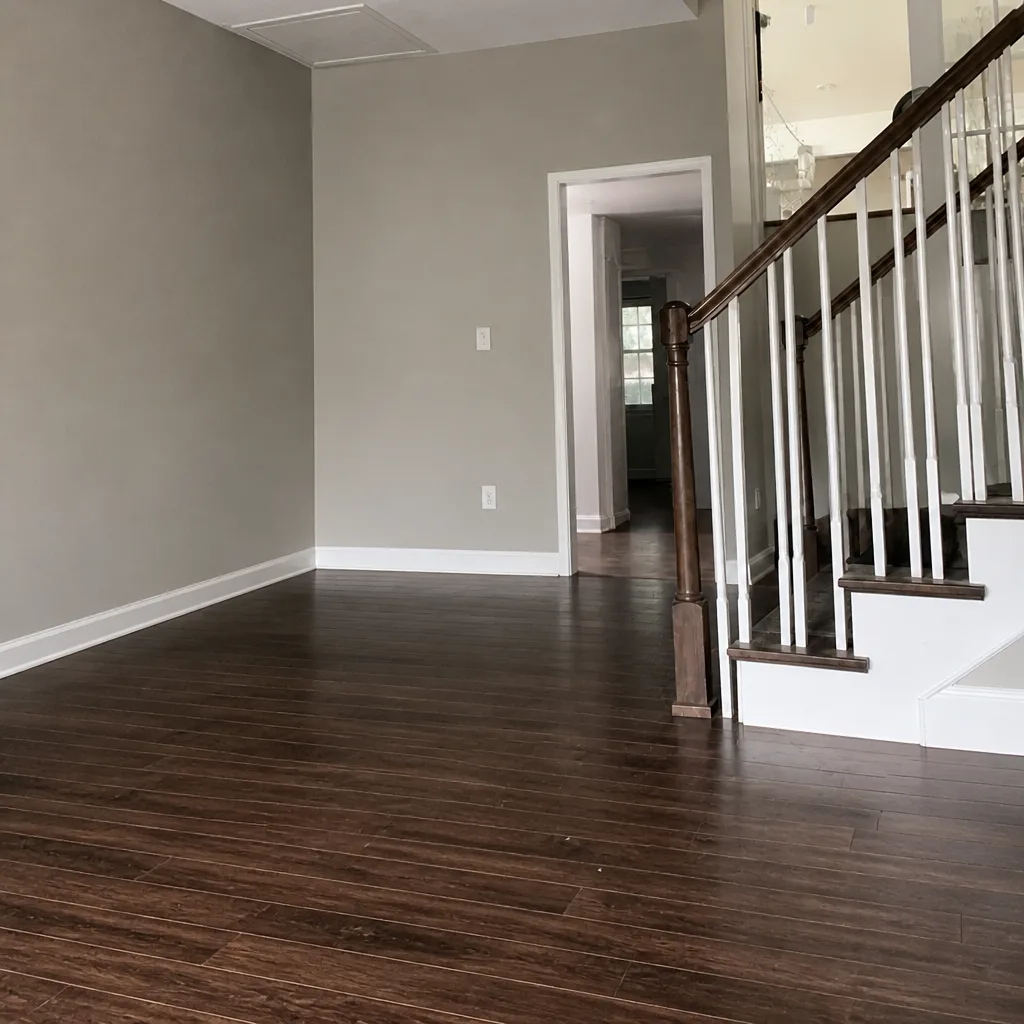
Whole-system duct and dryer vent check with before-and-after photos - you see exactly what came out of your vents
That "$99 whole-house special" is a bait ad - the real number appears once they are in your hallway, or the "clean" is a shop-vac at the register. We photograph the inside of your ducts before and after instead.
Air Duct Cleaning Emergency Preparedness Guide for Durham Homes
Most homeowners in Durham treat their HVAC system as the thing that helps them recover after a storm. That instinct is backward. When a hurricane’s remnants push this far inland and dump a day’s worth of rain on the Triangle, or an ice storm knocks out power for two days and then a hard freeze follows, the duct system usually becomes the first part of the house to take on damage and the last part anyone inspects. Running the air handler to dry the place out can pull air from a flooded crawlspace and move it through every supply register in the house. This guide covers what to do before, during, and after that kind of event so cleaning solves the problem instead of sealing it in.
Quick Answer
Air duct cleaning after a storm or water event in Durham is a decision with a 24 to 72 hour window. If ductwork stayed dry or got wet only briefly from clean rainwater, a thorough professional cleaning using contact agitation and HEPA collection can restore it. If ducts were submerged in floodwater, or sat wet for days in a warm crawlspace, replacement is usually the answer because cleaning can’t remove contamination that has soaked into fibrous duct liner. Calling early and documenting everything before work begins protects both your indoor air and your insurance claim.
Styles & brands we work with
- Whole-home duct cleaning
- Dryer vent cleaning
- Camera inspection
- Sanitizing & deodorizing
Table of Contents
- The post-flood duct protocol: can your system be saved?
- Post-fire and smoke damage: why standard cleaning isn’t enough
- Ice storms, power outages, and the restart you shouldn’t rush
- The 24 to 72 hour decision window after water intrusion
- Documentation for insurance claims that actually holds up
- What commercial-grade equipment changes about the outcome
- Dryer vents in an emergency: the fire risk people miss
- Building a duct emergency kit before you need one
The post-flood duct protocol: can your system be saved?
Whether a flooded duct system can be cleaned or must be replaced comes down to three things: how high the water got, how long it stayed, and what kind of water it was. Water classification matters more than most people realize. Rainwater that wicks into a crawlspace but never pools is a different problem from groundwater that carries soil, silt, and whatever else it picked up on the way. The industry standard for categorizing water damage, IICRC S500, separates clean water, gray water, and contaminated water – and each category sets a different response threshold for porous materials like duct board and duct liner.
Here’s how that plays out in practice for a Durham home:
- Water touched the outside of rigid metal duct only, no intrusion inside: Usually salvageable. The metal dries, the connections get inspected, and interior cleaning addresses anything that migrated through seams.
- Flexible duct or duct board soaked through for more than 24 to 48 hours: Generally replacement, not cleaning. These materials have a porous interior lining that holds moisture and the biological growth that follows.
- Return ducts in a flooded crawlspace contacted standing water at all: Treat as contaminated. That air gets drawn back into the return side and pushed through the house on the next heating or cooling cycle.
- Submersion from a rising creek or storm drain backup: Replacement across the board. Water at that classification carries things cleaning cannot remove from fibrous material.
If you call us for air duct cleaning in Durham after a water event, the first step is an inspection that answers these questions before any equipment gets unloaded. If the honest answer is that the ductwork needs replacement rather than cleaning, we say so. Cleaning a system that should be replaced does nothing for your air and creates a false sense of security.
Post-fire and smoke damage: why standard cleaning isn’t enough
Smoke doesn’t move through ducts the way a homeowner pictures. Combustion byproducts travel with the heated air that the system pulls in, and they land on the interior surfaces of the ductwork – including the fibrous lining on duct board and insulated flex duct. That lining is the problem. Metal wipes clean. Liner absorbs. A standard vacuum pass over the surface leaves the lining saturated with smoke residue, which keeps emitting odor every time the system runs, for months.
There are three categories of deposit that matter after a fire in a Durham home:
- Dry smoke residue from fast-burning material – lighter, larger particles that settle on surfaces but can be pushed deeper into liner by airflow.
- Wet smoke residue from slow, smoldering fires – sticky, harder to remove, and more likely to coat the lining.
- Protein residue from kitchen fires – nearly invisible, but produces the strongest odor per unit of deposit.
Cleaning after smoke damage calls for sealed containment with negative pressure so displaced particulate is captured at the source, not distributed through the house. That’s where an Abatement Technologies HEPA air scrubber earns its place on the job. Contact agitation on the duct walls loosens deposits that vacuum alone won’t budge. Where the lining has absorbed residue beyond what cleaning can lift, the honest repair is liner replacement or replacement of that duct run. In our experience, a smoke odor that comes back after one cleaning cycle almost always traces to liner that was left in place when it shouldn’t have been.
Ice storms, power outages, and the restart you shouldn’t rush
Durham’s ice storms create a specific kind of duct-system damage that doesn’t get talked about much: freeze-thaw cycling during an extended outage. Here’s how it works. A winter storm knocks out power for a day or two. Condensate in or near the indoor coil freezes. Then power returns and the system starts up, thaws quickly, and puts water into places that were dry when the storm began. Meanwhile, the temperature swings that come with ice storms – above freezing in the afternoon, well below at night – work on disconnected or poorly sealed duct joints, and any small gap that admits outdoor air admits humid air that condenses on cool metal inside.
Before you restart HVAC after an extended outage:
- Look for standing water or ice near the indoor unit and in the crawlspace – especially under the return plenum.
- Inspect accessible duct joints for separation – flex duct that came loose during a wind event or shifted during a freeze-thaw cycle.
- Check the condensate drain and pan – frozen lines crack, and a cracked line leaks into the plenum and the ducts below it.
- Smell the return air before the air handler runs – a musty or damp smell at the return grille is the signal to inspect before restarting.
- Run the fan on low first and listen – rattling or whistling near a joint you can access is worth investigating before the system runs for hours.
If any of these checks turn up moisture inside the duct system, the sequence should be inspect, dry, then clean. Restarting in the wrong order bakes moisture into the lining and gives biological growth a head start. Our technicians have up to 13 years of experience reading exactly these kinds of post-storm conditions, and the answer is often simpler than the homeowner feared.
The 24 to 72 hour decision window after water intrusion
The window between water intrusion and biological amplification in a duct system is short. Mold and other biological growth need moisture, organic material, and warmth – and a North Carolina crawlspace in late summer supplies all three. The first 24 to 72 hours determine whether a duct system can be dried and cleaned or has to be replaced. Acting too slowly is a real problem. Acting too quickly, without inspection, is also a problem, because it hides the source.
Here’s how the window usually breaks down:
- Hours 0 to 24: Stop the source, cut power to the HVAC system if water is anywhere near the air handler or return plenum, and take photos before touching anything. Document water levels at the ductwork with a tape measure or a visible reference.
- Hours 24 to 48: Get eyes on the ductwork. If flexible or duct board material was wet, that’s the decision point. Metal duct that got wet can usually be dried and cleaned. Fibrous material that stayed wet past the first day is a replacement conversation.
- Hours 48 to 72: This is the last reasonable moment to dry and clean a duct system with any chance of preserving it. Past 72 hours in a warm, humid crawlspace, contamination has progressed far enough that cleaning alone can’t deliver a defensible result.
- After 72 hours: Inspect for visible growth on liner and at joints. If found, the affected runs come out. Cleaning the rest of the system is still worthwhile, but only after the compromised sections are removed.
One practical note for Durham: a house that sat closed up with no power in late summer is a different scenario from the same house in February. Heat and humidity accelerate everything. If your event happened during the warmer months, treat the faster end of that timeline as the real deadline.
Documentation for insurance claims that actually holds up
Insurance carriers don’t argue with photographic evidence and measurements. They argue with claims that rely on a homeowner’s description of what happened. The documentation that holds up starts before anyone touches the ductwork and continues through the work itself.
What to capture before any cleaning begins:
- Wide shots and close shots of the water line on the ductwork, with a ruler or reference object in frame.
- Photos of the water source – the flooded crawlspace, the backed-up drain, the storm-damaged roof above the affected area.
- Moisture readings from affected duct runs and surrounding materials, with dates.
- The condition of the duct interior itself – this is where the equipment gap shows up. A shop vac can’t provide before-and-after photographic evidence of the duct interior because it doesn’t have the lights, cameras, or contact-cleaning tools to see inside the run.
A commercial duct cleaning setup with Rotobrush contact agitation and Nikro industrial vacuum collection produces documented before-and-after footage of each run, measured airflow readings when relevant, and photographic records that a claims adjuster can work from. That’s the difference between “the duct cleaner said it was bad” and “here is the duct interior at three intervals, with dates, showing exactly what condition it was in.” In our experience, well-documented duct restoration work moves through the claims process far more smoothly than a shop-vac invoice with no interior evidence attached.
What commercial-grade equipment changes about the outcome
Every duct cleaning company says it uses professional equipment. What that means varies widely. A shop vac with a long hose is not commercial duct cleaning equipment, and a portable unit rebranded to look like one still doesn’t have the airflow or the containment to do the job after a water event. Commercial gear, by contrast, is what makes the difference between removing contamination and redistributing it.
Here’s what the equipment actually does on a post-event job:
- Rotobrush contact-cleaning systems drive a rotary brush through the duct run to agitate deposits off the duct walls while vacuum collection pulls them out. Vacuum alone leaves material stuck to the walls. Contact is what lifts it.
- Nikro industrial vacuums provide the airflow and the collection capacity to keep up with agitation across the whole system, not just the accessible sections.
- Abatement Technologies HEPA air filtration runs in the work area to capture particulate that agitation displaces, so it doesn’t end up back in the air you’re breathing while the job is underway.
- Guardsman-grade protective treatment extends the value of the visit past the day of cleaning. It’s an option on many jobs and a reasonable one after an event that stressed the system.
We also supply and install Honeywell and Aprilaire indoor air quality products. That matters after an event because cleaning restores the system, but filtration upgrades in front of and around the air handler determine how quickly the air quality actually improves afterward. Cleaning solves the emergency. Filtration prevents the next one from landing as hard. When we quote air duct cleaning in Durham after a storm event, the conversation often includes both.
Dryer vents in an emergency: the fire risk people miss
A dryer vent isn’t a maintenance item – it’s a fire-prevention item. That framing matters more after a storm, not less, because lint that built up in the vent before the event is still there, and any water intrusion or moisture that got into the vent run makes clogs worse, not better. Clogged dryer vents are one of the leading causes of residential house fires, and the added lint load from a storm-disrupted laundry cycle doesn’t do the homeowner any favors.
After a water event or an extended outage, it’s worth checking the outdoor vent flapper and the full run from dryer to exterior. If the vent was flooded or got wet from a roof leak, the run needs to be cleared and dried, and any lint blockages removed. Lint that dried after getting wet becomes a harder, denser block that lint traps catch less easily. Routine dryer vent cleaning is the right response, and it’s a safety service in exactly these moments, not a convenience add-on.
One more thing worth flagging: duct repair and dryer vent clearing are both services we run in the same visit as cleaning. A vent run that came loose during a storm or a duct joint that separated during a freeze-thaw cycle doesn’t need a second contractor scheduled – it needs a technician with the right tools on site. That’s the “we found it, we fix it” approach, and it saves a homeowner a second mobilization after an event when time and mental bandwidth are both short.
Building a duct emergency kit before you need one
Preparedness for duct emergencies isn’t about buying gear. It’s about knowing where the shutoffs are and what to photograph. A small amount of preparation before the next storm makes the difference between a well-documented, well-timed response and a frantic scramble after.
What to have ready in a Durham home:
- Locate and label the HVAC disconnect – the switch or breaker that cuts power to the air handler and outdoor condenser. Know where it is before you need it.
- Photograph the duct system now, in dry condition – accessible ducts, return plenums, and the air handler. These baseline photos are gold when you’re filing a claim and need to show “before.”
- Note the crawlspace access point and any low-lying vents – these are the first places water shows up.
- Keep a moisture meter in the house. They’re inexpensive and give you numbers a claims adjuster can work with.
- Write down the duct cleaning company’s number you’d actually call – the one who answers, dispatches on a schedule, and has commercial equipment, not just a truck and a shop vac.
We answer 24/7 for Durham homeowners, and we dispatch Sunday through Friday, 7am to 7pm. If a storm hits on a Saturday, call and we’ll book you into the next opening on Sunday. What matters most is that the call becomes a real dispatch with a clear next step, not a voicemail that disappears.
Common Mistakes to Avoid
- Running the HVAC to “dry the house out” before inspecting the ductwork. If the return ducts are in a flooded crawlspace, every minute of runtime is pulling contaminated air through the house. Shut the system down first.
- Cleaning wet fibrous duct instead of replacing it. Flexible duct and duct board with soaked internal liner can’t be cleaned back to safe condition. Cleaning hides the problem until the next humid stretch, then the smell returns.
- Waiting past 72 hours in summer. A Durham crawlspace in July is a warm, humid environment. Every day past 72 hours drops the odds that cleaning alone will save the system.
- Skipping documentation before cleanup starts. Carpet and drywall get photographed automatically. Ductwork often doesn’t. Take the baseline photos before the cleanup crew arrives.
- Booking the cheapest quote after an event. A low bid usually means a shop vac and no containment. That’s how displaced contamination ends up redistributed through the home rather than removed from it.
- Overlooking the dryer vent after a storm. Water intrusion into a vent run combines with pre-existing lint to create a denser blockage than the homeowner expects. Check it as part of any post-storm inspection.
- Delaying the repair on a duct joint that came loose. A separated joint doesn’t just leak air – it admits humid outdoor air and depressurizes the system. Fix it in the same visit as cleaning.
See the difference
 Before
 After
 Before
 After
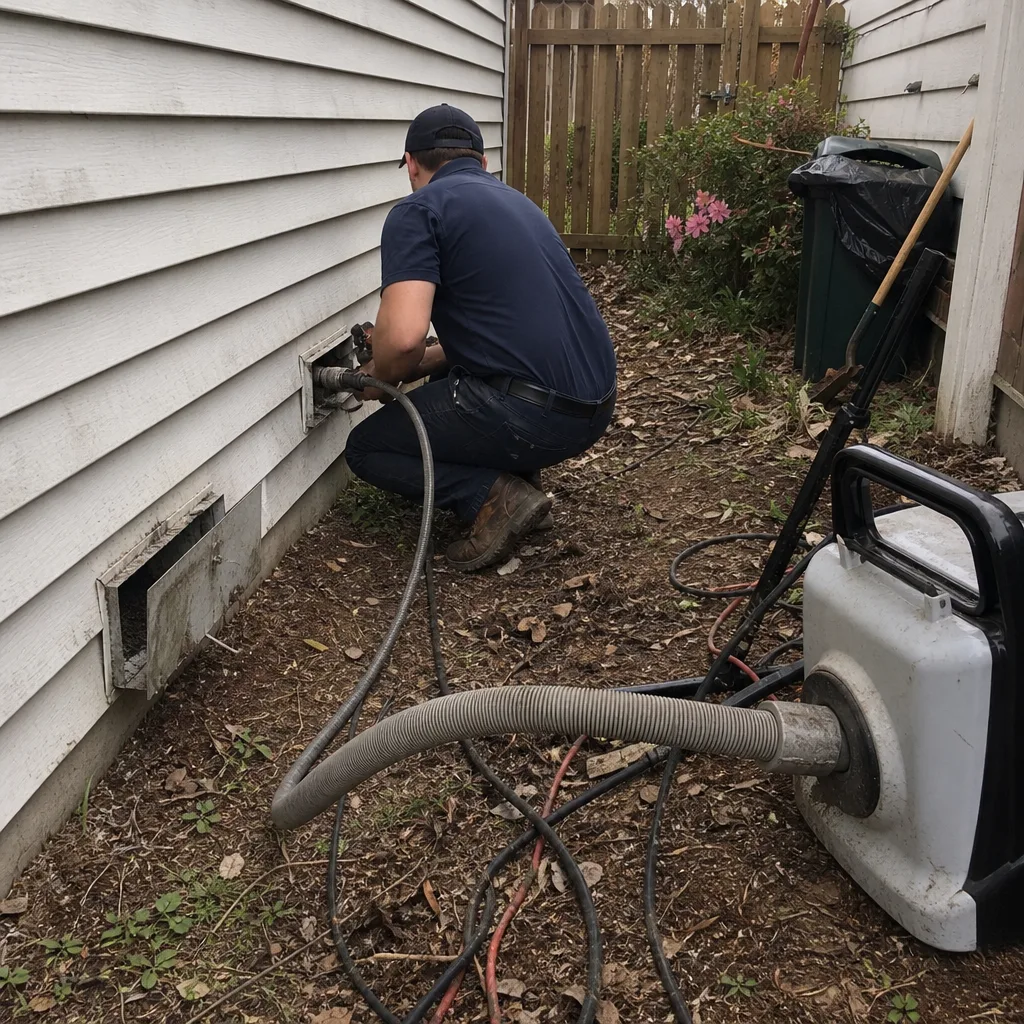 Before
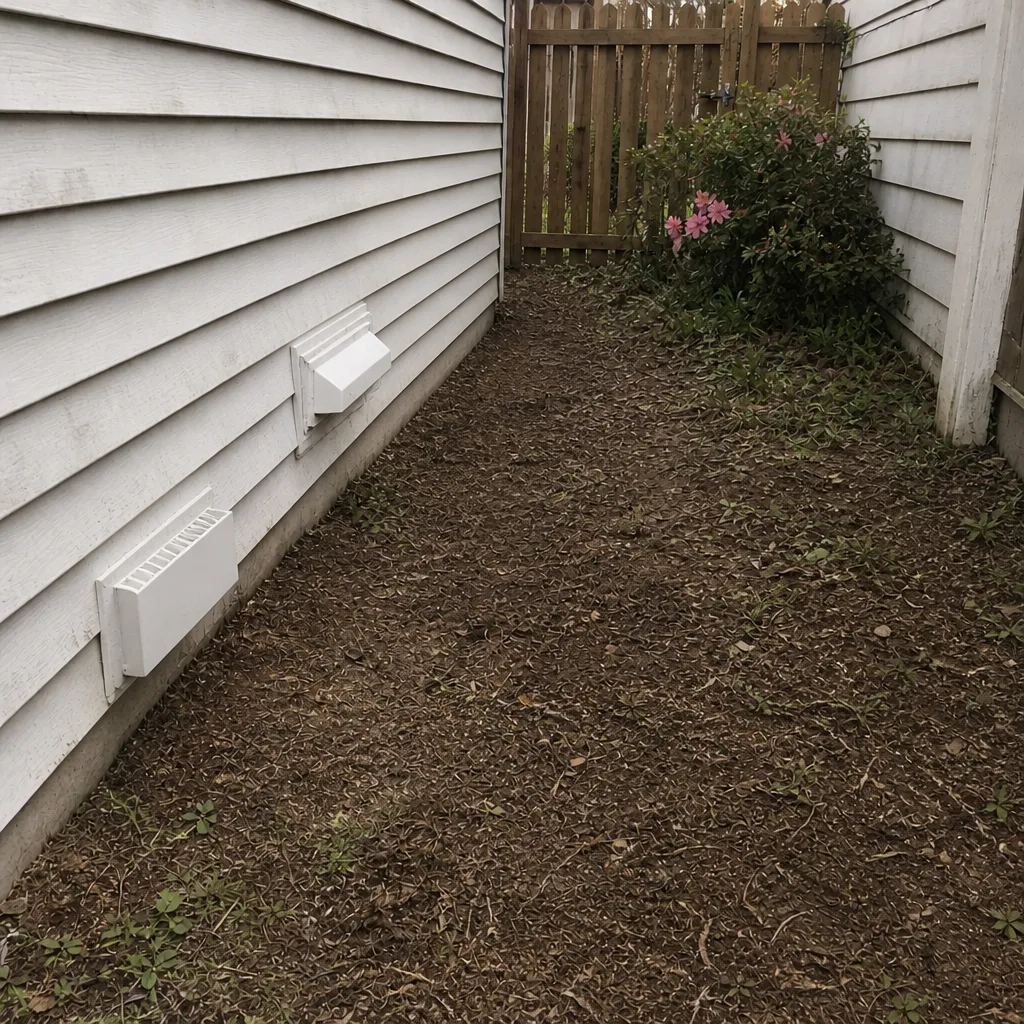 After
When to Call a Professional
Call a professional duct service after any of these events: water reached the ductwork, the crawlspace flooded, a fire produced smoke in the home, the power was out long enough to freeze condensate lines, or a duct joint visibly separated during a storm. Also call if you smell damp or musty air at a return grille, or if the system was running during the event and you’re unsure whether the ducts pulled in contaminated air. These are inspection-required situations, not wait-and-see situations.
Duct Cleaning Durham offers free estimates in Durham – call (866) 486-6152. We answer 24/7. Fast dispatch from 7am to 7pm, Sunday through Friday. The estimate is free, and we set one flat price per system in writing before any work begins – no per-vent pricing, no bait-and-switch coupon. If the honest answer is that your ductwork needs replacement rather than cleaning, you’ll hear that from us before any equipment comes off the van. For the broader service picture, our duct cleaning Durham page covers the full range of what we handle.
Frequently Asked Questions
Post-event duct cleaning in Durham varies because the scope depends on how much water reached the system and how many runs need attention. We quote one flat price per system in writing before work starts, so you’re not exposed to per-vent charges or surprise add-ons after the technician is inside. The written estimate sets the final price. Call (866) 486-6152 for an exact quote – estimates are free.
Some flooded duct systems can be cleaned, and some cannot. Rigid metal duct that got wet typically dries and cleans back to safe condition. Flexible duct or duct board that sat soaked for more than a day in a warm environment usually needs replacement because the internal liner holds contamination past what cleaning can remove. An on-site inspection is the only way to know which case you have. Call (866) 486-6152 to schedule that inspection – it’s part of the free estimate.
Call within 24 hours. The decision window after water intrusion is 24 to 72 hours before biological growth in a warm, humid crawlspace starts to make cleaning impractical. The earlier the inspection happens, the more options you have. We answer 24/7, and we dispatch for inspection Sunday through Friday, 7am to 7pm.
Cheap quotes almost always reflect lighter equipment, no containment, and no photographic documentation of the work. A shop vac and a hose cannot lift deposits that are stuck to duct walls, and without HEPA collection in the work area, displaced contamination ends up back in the air. Commercial equipment – Rotobrush contact agitation, Nikro industrial vacuum, Abatement Technologies HEPA filtration – is what separates a real post-event cleaning from a surface pass. Call (866) 486-6152 and we’ll walk you through exactly which equipment we bring and why.
Ask for before-and-after photos of the duct interior for each run that was cleaned. That’s the standard we work to, because commercial equipment includes the cameras and lights to see inside the run, document what was there, and show what’s there after. If a company can’t produce that evidence, the work is hard to verify. Call (866) 486-6152 to schedule a documented cleaning – estimates are free.
For most homes, professional cleaning every few years is reasonable, and it’s worth doing any time after a water event, smoke event, remodel, or long outage. Durham’s humid summers and storm season mean ducts here see more moisture load than in a drier climate, so post-event inspections matter even when routine cleaning is on schedule. If you’re unsure, an inspection settles it – call (866) 486-6152 for a free estimate.
The Bottom Line
The worst post-storm duct outcome in Durham is the one that happens by default: the homeowner runs the system to dry the house out, and the air handler pulls contamination from a flooded crawlspace into every room. The second worst is cleaning a system that should have been replaced, which locks contamination in place. Inspect before restarting. Document before cleaning. Distinguish between metal duct that can be restored and fibrous duct that should be replaced. The 24 to 72 hour window is real, and it doesn’t wait for a convenient day. Commercial-grade equipment with real containment and documented before-and-after evidence is the difference between a cleaning that solves the problem and one that just moves it around.
When the next storm hits and you’re not sure what you’re looking at, call (866) 486-6152 for a free estimate. We answer 24/7. Fast dispatch from 7am to 7pm, Sunday through Friday.
Written by the team at Duct Cleaning Durham.