
Last updated November 15, 2026
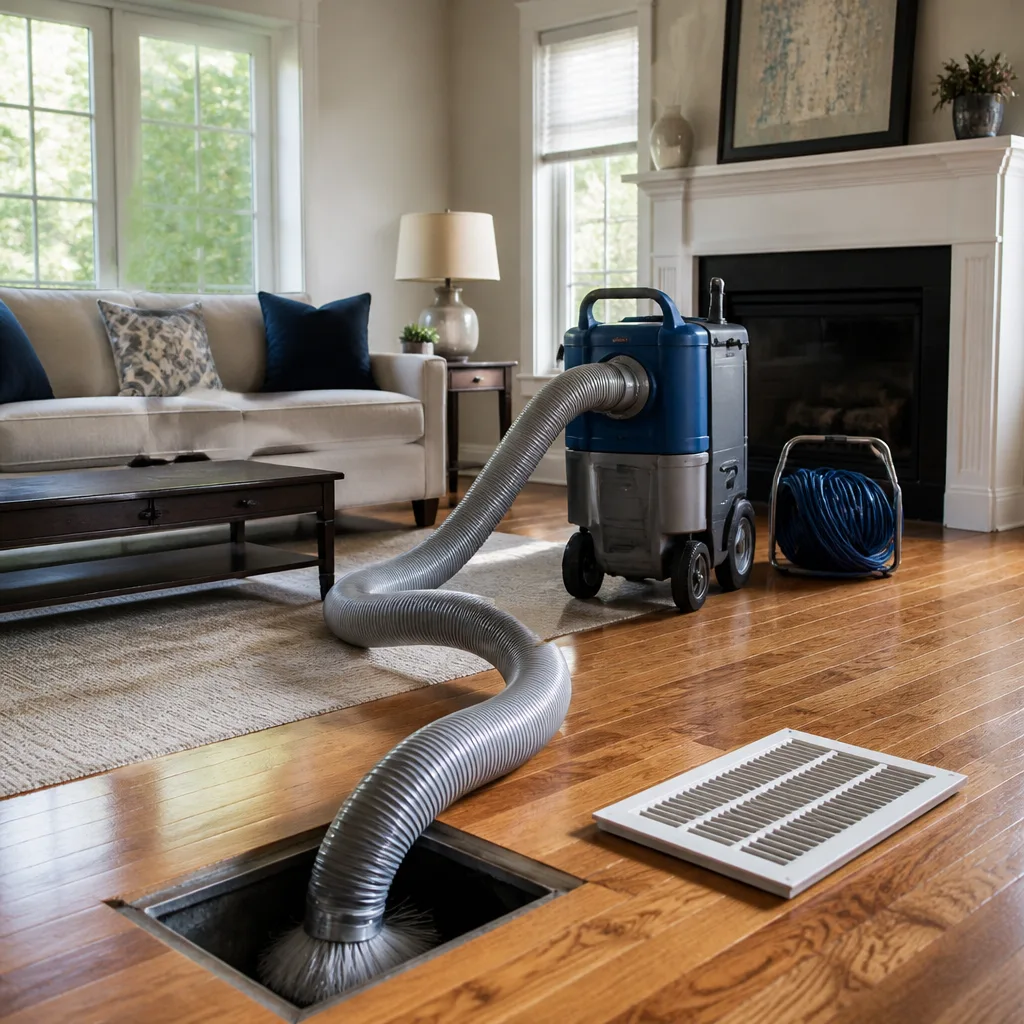 Whole-home duct cleaning
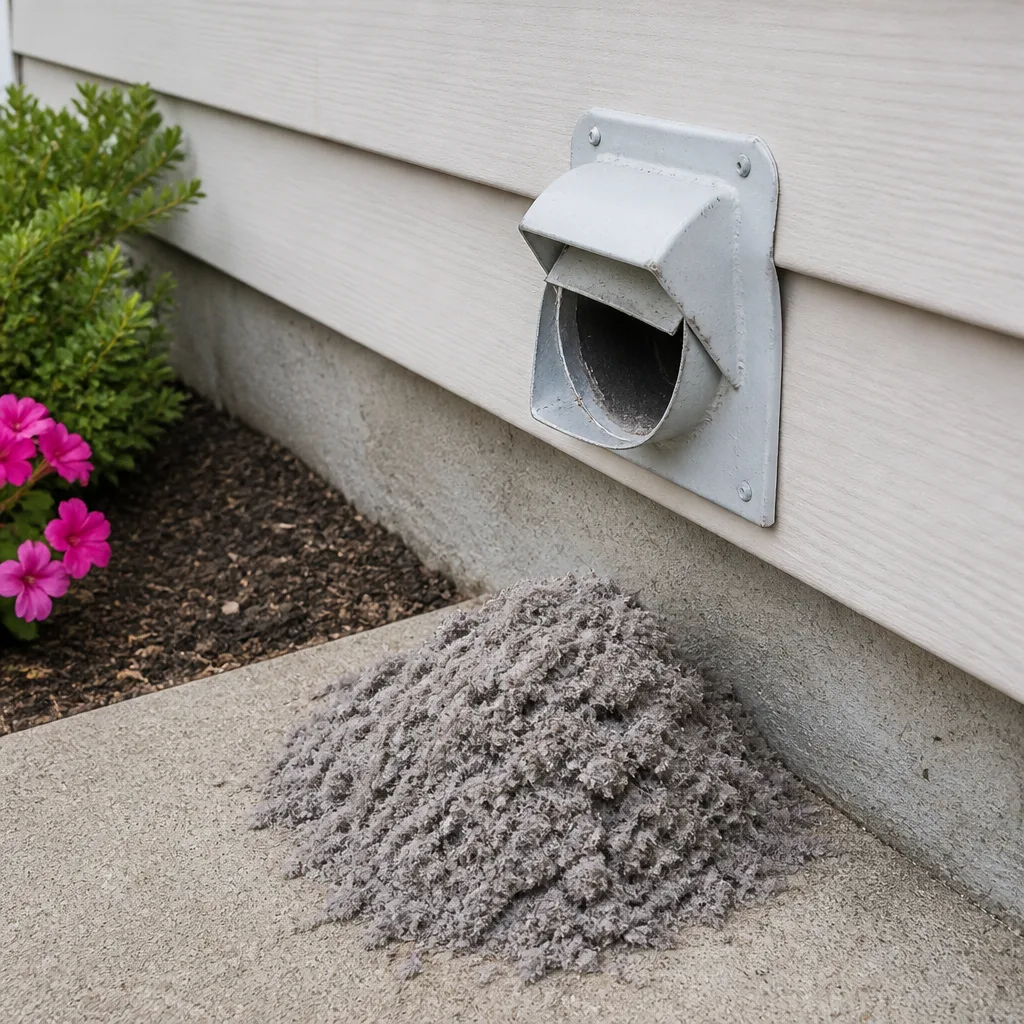 Dryer vent cleaning
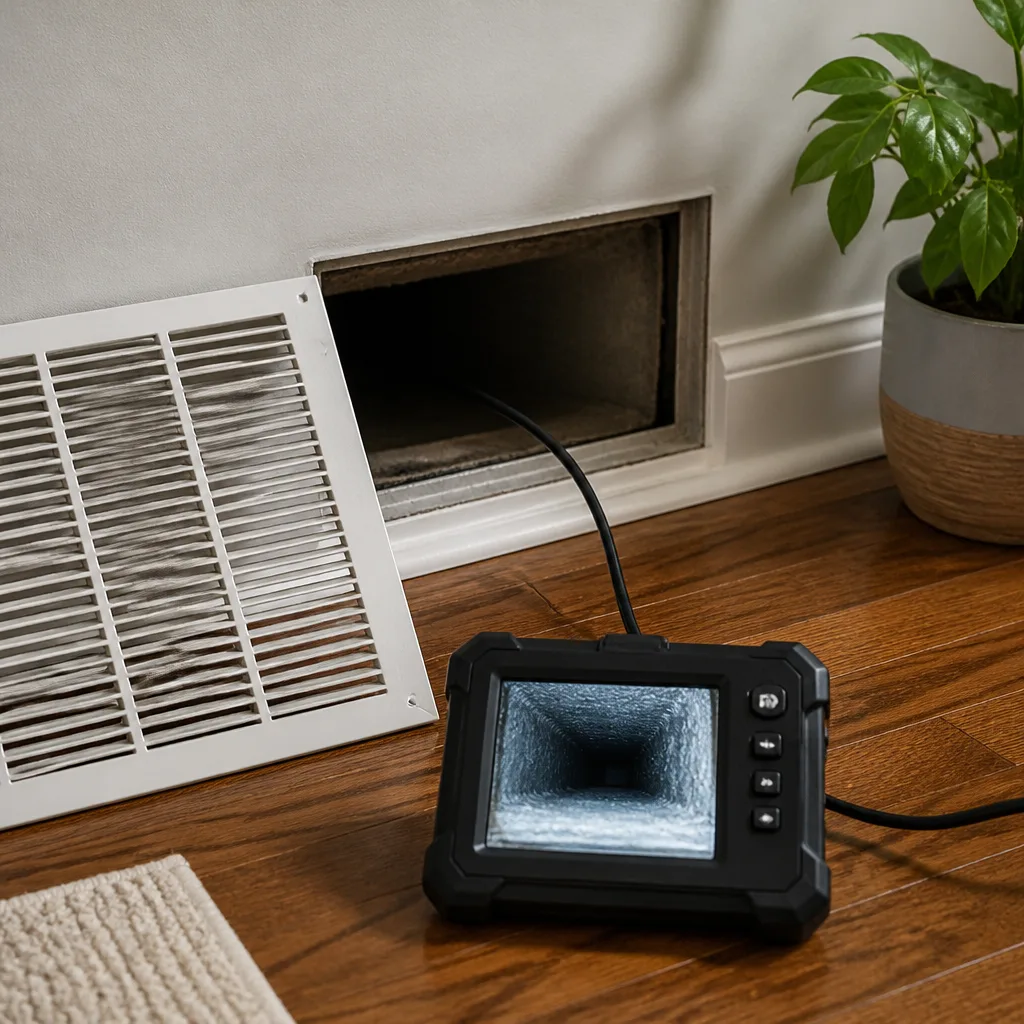 Camera inspection
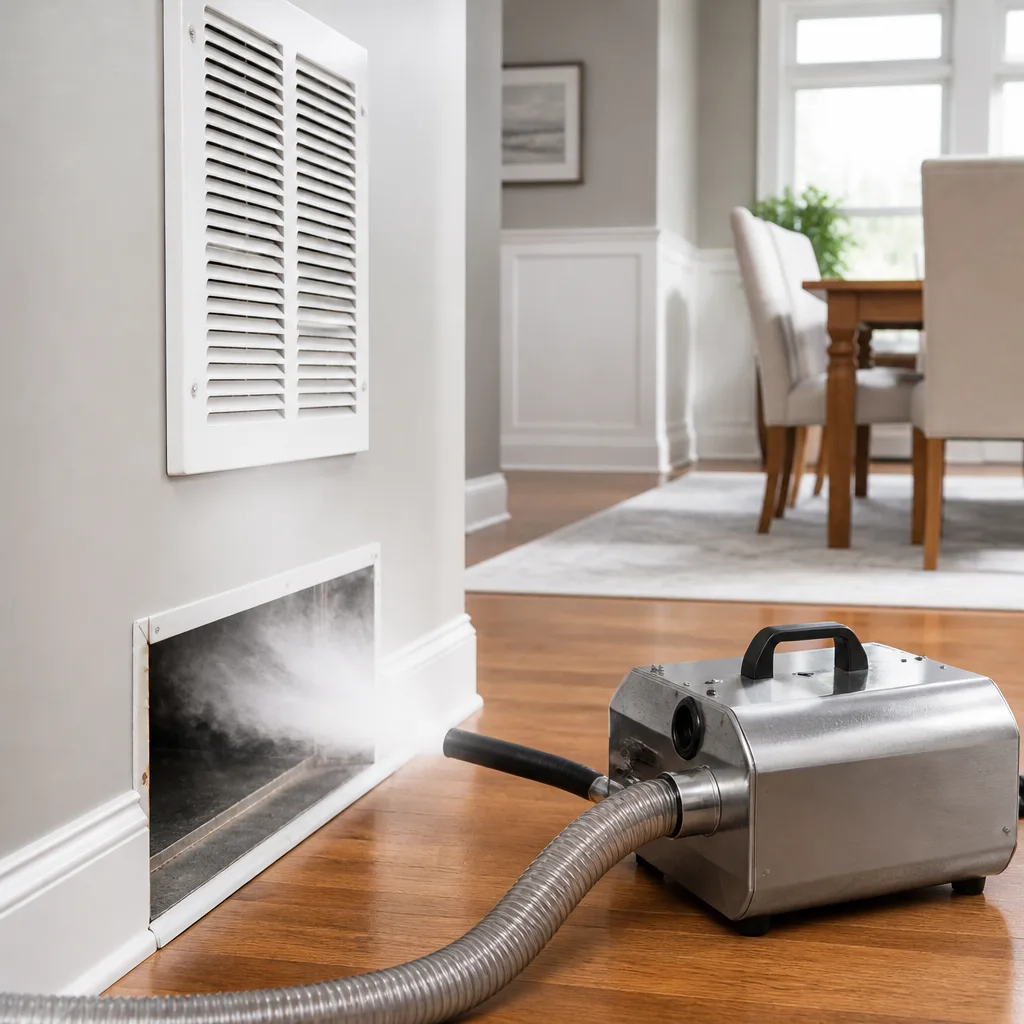 Sanitizing & deodorizing
Whole-system duct and dryer vent check with before-and-after photos - you see exactly what came out of your vents
That "$99 whole-house special" is a bait ad - the real number appears once they are in your hallway, or the "clean" is a shop-vac at the register. We photograph the inside of your ducts before and after instead.
DIY vs Professional Air Duct Cleaning: The Durham Homeowner’s Decision Guide
Most homeowners treat DIY duct cleaning as a safety question. It isn’t. Nothing about pushing a brush through a register is likely to hurt you. The real limit is mechanical, and it’s specific: a homeowner with a vacuum, a dryer vent brush, and a borescope camera can legitimately maintain accessible register areas and short duct runs. What that setup cannot do is create the negative pressure differential required to actually transport dislodged debris out of the duct system. Agitation without collection moves contamination around. This guide draws the line between maintenance and a professional job in technical terms, written from Durham.
Quick Answer
DIY air duct cleaning is appropriate for register faces, accessible flex duct inspection, filter changes, and dryer vents on short straight runs. It is not appropriate for any job that requires dislodging debris deeper in the system, because a household vacuum can’t hold enough negative pressure at a sealed collection point to capture what the brush frees. In Durham, professional cleaning every 3 to 5 years fits most homes; biological growth, post-water-intrusion ductwork, pest evidence, and post-renovation debris require a technician regardless of homeowner skill.
Styles & brands we work with
- Whole-home duct cleaning
- Dryer vent cleaning
- Camera inspection
- Sanitizing & deodorizing
Table of Contents
- The Physics Problem With DIY Duct Cleaning
- What You Can Legitimately Do Yourself
- The Four Conditions That Make DIY Inappropriate
- Tool Reality Check: Consumer Kits vs Commercial Systems
- How Often Ducts Really Need Cleaning in Durham
- The Honest Middle Ground
- Common Mistakes to Avoid
- When to Call a Professional
The Physics Problem With DIY Duct Cleaning
Air duct cleaning isn’t really about scrubbing. It’s about transporting. Debris that gets loosened from a duct wall and then resettles somewhere else in the system has not been cleaned, it has been relocated. Sometimes it relocates into the supply air and ends up on your furniture, your furnace filter, or your lungs.
The mechanism that prevents this is negative pressure. A proper cleaning holds the duct system under vacuum at a sealed collection point, so any particulate the agitation frees gets pulled toward the collection point and trapped instead of drifting into the living space. In our work with commercial systems, that target is roughly 2,000 CFM flowing toward the collection point. Household shop vacs move a fraction of that, and they don’t hold it because they can’t seal to the trunk line in a way that maintains a pressure differential across the whole run.
Picture the outcome. A homeowner removes a register cover, feeds a brush whip down the branch line, and spins it. The brush absolutely breaks debris loose. Without that pressure differential pulling toward a sealed collection point, though, the loosened material can just as easily travel into the nearest open register as into the vacuum hose, which is often only connected at one end and leaking everywhere else.
This is the specific reason DIY duct cleaning can be counterproductive without being dangerous. It’s not that homeowner effort is worthless. It’s that the effort is happening in the wrong half of the process. Agitation without collection is an incomplete job that sometimes leaves the system dirtier in the immediate term than it was before you started.
Why Pressure Differential Matters More Than Brush Choice
Homeowners usually fixate on the brush, and the brush does matter (more on that below). But the pressure differential is the load-bearing part of the job. You can run an aggressive brush through a duct and still fail to clean it if the vacuum side of the equation is weak or unsealed. You can also clean a duct reasonably well with a gentler contact tool if the collection side is strong and well-sealed. The collection side is what most consumer kits get wrong.
What “Sealed Collection Point” Actually Means
A sealed collection point is a connection where the vacuum attaches to the duct system with gaskets or tape, so no air leaks in around the hose. This matters because a leaky connection kills the pressure differential. If you’re pulling 500 CFM through a hose that leaks 300 CFM at the collar, you’re not moving 500 CFM through the duct. You’re moving 200 CFM through the duct and 300 CFM through the leak. Consumer kits treat the connection as an afterthought. Commercial systems treat it as the whole point.
What You Can Legitimately Do Yourself
Plenty of maintenance belongs in homeowner hands. Doing these things well makes your professional cleaning last longer and keeps the system closer to spec between visits.
1. Register Face Cleaning
Take the covers off, wash them in the sink or tub with mild soap, dry them fully, and reinstall. This is the single most visible thing you can do and it is entirely safe. Do this seasonally, or whenever the covers look dusty from the room side.
2. Filter Replacement With Correct MERV
Change the filter on the schedule the filter manufacturer prints on the frame, not the schedule a salesperson suggested. Match the MERV rating to what your HVAC manufacturer specifies. A filter that’s too restrictive for your air handler can reduce airflow enough to frost the coil or overheat the blower, so “higher MERV is better” is not a safe rule. If you don’t know the spec, check the manual or call a technician before upgrading.
3. Borescope Visual Inspection
An inexpensive USB borescope that feeds through a register and connects to a phone is a legitimate diagnostic tool. It lets you see accumulation, moisture staining, or physical damage on accessible flex runs. Look, don’t touch. If you see something alarming through the scope, that’s information for a professional, not a signal to start poking.
4. Dryer Vent Cleaning on Short Straight Runs
If your dryer vent is short (under 15 feet), straight, runs to an exterior wall, and has no hidden elbows or crushed sections, a homeowner can reasonably clean it with a dryer vent brush kit. Detach the dryer, feed the brush through from the outside, and confirm the vent flap opens freely when the dryer runs. Anything longer, anything with multiple elbows, and anything that runs through a wall cavity is a professional job. Dryer vent cleaning is a fire-prevention service, not a convenience, and crushed or clogged vents are a leading cause of house fires. See our dryer vent cleaning page for how the professional version differs.
5. Supply Register Vacuuming Between Cleanings
A brush attachment on a household vacuum at each supply register, run for 15 seconds, lifts loose dust off the visible throat of the register. This does nothing for the ducts behind the register, and that’s fine. It’s a maintenance action, not a cleaning.
The Four Conditions That Make DIY Inappropriate
These are the situations where the answer is not “use better tools.” It’s “don’t touch it.” In every one of them, contamination is active, and the mechanism of containment matters more than the mechanism of removal.
1. Visible Biological Growth
If you see staining, discoloration, or a musty smell coming from a register, the ductwork likely has active biological growth. That’s a job for a technician with HEPA-class filtration and the ability to contain the work area. Running a homeowner brush through it would aerosolize spores that were previously sitting in place, which is a bad trade. The scope of professional service here is cleaning and drying, and it depends on resolving the moisture source first. If you have active growth, that’s a job for a specialist, and it starts with figuring out where the water is coming from.
2. Post-Water-Intrusion Ductwork
Ductwork that took on water from a roof leak, a burst pipe, or a flooded crawlspace needs careful attention because the interior is a moisture-trapping shape. In Durham’s humid summers, duct interiors that have been wet can stay damp long enough to become a growth problem. Ductwork that has been wet needs inspection, drying verification, and in some cases replacement of the affected section. Cleaning alone won’t fix a duct that’s still getting wet.
3. Rodent or Pest Evidence
Droppings, nesting material, or gnaw marks inside a duct system are a health concern as well as a physical one, and they require containment during removal. A homeowner with a shop vac and no HEPA filter will aerosolize whatever is in there. Professional service with Abatement Technologies air scrubbing on-site captures displaced particulate in the work area instead of redistributing it into the home. Rodent issues also usually mean a duct damage inspection, since gnawing sometimes breaches the duct wall.
4. Post-Renovation Debris
Drywall dust, sawdust, and construction debris settle into ducts during renovation, and drywall dust in particular can cake onto interior surfaces in a way that household vacuuming won’t address. If your home was renovated while the HVAC was running (even occasionally), you likely have construction dust in the system. That’s a professional cleaning, and it should include sealing the registers first to keep dust from blowing during the work.
Tool Reality Check: Consumer Kits vs Commercial Systems
The consumer duct cleaning market sells kits that look like professional equipment. They are not. The gap isn’t cosmetic and it isn’t a matter of marketing. It’s measurable in three categories: airflow, brush rotation, and contact pressure.
Airflow: The Primary Gap
A typical shop vac in a household configuration moves well under 200 CFM through a hose, and the number drops further as the hose length increases and the connection to the duct is unsealed. A commercial-grade Nikro industrial vacuum running through a sealed collection point can hold the 2,000 CFM target across a residential system. Those numbers describe completely different tasks. One is suction. The other is negative pressure across the whole duct.
Brush Rotation and Contact Cleaning
Consumer brushes attach to a cordless drill and spin at whatever the drill spins at, with a fixed-length whip that binds in elbows. A Rotobrush contact-cleaning system is engineered for duct work specifically: a controlled rotation speed, a flexible whip that follows elbows, and a head designed to make consistent contact pressure against the duct wall as it travels. Consistent contact is what actually scours the surface. Inconsistent contact just moves dust.
Containment
When the agitation frees particulate, some of it goes into the vacuum and some of it becomes airborne in the work area. On a professional job, Abatement Technologies air filtration runs the whole time, capturing what escapes so the contaminants are pulled from the ducts and captured, not redistributed into the home. Consumer kits have no equivalent, which is why a homeowner cleaning session often produces more dust in the room than a professional visit does.
Summary Comparison
- Airflow: Consumer shop vac under 200 CFM target vs commercial Nikro system holding roughly 2,000 CFM at a sealed collection point.
- Brush: Cordless drill with a fixed whip vs a Rotobrush contact-cleaning system with controlled rotation and flexible whip.
- Containment: None vs Abatement Technologies air scrubbing on every job.
- Repair capability: None vs on-site duct repair when cleaning reveals damage.
- Disposal: Household trash vs proper collection and disposal of the debris pulled.
How Often Ducts Really Need Cleaning in Durham
Every 3 to 5 years covers most Durham homes, and that range is a schedule, not a sales pitch. What moves you toward the near end of the window is what’s happening in the house, not the calendar.
What Moves Durham Homes Toward the Short End
- Pets and allergic occupants. Fur and dander accumulate faster than dust alone, and homes with multiple shedding pets usually land at the tighter end.
- Recent renovation. Construction dust lingers in the system long after the work is finished.
- Humidity. Durham’s damp summers make cooling seasons heavy, and long runtime combined with humid return air drives condensation on duct interiors that see less insulation.
- Return duct configuration. Homes with long return runs or undersized returns pull more particulates through the system per hour of operation.
- Old housing stock. Many Durham homes have duct systems that were built before filtration was engineered to current expectations, which means the return path captures less than it would in newer construction.
What Doesn’t Justify Cleaning
Barely used systems, homes without pets and without recent renovations, and homes with newer construction and properly sealed ducts often go well beyond 5 years without needing anything. A dusty register cover on its own is not a signal. The signal is accumulation inside the duct system, and a borescope look at a representative run will tell you more than a brochure will.
What About Durham’s Older Homes?
Durham has homes from a wide range of build eras, and older homes tend to have duct systems with more connections, more elbows, and more potential leak points. Those joints are where most debris accumulates, and they’re also the joints that most benefit from a professional cleaning pass that can reach around elbows with a flexible whip. If you’re in an older Durham home and you’ve never had the ducts examined, a borescope inspection is a reasonable starting point. For the full service writeup, see air duct cleaning.
The Honest Middle Ground
The DIY versus professional framing is a false binary most of the time. The realistic model is a maintenance partnership, and it works like this.
What Homeowners Do Between Professional Cleanings
- Replace filters on schedule. Match MERV to your equipment spec, not the highest MERV you can find.
- Clean register covers seasonally. Remove, wash, dry, reinstall.
- Vacuum register throats lightly. Brush attachment, 15 seconds each, monthly during heavy use months.
- Inspect the dryer vent after every load in cold weather. If the vent flap is not moving freely or the dryer is taking longer than usual, schedule a professional check.
- Look with a borescope once a year. Photograph what you see so a technician can compare later.
What Technicians Do
- Contain the work area. Abatement Technologies filtration set up before any agitation begins.
- Run the contact clean. Rotobrush system through the branches, sealed to the collection point.
- Pull the system under vacuum. Nikro industrial vacuum maintaining the pressure target.
- Repair what cleaning reveals. Failed seals, disconnected joints, and crushed runs get fixed during the visit, not deferred.
- Photograph before and after. Photos from inside the ducts so you can see exactly what changed.
How Often the Partnership Should Sync Up
Every 3 to 5 years for most Durham homes, with a visit in between if anything changed in the house (renovation, new pet, water intrusion, pest evidence). Add a dryer vent cleaning on a separate schedule if your vent is not one you can safely clean yourself. The two schedules are related but not synchronized; the duct cleaning doesn’t need to happen every time the dryer vent does.
Common Mistakes to Avoid
- Running a shop vac without HEPA filtration into a duct you suspect has biological growth. Household vacuums aerosolize what they pick up and exhaust it back into the room. That’s a contaminant migration problem disguised as a cleaning.
- Buying a consumer kit and mistaking it for commercial equipment. The kit will look like a professional system and will not perform like one. The airflow and containment gaps are larger than the branding suggests.
- Choosing the highest MERV filter available for an older air handler. A filter that restricts airflow can cost you a blower motor. Match MERV to your manufacturer’s spec.
- Cleaning a dryer vent with multiple elbows or a long run and assuming you’ve cleaned the whole thing. A brush that stops at the first elbow has not addressed the sections beyond it, which are usually the sections that clog and overheat.
- Skipping the register-to-register pressure check after a DIY cleaning. If some registers feel weaker after you cleaned, you may have dislodged debris that is now sitting in a joint or bend. That’s a “call a technician” signal, not “try harder.”
- Assuming every quoted price is comparable. Prices quoted for a “cleaning” that turns out to be register vacuuming and a filter change are not the same as a whole-system clean with containment and equipment matched to the job. Ask what equipment they run before you book.
- Cleaning ducts in a home with active water intrusion. Fix the leak first. Cleaning a wet duct is a waste of money.
When to Call a Professional
Call a professional, without attempting DIY first, when you have visible biological growth, ductwork that has taken on water, rodent or pest evidence, or construction debris from a recent renovation. Also call when a dryer vent has more than one elbow, runs over 15 feet, or has a history of lint buildup. In a home without any of those conditions, a professional cleaning every 3 to 5 years plus a pre-purchase borescope inspection for any home you’re buying is a reasonable baseline. If you’re deciding whether now is the time, a look through the system settles the question quickly. If you’re in any of the Durham neighborhoods where duct systems are original to the house, a professional look is even more useful, since original systems are where damage gets found. Duct Cleaning Durham offers free estimates in Durham. Call (866) 486-6152. We answer 24/7. Fast dispatch from 7am to 7pm, Sunday through Friday.
See the difference
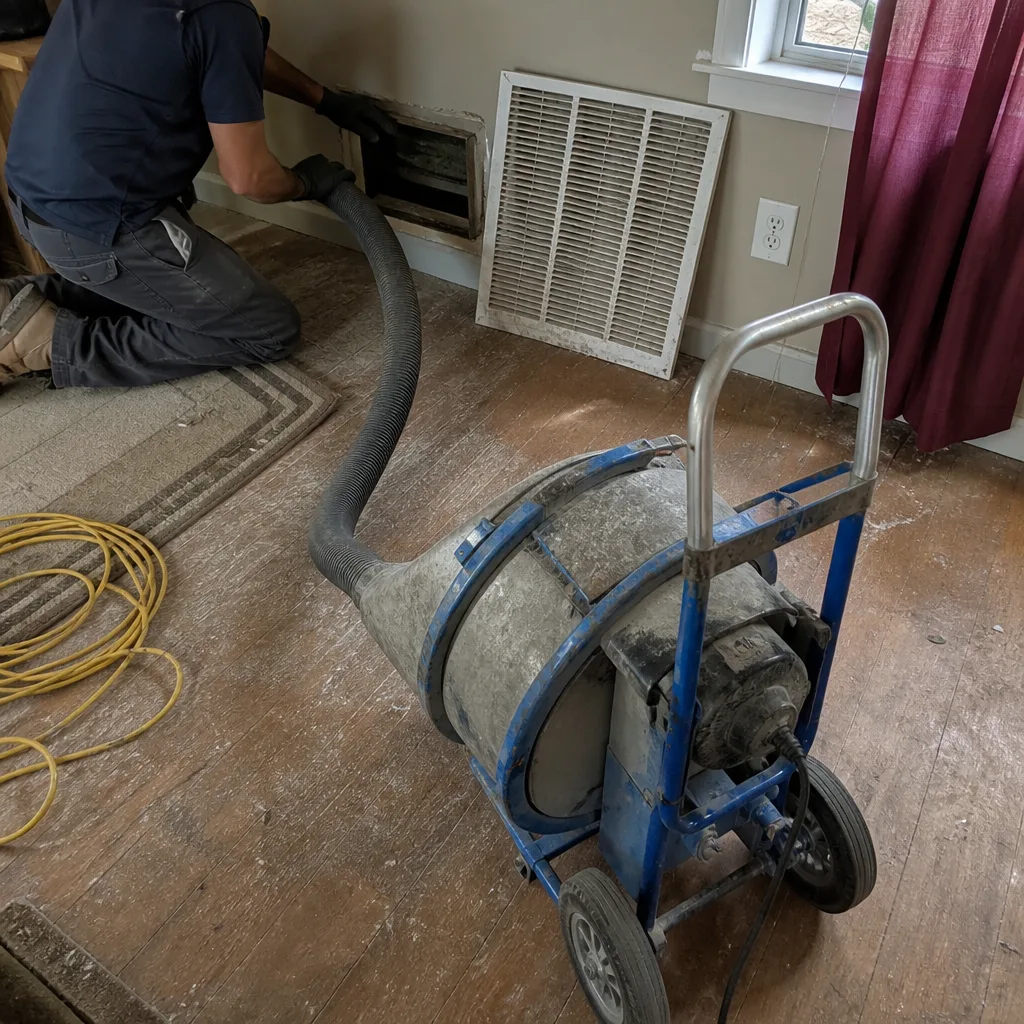 Before
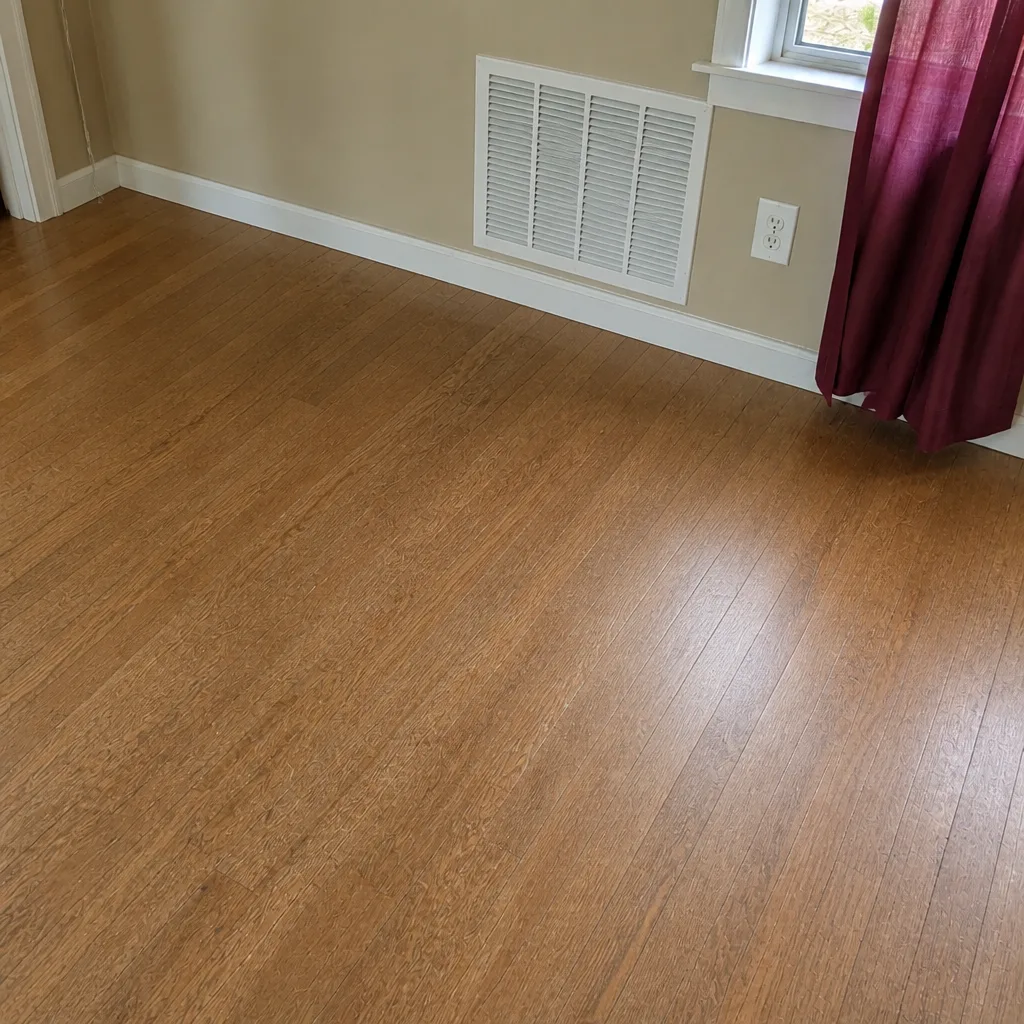 After
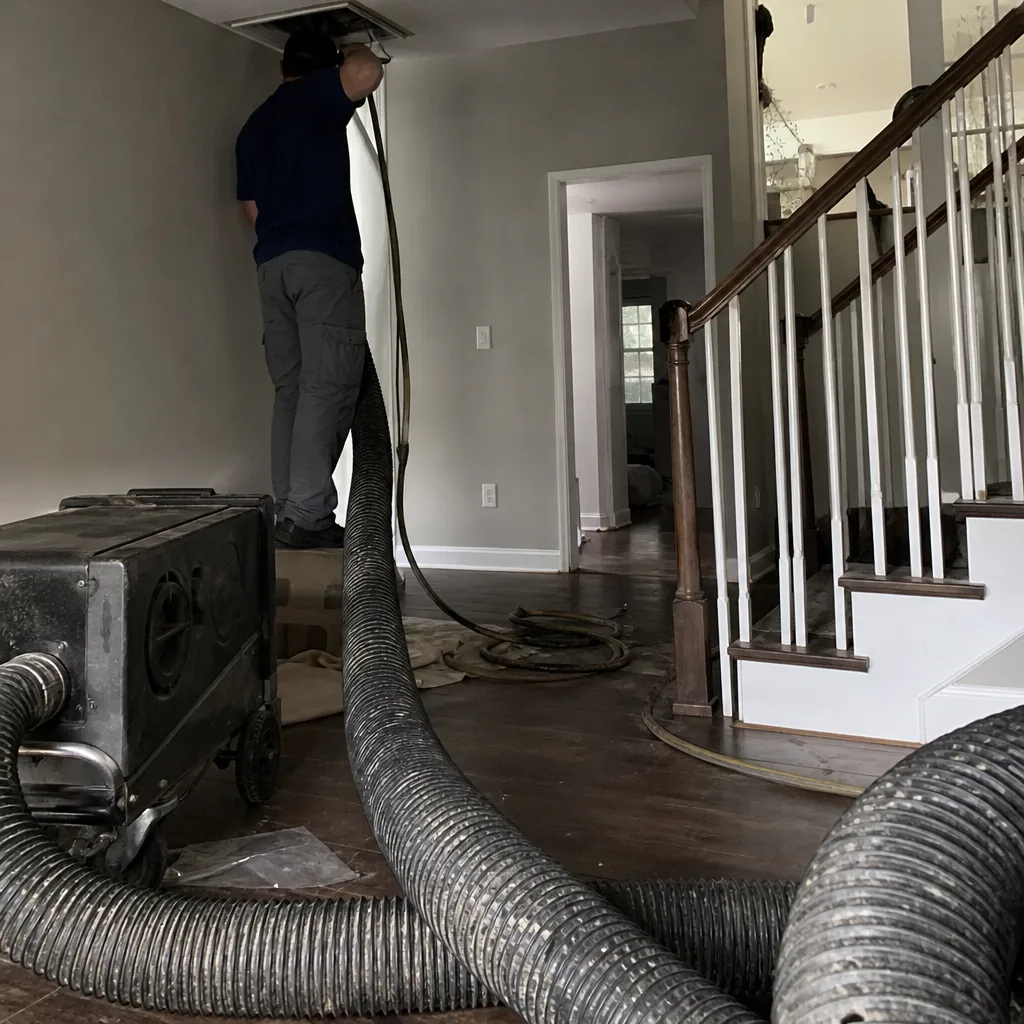 Before
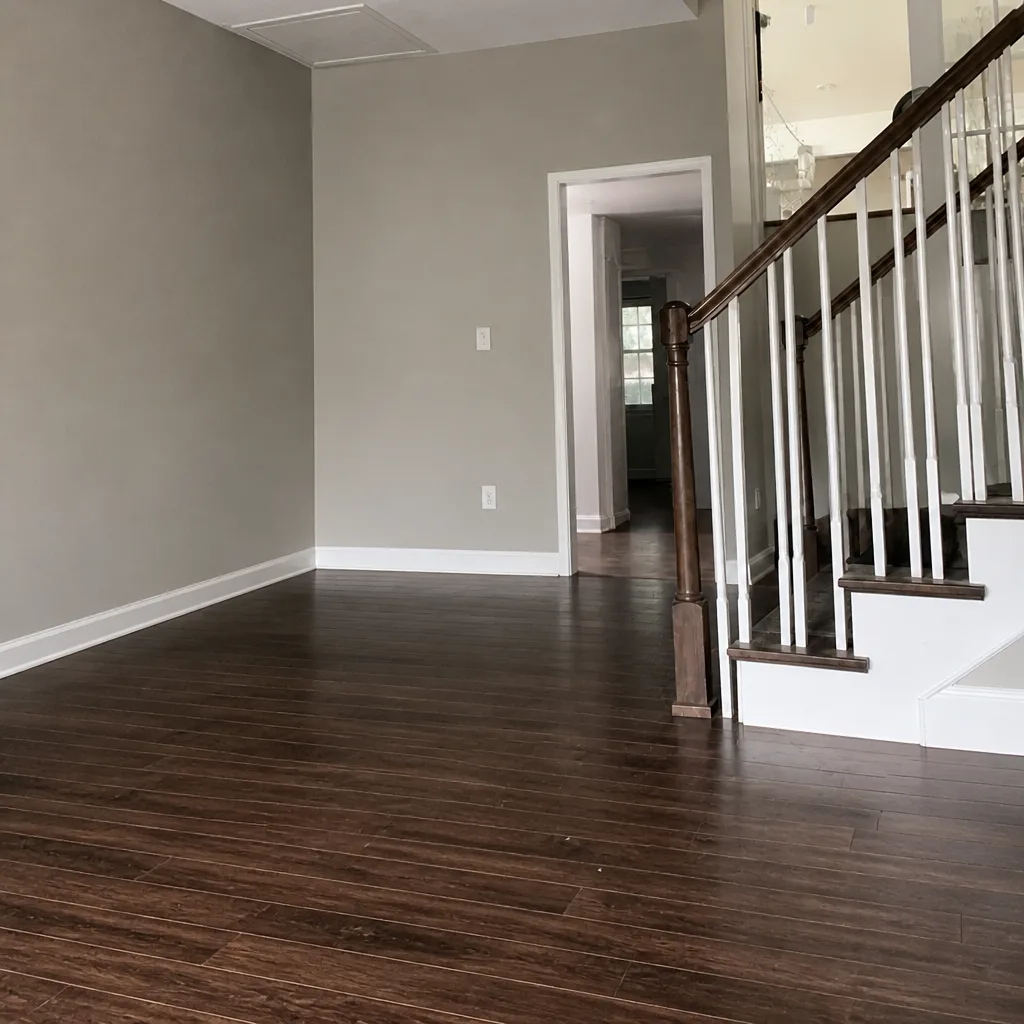 After
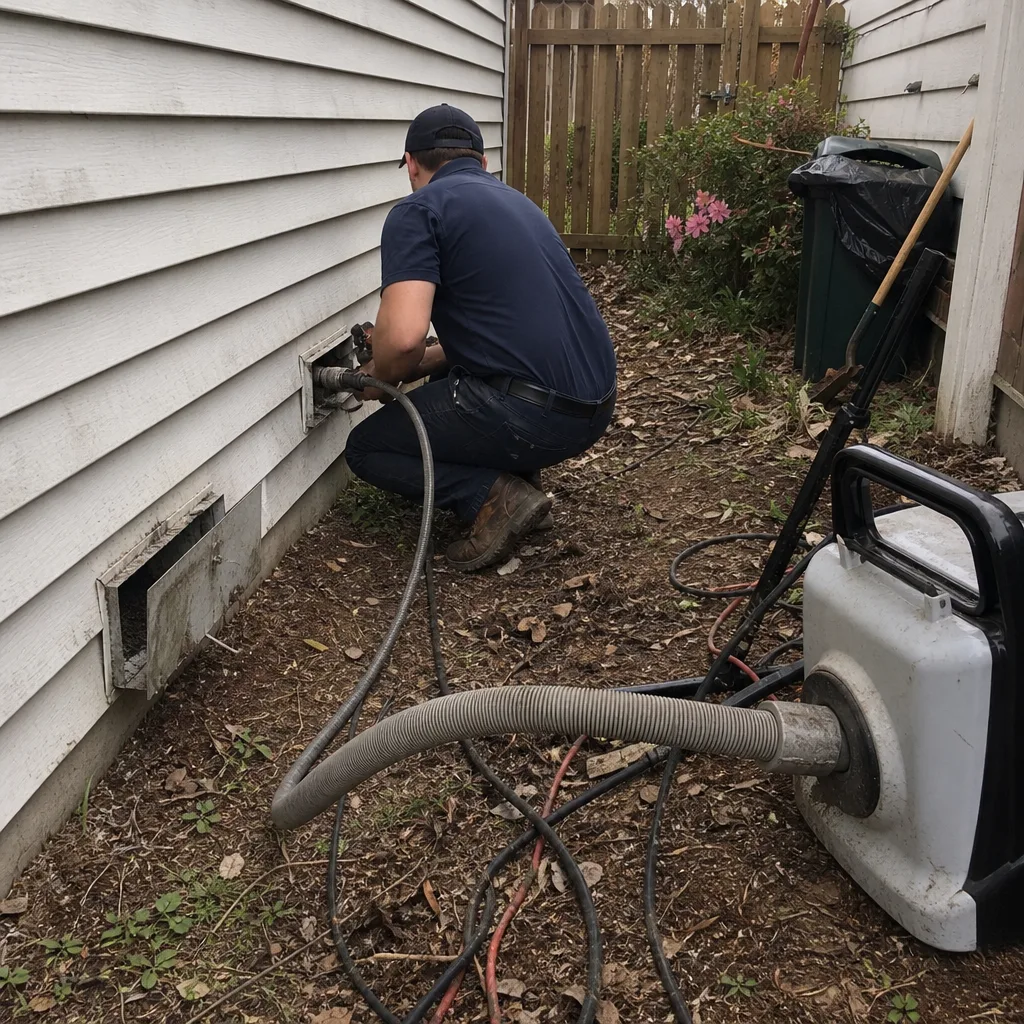 Before
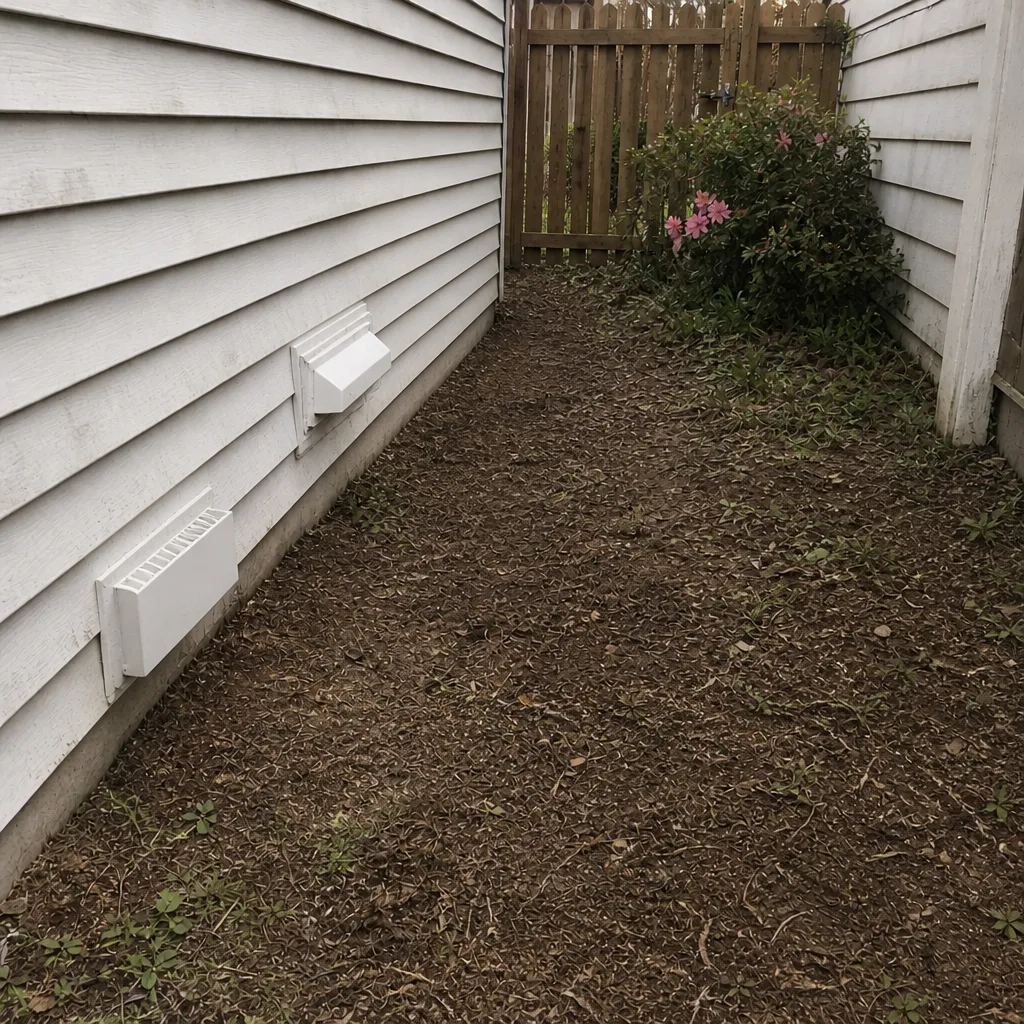 After
Frequently Asked Questions
Yes, for specific tasks: washing register covers, changing filters to the correct MERV, visual borescope inspection of accessible flex runs, and dryer vent cleaning on short straight runs under 15 feet. Anything that involves dislodging debris deeper in the duct system requires a sealed collection point and commercial vacuum capacity that consumer equipment doesn’t provide.
It can leave it dirtier than it found it. A shop vac with an unsealed connection creates a pressure differential that’s too well-distributed to pull loosened debris into the hose cleanly, so some of the freed particulate migrates into the living space instead. The mechanism is subtle and not dangerous, just ineffective. For duct repair capability after a cleaning, see Duct Cleaning Durham.
Professional air duct cleaning in Durham typically runs into the several hundred dollar range for a whole-home system, with the final number depending on system size, number of branches, and whether repair work is needed. The price is set by a written estimate before the work starts, not quoted per register. Call (866) 486-6152 for a free estimate.
Every 3 to 5 years for most Durham homes, at the tighter end if you have pets, recent renovation, or older duct systems. Durham’s humid summers put pressure on duct interiors that drier climates don’t, so the schedule leans sooner rather than later. If you have water intrusion, call for a professional check regardless of the calendar.
Indirectly, yes. A filter that’s too restrictive for the air handler can reduce airflow enough to frost the coil or strain the blower motor, and the wrong brush used aggressively inside flex duct can tear the liner. Neither is likely to cause catastrophic failure, but both cost real money to fix. If your system has original flex duct from an older build, a professional look before any DIY attempt is worth the call.
Different scopes. Homeowner maintenance covers register faces, filters, dryer vents on short runs, and visual inspection. Professional service covers the duct interior with commercial equipment: a Rotobrush contact-cleaning system, a Nikro industrial vacuum maintaining negative pressure at a sealed collection point, and Abatement Technologies air scrubbing on-site for containment. The professional visit also includes repair capability when cleaning reveals a failed seal or joint. If you’re outside Durham, the same principles apply; see the Durham page for area specifics or call us for referral guidance.
The Bottom Line
The question isn’t whether DIY duct cleaning is safe. It’s whether it’s complete. For register maintenance, filter changes, visual inspection, and short dryer vent runs, homeowner work is genuinely useful and worth doing. For anything that requires dislodging debris deeper in the system, the mechanical gap between consumer equipment and commercial equipment is too large to bridge. That’s not a knock on homeowners. It’s just the physics. Most Durham homes do well with a professional clean every 3 to 5 years and disciplined homeowner maintenance in between. Call (866) 486-6152. We answer 24/7. Fast dispatch from 7am to 7pm, Sunday through Friday.
Key Takeaways
- Negative pressure, not brush choice, is the limiting factor in DIY duct cleaning.
- Register faces, filters, borescope inspection, and short dryer vents are legitimate DIY.
- Biological growth, water intrusion, pest evidence, and construction debris require professional service.
- Commercial equipment holds roughly 2,000 CFM at a sealed collection point; consumer kits don’t come close.
- Every 3 to 5 years is the schedule for most Durham homes.
- Before-and-after photos and a written estimate set the price; ask for both.
Written by the team at Duct Cleaning Durham.