
Last updated November 15, 2026
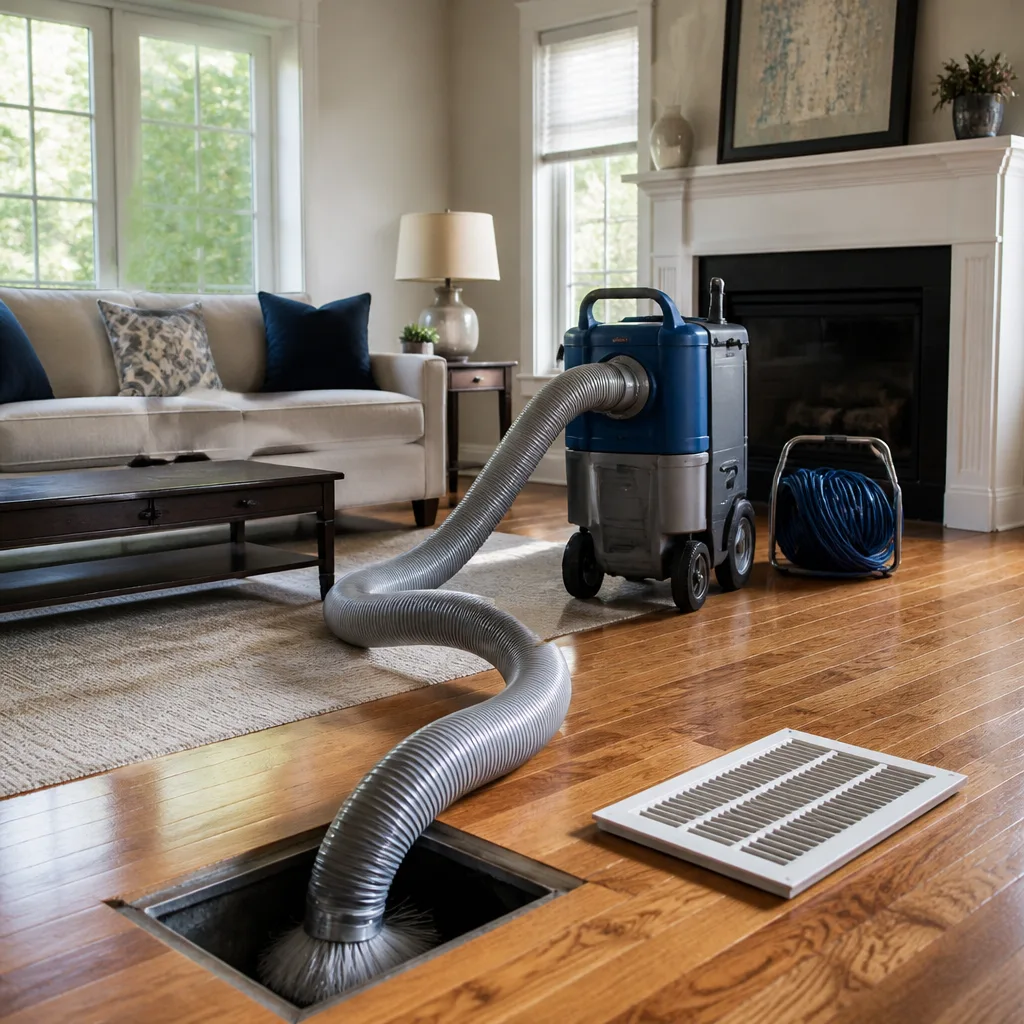 Whole-home duct cleaning
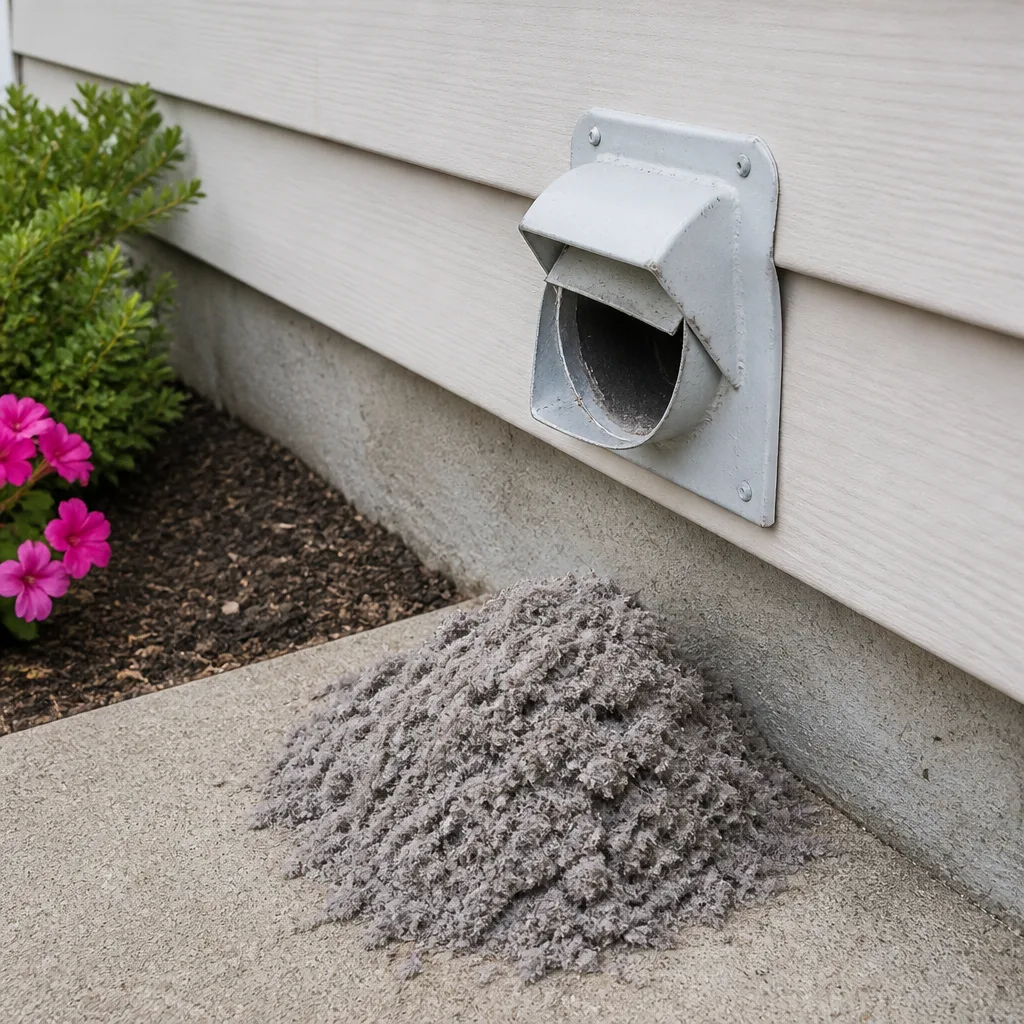 Dryer vent cleaning
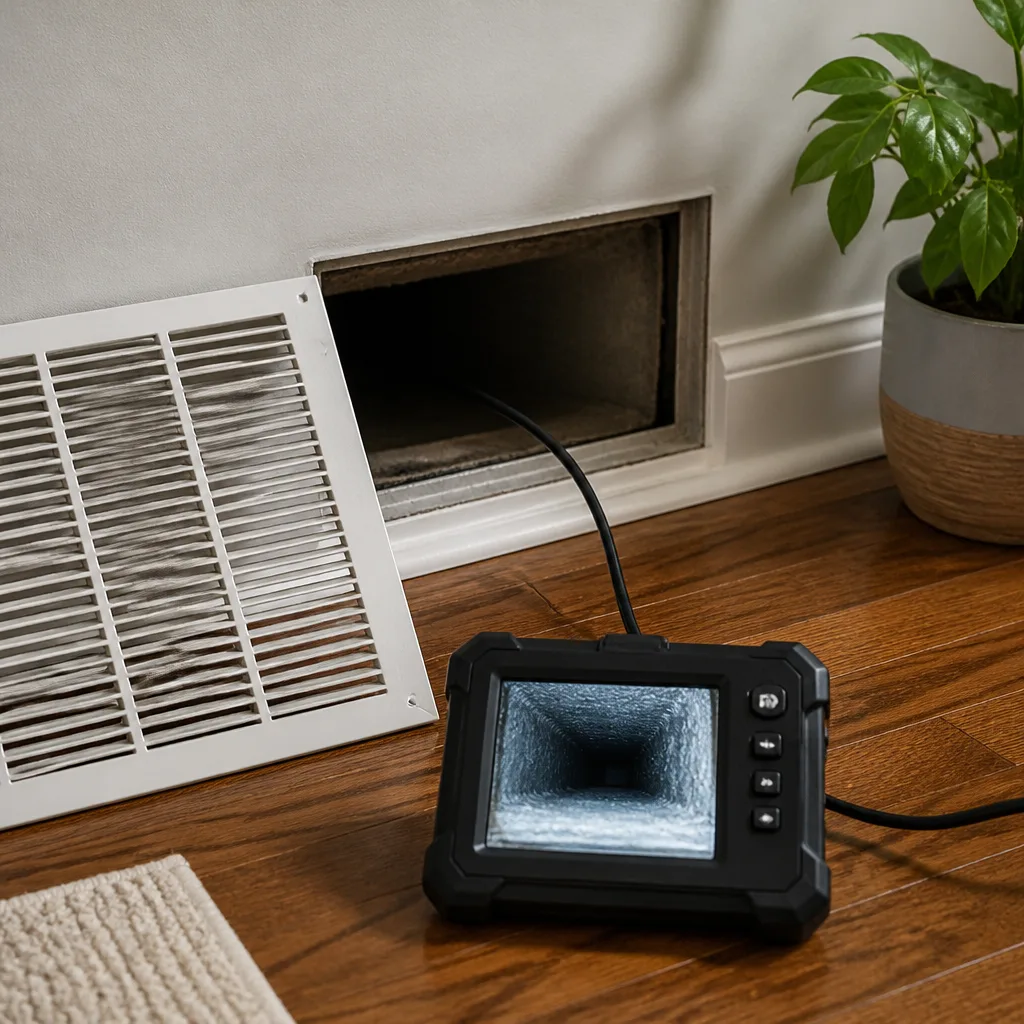 Camera inspection
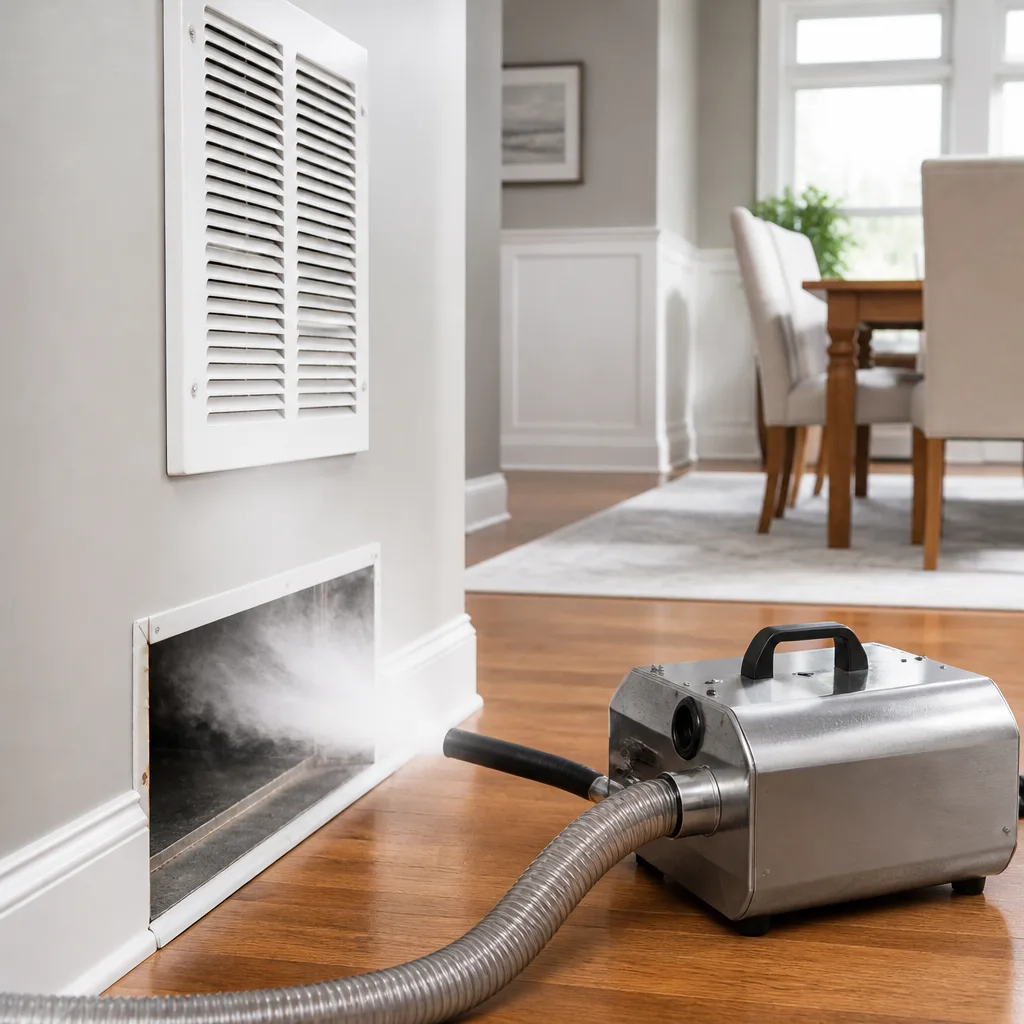 Sanitizing & deodorizing
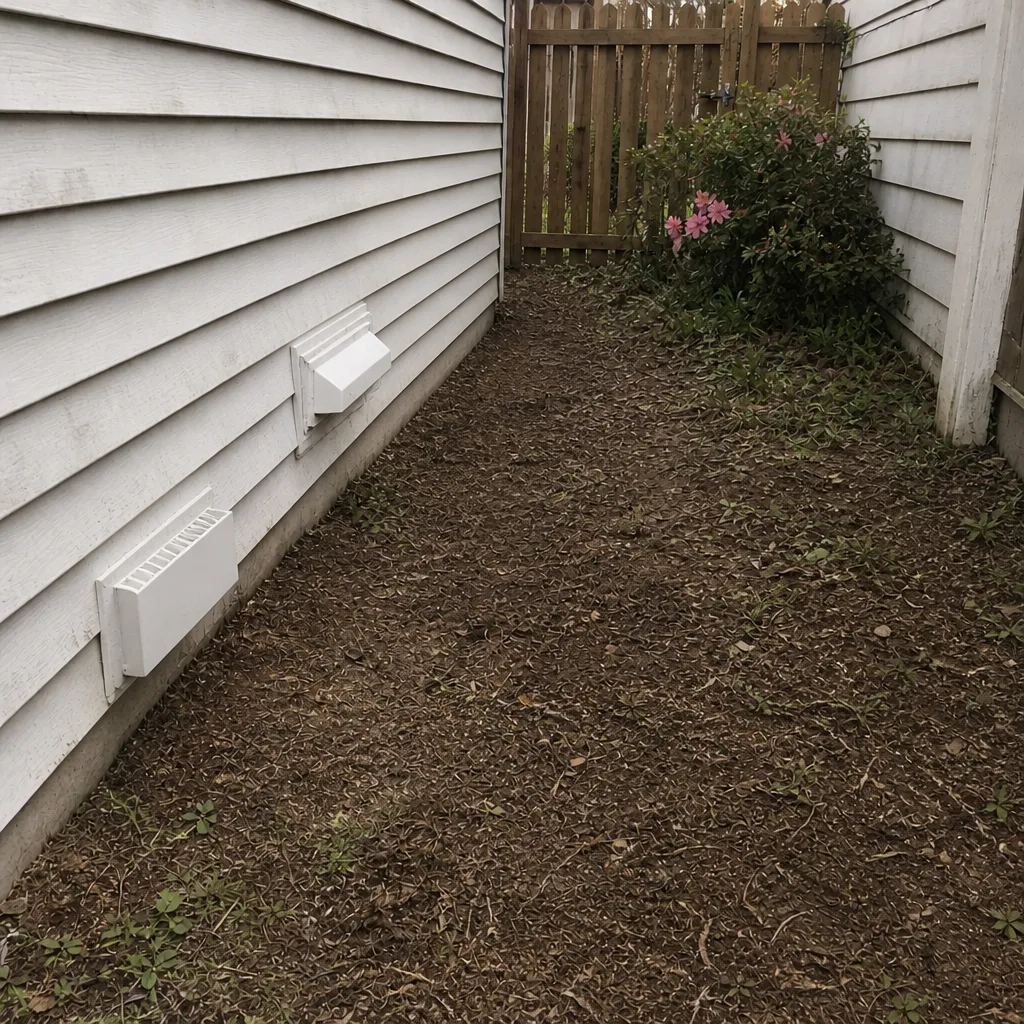
Whole-system duct and dryer vent check with before-and-after photos - you see exactly what came out of your vents
That "$99 whole-house special" is a bait ad - the real number appears once they are in your hallway, or the "clean" is a shop-vac at the register. We photograph the inside of your ducts before and after instead.
Seasonal Air Duct Cleaning Care for Durham: Year-Round Homeowner’s Guide
Most homeowners treat duct cleaning as a once-every-few-years errand, scheduled whenever the thought crosses their mind. In Durham, that approach usually means cleaning at the wrong moment. The contamination that builds inside a duct system here isn’t a steady, even accumulation – it arrives in seasonal pulses, and each pulse has a different composition and a different timeline. Pollen floods in fast during spring. Humidity drives biological growth through the summer. The first heating cycle of fall bakes last season’s residue into the air stream. Cleaning on a random schedule means you’re often working against the calendar instead of with it. This guide maps Durham’s contamination cycle season by season, explains the timing traps that catch most homeowners, and lays out a filter and inspection strategy that keeps the system ahead of what each season throws at it.
Styles & brands we work with
- Whole-home duct cleaning
- Dryer vent cleaning
- Camera inspection
- Sanitizing & deodorizing
Quick Answer
The best time to clean air ducts in Durham is late May or early June, after peak pollen season has ended and before summer humidity drives biological growth inside the system. A second look is worth scheduling in October, when switching from cooling to heating, because the first heat cycle pushes whatever accumulated over summer into the living space. Homes with pets, allergies, recent renovations, or return leaks near rooflines may need attention more than once a year.
Table of Contents
- The Durham Contamination Calendar: What Each Season Deposits
- Winter: Combustion Byproducts and the Closed-House Effect
- Spring: Pollen Loading and Durham’s Tree Canopy
- The Spring Cleaning Timing Trap
- Summer: Humidity and Biological Growth
- October’s Critical Moment: The Cooling-to-Heating Switch
- Fall: Particulate Resettlement and What It Means
- Seasonal Filter Strategy for Durham Homes
- What Professional Cleaning Actually Involves
- Common Mistakes to Avoid
- When to Call a Professional
- Frequently Asked Questions
- The Bottom Line
The Durham Contamination Calendar: What Each Season Deposits
Durham’s climate does not load ducts evenly. The Piedmont region sits between the cooler mountains to the west and the humid coastal plain to the east, which means it gets the full range – hot, humid summers, cold winters with regular furnace use, and one of the heaviest spring pollen seasons in the country. Each of those conditions puts a specific type of contamination into the system on its own schedule.
Here’s how the year breaks down for a typical Durham home:
- Winter (December – February): Gas furnace operation produces trace combustion byproducts. With the house closed tight, those particles have nowhere to go but the return air and the duct surfaces.
- Spring (March – May): Pollen infiltrates through return leaks, open windows, and every construction gap and soffit vent. Tree pollen is the dominant load in this region, and Durham’s canopy is thick.
- Summer (June – September): Cooling runs continuously, the evaporator coil stays wet, and biological growth builds on coil surfaces, drain pans, and any duct lining that stays damp. Humidity is the driver.
- Fall (October – November): The HVAC switches modes and the particulate that settled over summer gets stirred back into the air stream. Duct surfaces that were dormant all summer now move air at higher temperatures.
The point of mapping this cycle isn’t to imply every home should be cleaned four times a year. It’s to understand that a single cleaning event hits the system at one point in the cycle and the next contamination pulse starts loading again immediately. Timing determines which load you’re removing and which one you’re leaving behind.
Winter: Combustion Byproducts and the Closed-House Effect
Winter looks like the quietest season for duct contamination, but it’s the opposite. When a gas furnace runs, its combustion produces trace particles – nitrogen compounds, sulfur compounds, fine particulates – that escape through the appliance connection and into the return air supply. A healthy, tight furnace with proper venting isn’t a hazard, but even a small amount of unburned byproduct in a sealed house adds to what’s already sitting in the ducts.
The second winter factor is the closed-house effect. Windows stay shut for months. There’s no air exchange to dilute what’s in the system, and the same particles recirculate through the furnace, into the rooms, back through the returns, and into the system again. Homes in Durham’s older neighborhoods – Watts-Hillandale, Trinity Park, Cleveland-Holloway – often have duct systems that were installed decades ago and have never been sealed or cleaned. In those homes the winter recirculation loop keeps older deposits suspended for months at a time.
What to watch for during winter:
- A slight metallic or dusty smell on the first few furnace cycles of the season.
- Visible dust on return grilles that reappears quickly after dusting.
- Family members reporting drier eyes or more frequent congestion in the heated months.
- Visible rust or staining around furnace connections.
Any sign of actual combustion byproducts in living spaces – soot, a persistent fuel smell, a yellow flame instead of blue – is a furnace problem, not a duct problem. That’s an HVAC service call, and it should be addressed before anything else. Duct cleaning doesn’t fix a furnace and shouldn’t be asked to.
Spring: Pollen Loading and Durham’s Tree Canopy
Spring is where Durham’s conditions differ most from surrounding suburbs. The city has significant urban tree coverage – old oaks, maples, pines, sweetgums, and the ornamental plantings that fill neighborhoods like Forest Hills and Hope Valley. The pollen load in March and April is heavy, and it comes in pulses tied to which species is blooming.
What most homeowners don’t realize is how much of that pollen actually reaches the inside of the ducts. Pollen doesn’t walk in through the front door. It enters through three main paths:
- Return air leaks. Every joint, gap, and unsealed boot in the return side of the system becomes a vacuum point during cooling season. Any leak located in an attic, crawlspace, or near soffit vents pulls outside air – pollen included – directly into the return path.
- Open windows and doors. The obvious path, but less of the total than people think. Opening windows for a breeze brings in some pollen but usually less than return leaks pull in continuously.
- Filter bypass. The filter slot itself. A filter that’s slightly undersized, or a filter frame that wasn’t sealed to the duct, lets unfiltered air slip past the filter entirely.
Durham’s canopy means return leaks near rooflines or in attic soffits are exposed to pollen concentrations that homes in newer, clearer suburbs simply don’t see. A home in Watts-Hillandale with attic ductwork under a mature oak has a different pollen exposure profile than a newer construction in the southern part of the county. That matters when you’re deciding how often to clean and what condition to look for.
The Spring Cleaning Timing Trap
Here’s the mistake that catches most Durham homeowners: they clean their ducts in March, right when they first notice pollen dusting their windowsills, and assume the job is done for the year. It isn’t. In fact, March is close to the worst possible time to schedule a spring cleaning.
Peak tree pollen in this region runs through April and into early May. Cleaning in March means you’re removing last year’s load and then letting this year’s pulse settle into the clean system over the following eight to ten weeks. By June, the ducts have accumulated a fresh layer that will sit there until the next cleaning. You’ve paid for a cleaning and gotten six weeks of benefit.
The correct target window is late May or early June, after the oak and pine pollen has finished and before the summer humidity season gets going in earnest. That timing removes the full spring load, delivers a clean system into cooling season, and sets up the home for the biological-growth window that follows.
This is one of the places where working with someone familiar with Durham’s climate actually matters. A duct cleaner who works nationwide schedules by generic guidelines. Local knowledge of when the pollen season actually ends here, and when the humidity ramps up, changes the recommendation.
Summer: Humidity and Biological Growth
Summer is the season with the most consequential contamination, even though it’s invisible. As the cooling system runs continuously from June through September, the evaporator coil stays wet. The drain pan collects condensate. Any insulated duct lining that stays slightly damp – even after the system cycles off – becomes a surface for biological growth.
Durham’s summer humidity sits in the range that supports this kind of growth best. A typical summer day here holds enough moisture in the air that the cooling system is removing significant water from the indoor environment every hour. That water has to go somewhere, and most of it goes down the drain pan and out the condensate line. But when that line clogs, or when the coil doesn’t fully dry between cycles, the moisture stays put.
Signs that biological growth is the current problem:
- A musty or “gym bag” smell when the air first comes on.
- Visible dark spotting on the coil, in the drain pan, or on duct lining visible through a register.
- Family members who feel worse in the house than they do outside.
- Increased asthma or allergy symptoms that don’t track with spring pollen season.
It’s worth being careful about the language here. Duct cleaning doesn’t remove mold from a building. It removes the accumulated dust, debris, and organic material that feeds and harbors biological growth, and a proper cleaning combined with IAQ upgrades to the system is what actually improves long-term conditions. If there’s active visible mold growth of any size, or if there’s a chronic moisture problem behind a wall, that’s a separate scope. We clean ducts, dryer vents, and repair ductwork – and when the cleaning uncovers a moisture problem that’s outside that scope, we say so.
October’s Critical Moment: The Cooling-to-Heating Switch
There’s a specific window every October and early November when the heating system runs for the first time in months. That first heat cycle is a moment most homeowners don’t think about, and it’s one of the two most important inspection points on the Durham calendar.
Here’s what happens. Over the summer, biological material and debris accumulate on the evaporator coil, in the drain pan, and in the return air ductwork. That material is damp and relatively inert while the cooling system is running. When the furnace fires up for the first time in the fall, the air stream that comes through the system is now warm. The warm air hits the cooled, damp surfaces in the ductwork downstream, and it lifts and disperses the accumulated material – into the living space, on the first cycle and every cycle after.
This is the reason for the “musty smell on first heat” complaint that homeowners call about every October in Durham. It’s not a furnace problem. It’s the accumulated summer load being redistributed by the first warm-air pass.
What to do about it:
- Inspect before the switch. Late September or early October is the right window for a duct inspection, especially if last cleaning was more than a year ago.
- Replace the filter before the first heat cycle. A fresh filter catches what gets lifted on the first pass.
- Consider cleaning before the switch if the system has visible debris or smell. Cleaning in September removes the summer load before it can be redistributed in October.
- Watch the first heat cycle. If the smell is pronounced, that’s a signal cleaning is overdue, not a signal the furnace is failing.
We’ve seen this pattern so consistently across Durham homes that we plan it into the calendar for clients who ask. Fall cleaning, done before the first heat cycle, solves problems that would otherwise become a winter-long smell.
Fall: Particulate Resettlement and What It Means
Fall looks straightforward – leaves drop, weather cools, furnace runs – but the duct system is doing something specific worth understanding. The airflow pattern changes. Cooling operation used low-velocity airflow through the whole system; heating operation runs at higher velocity and different temperature. That change causes fine particulate that had settled on duct surfaces to be disturbed and picked back up into the air stream.
You’ll see this show up as fall dust in the house. Surfaces that stayed clean all summer start showing dust again in October. Return grilles accumulate at a rate that seems faster than it should. Those are the settled particles being resuspended by the mode switch.
Three things help in fall:
- Clean before the switch if it’s been more than a year. Removing the settled layer before it’s disturbed means it’s removed, not redeployed into the living space.
- Fresh filter, timed to the switch. A new filter in October catches the first wave of resuspended particulate.
- Check return grilles and boots. If the return grille looks worse than expected, the ducts downstream probably have more than you think.
Fall is also the season when duct repair work is easiest to schedule. Summer is a busy time for every duct and HVAC business, and January is peak cold. A fall inspection leaves room for a proper cleaning and, if the inspection finds disconnected joints or crushed sections, a repair visit that can be done before winter without pressure. When we find a problem during cleaning, we fix it in the same visit – “we found it, we fix it” isn’t a slogan here, it’s just how the calendar works with three connected service lines.
Seasonal Filter Strategy for Durham Homes
Filters are the cheapest maintenance lever in the system, and most homeowners use one rating year-round that wasn’t chosen for the season at all. A seasonal filter strategy, tuned to what’s loading the ducts, reduces the amount of contamination that reaches the duct surfaces between cleanings.
The basic logic:
- Winter: Standard MERV 8 to MERV 11, replaced at the start of the season. Fine particulate and combustion byproducts are the load, and you don’t need a high-MERV filter in a low-particulate season.
- Spring: MERV 11 to MERV 13 for peak pollen weeks. Higher-MERV media captures smaller particles and takes more pollen off the airstream before it reaches the ducts. Change more frequently during this window – every 4 to 6 weeks if the home is near heavy canopy.
- Summer: MERV 8 to MERV 11. High-MERV filters load faster in high-humidity conditions where the filter media can absorb moisture, and the biggest summer risk is airflow restriction, not particulate capture.
- Fall: MERV 11 to MERV 13 at the switch, then step back to MERV 8 after the first few weeks of heating once the resuspended particulate is cleared.
The one thing to be careful about with higher MERV is static pressure. Older Durham HVAC systems – especially those in homes built before the 1990s – weren’t designed for the airflow restriction that a high-MERV filter introduces. A MERV 13 filter in a 30-year-old air handler can drop airflow enough to freeze the evaporator coil in summer or overheat the heat exchanger in winter. That’s not a small problem. If you’re considering a filter upgrade, the right move is to know the airflow capacity of the system first. A duct inspection can flag whether the system is already tight on static pressure before you add a higher-resistance filter.
For homes where the seasonal filter cycle isn’t enough – homes with allergies, pets, or ongoing pollen exposure – a filter upgrade is one path and an in-duct air quality system is another. We supply and install Honeywell and Aprilaire indoor air quality products, which tend to be a longer-term answer than filter-only approaches. Both brands are widely-used and well-documented, so the parts are easy to source when service comes around.
What Professional Cleaning Actually Involves
Homeowners shopping for duct cleaning frequently get quotes that differ by a factor of three or four, and the reason isn’t usually the level of effort – it’s the equipment, and whether it can actually do the job.
A consumer shop vac rebranded as “professional equipment” can pull a few ounces of dust off the nearest register. It cannot reach the duct runs, dislodge the contact-bound debris on the duct walls, or capture what it dislodges before it redistributes into the living space. That’s the difference between a cleaning that produces visible results and one that produces an invoice.
Commercial-grade duct cleaning uses two things at once: a high-volume negative-pressure source at one end of the system, and a contact-cleaning tool that travels the duct runs to dislodge accumulated material. The equipment we use on Durham jobs:
- Rotobrush contact-cleaning systems – the rotary brush-and-vacuum combination that actually contacts duct surfaces and lifts material rather than just pulling air through them.
- Nikro industrial vacuums – the negative-pressure backbone that keeps the whole system under vacuum during cleaning.
- Abatement Technologies air filtration – the containment layer. Anything dislodged from the ducts is captured in the work area, not redistributed into the rooms.
That third component is the one most homeowners don’t ask about and should. A cleaning that disturbs more contamination than it removes is worse than no cleaning at all. The Abatement Technologies air scrubbers used on every job are the same equipment used in hospital and commercial remediation work, and they’re the reason a proper duct cleaning improves indoor air rather than temporarily making it worse. Guardsman-grade protective treatment after cleaning extends the value of the visit past the day of service.
When the cleaning uncovers a problem – a disconnected joint, a crushed run, a boot that wasn’t sealed – the repair line exists to fix it in the same visit. The alternative, common with single-service vendors, is that the customer gets told “something looks wrong” and then has to hunt down a second contractor. That’s not helpful when the ducts are already open and the crew is on site.
Common Mistakes to Avoid
- Cleaning in March instead of late May. You’ll remove last year’s pollen load and then let this year’s settle into a clean system. Wait for peak pollen to finish.
- Skipping the fall inspection before the first heat cycle. The October musty smell almost always signals that summer accumulation is about to be redistributed. Check before the switch, not after.
- Upgrading to a MERV 13 filter in an older Durham system without checking airflow. A high-MERV filter can freeze the coil in summer or overheat the heat exchanger in winter if the system wasn’t built for it.
- Choosing a quote based on the lowest number without asking about equipment. A shop vac and a Rotobrush system are not the same tool, and a low bid usually reflects the difference. Ask what equipment is coming through the door.
- Cleaning and immediately reopening windows for weeks. This is common in spring when the weather is good, and it repollens the system you just cleaned. Give it a few weeks of closed-window operation if pollen is the target.
- Assuming a visible register is the whole story. The ducts behind a clean grille can be significantly loaded. It’s the return side, especially near attic and soffit leaks, that picks up the most in Durham’s canopy-heavy neighborhoods.
- Treating dryer vent cleaning as a spring-cleaning afterthought. A dryer vent isn’t a maintenance item – it’s a fire-prevention item. Lint accumulation is one of the top residential fire hazards, and it builds in the same seasonal pattern as duct contamination.
When to Call a Professional
Most Durham homes benefit from a professional cleaning every one to three years, depending on how much load the system is seeing. Homes with pets, recent renovations, or occupants with respiratory sensitivities are usually on the shorter end. Homes with sealed, well-filtered systems can stretch further.
The situations that call for a callback sooner:
- Visible dust on return grilles reappearing within days of cleaning.
- A musty smell on startup that persists after a filter change.
- Visible debris, dark spotting, or pest activity on surfaces inside the ducts.
- A dryer that takes noticeably longer to dry clothes, or a vent that hasn’t been cleaned in more than a year.
- Recent water damage, renovation, or pest intrusion into the duct system.
- A first-of-season heating cycle that produces a persistent smell.
If several of those apply, the right next step is an inspection. Scheduling the inspection before the problem diagnosis saves a step. You can reach us at Duct Cleaning Durham for a free estimate in the local area – call (866) 486-6152. We answer 24/7. Fast dispatch from 7am to 7pm, Sunday through Friday.
Frequently Asked Questions
Most Durham homes should be cleaned every one to three years, with a preference for late May or early June so the cleaning falls after peak pollen season and before summer humidity. Homes with pets, allergies, recent renovations, or return leaks near attic or soffit areas usually land on the one-year end of that range. Homes with well-sealed, well-filtered systems can go closer to three years. The best single recommendation is to inspect annually and clean on the schedule the inspection indicates.
Yes, and the visible dust in the house is a poor indicator of duct condition. The return side of the system – especially return leaks under attic insulation or near soffit vents – can be heavily loaded while the living space looks normal. Durham’s spring pollen load and the summer humidity cycle both feed contamination that isn’t visible from the register. A proper inspection with the system under vacuum is the way to know what’s actually there.
Spring cleaning removes the pollen load that builds from March through May; fall cleaning removes the summer biological accumulation and prepares the system for the mode switch. Both matter for different reasons. Late May or early June addresses pollen; September or early October addresses the summer residue before the first heat cycle bakes it into the air stream. If you clean only once a year in Durham, late May or early June is the higher-value timing.
No. A shop vac pulls air from the nearest visible register but cannot reach the full duct runs, dislodge contact-bound debris from duct walls, or contain what it dislodges. Cleaning without negative-pressure containment redistributes contamination into the living space. Commercial cleaning uses a Rotary or similar contact tool at one end of the system plus industrial vacuum at the other to keep the whole duct run under negative pressure during the work, and Abatement Technologies-grade air filtration to capture anything that would otherwise escape into the room. That’s the reason proper cleaning improves indoor air and DIY cleaning can make a room smell worse.
Even a properly operating gas furnace can produce trace combustion byproducts that add to what’s already in the return air, and the closed-house winter season keeps those particles recirculating. It’s not usually a large-volume problem, but it’s a real one, and it’s part of the reason winter is the accumulation phase in Durham. A persistent fuel smell, soot around the furnace connection, or a yellow flame instead of blue is a different matter – that’s an HVAC service call, and it should be handled before any duct work is scheduled.
MERV 8 to MERV 11 is a reasonable baseline for most of the year, with MERV 11 to MERV 13 for peak pollen weeks in spring and the switch to heating in fall. The critical caveat is static pressure: older Durham HVAC systems, especially in pre-1990s homes, can’t always handle MERV 13 without airflow problems that freeze the coil in summer or overheat the heat exchanger in winter. The right move is to know the system’s airflow tolerance first. Call (866) 486-6152 for an exact quote on an inspection – estimates are free.
The Bottom Line
Durham’s duct contamination runs on a four-season cycle, and cleaning at the wrong point in that cycle produces less benefit than the same cleaning would at the right one. The key points: peak pollen season runs March through May, so the optimal spring cleaning window is late May or early June, not March. Summer humidity drives biological growth, and the first heat cycle of October redistributes it into the living space – which is why a fall inspection matters. A seasonal filter strategy tuned to each phase, not a single year-round rating, reduces what reaches the duct surfaces between cleanings. And the equipment matters as much as the timing: Rotobrush contact cleaning, Nikro industrial vacuum, and Abatement Technologies air filtration are what make a cleaning effective rather than a rearrangement of dust. If you want a seasonal plan built around your specific home, we’re glad to start with an inspection.
For an air duct, dryer vent, or duct repair estimate in Durham, call (866) 486-6152 for a free estimate. We answer 24/7. Fast dispatch from 7am to 7pm, Sunday through Friday. For more on the individual services, see air duct cleaning or dryer vent cleaning.
Written by the team at Duct Cleaning Durham.
See the difference
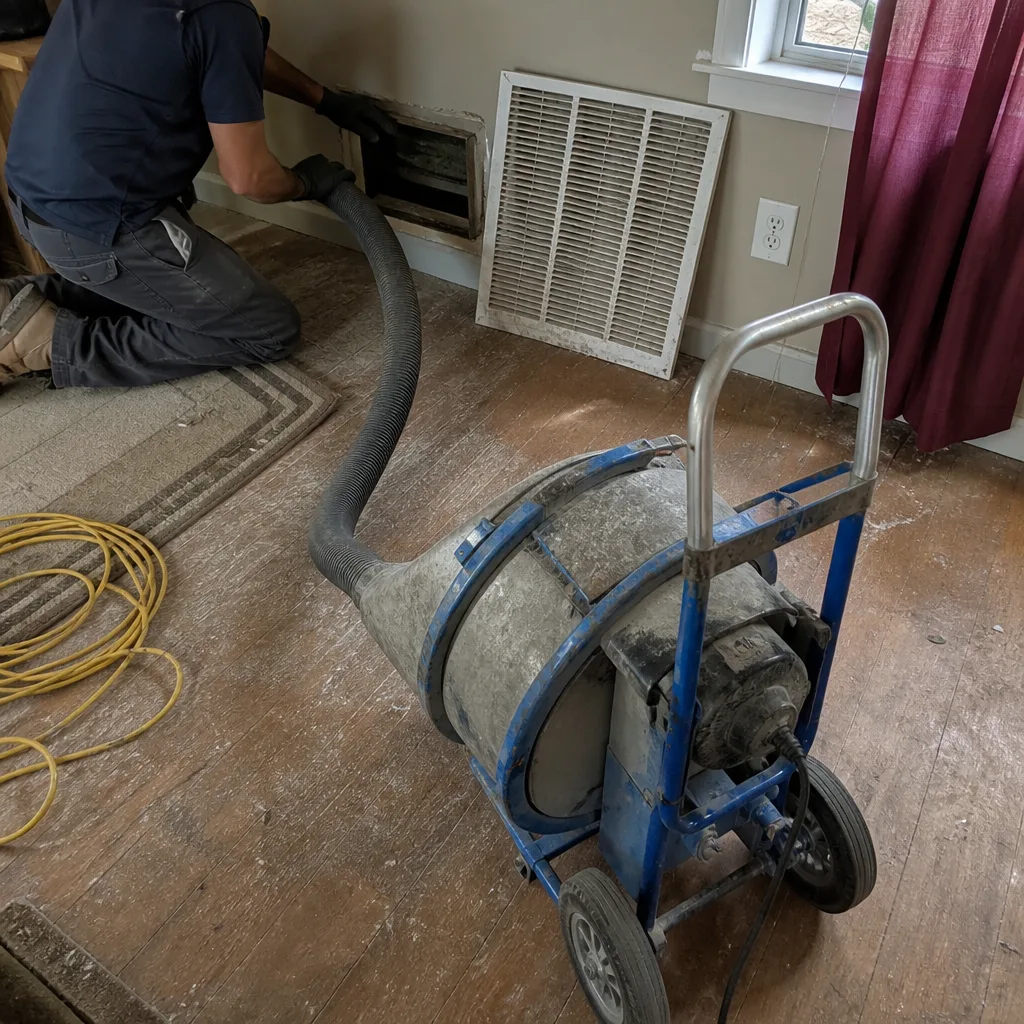 Before
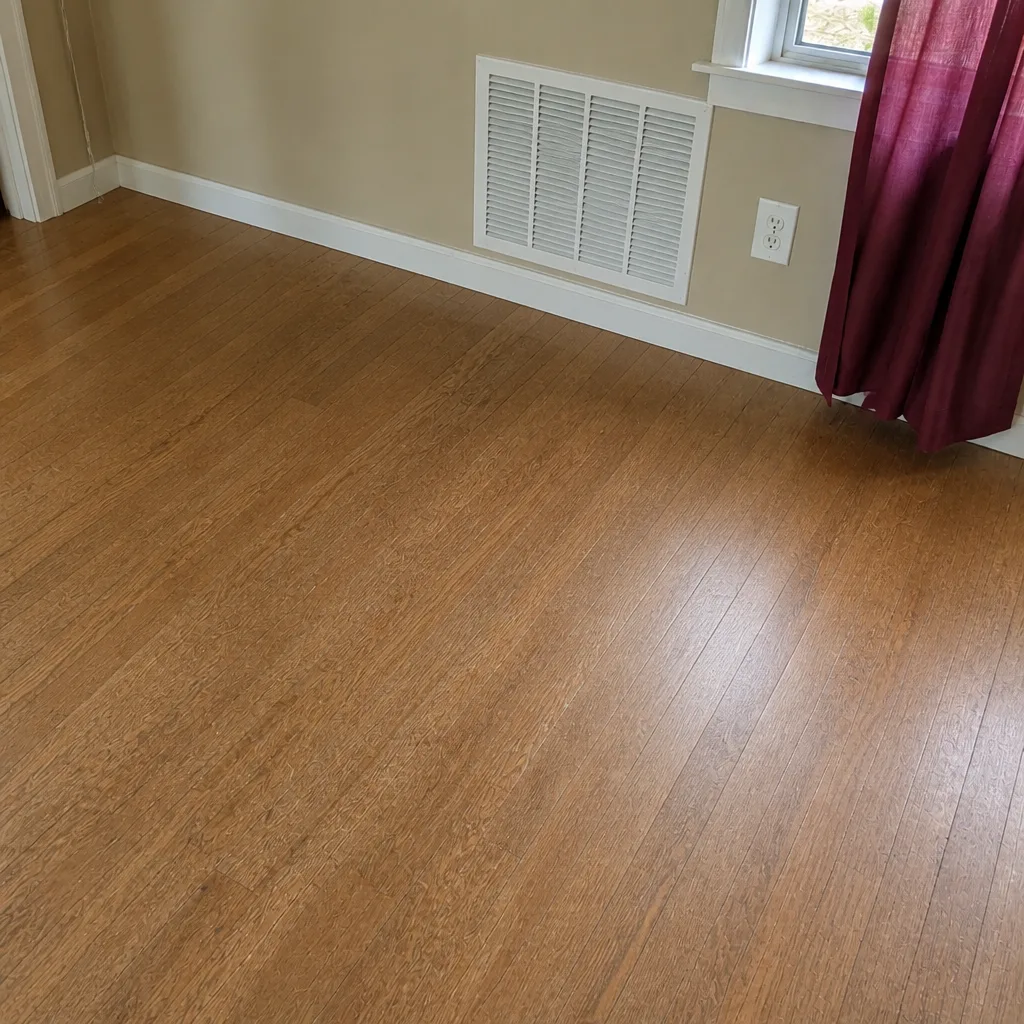 After
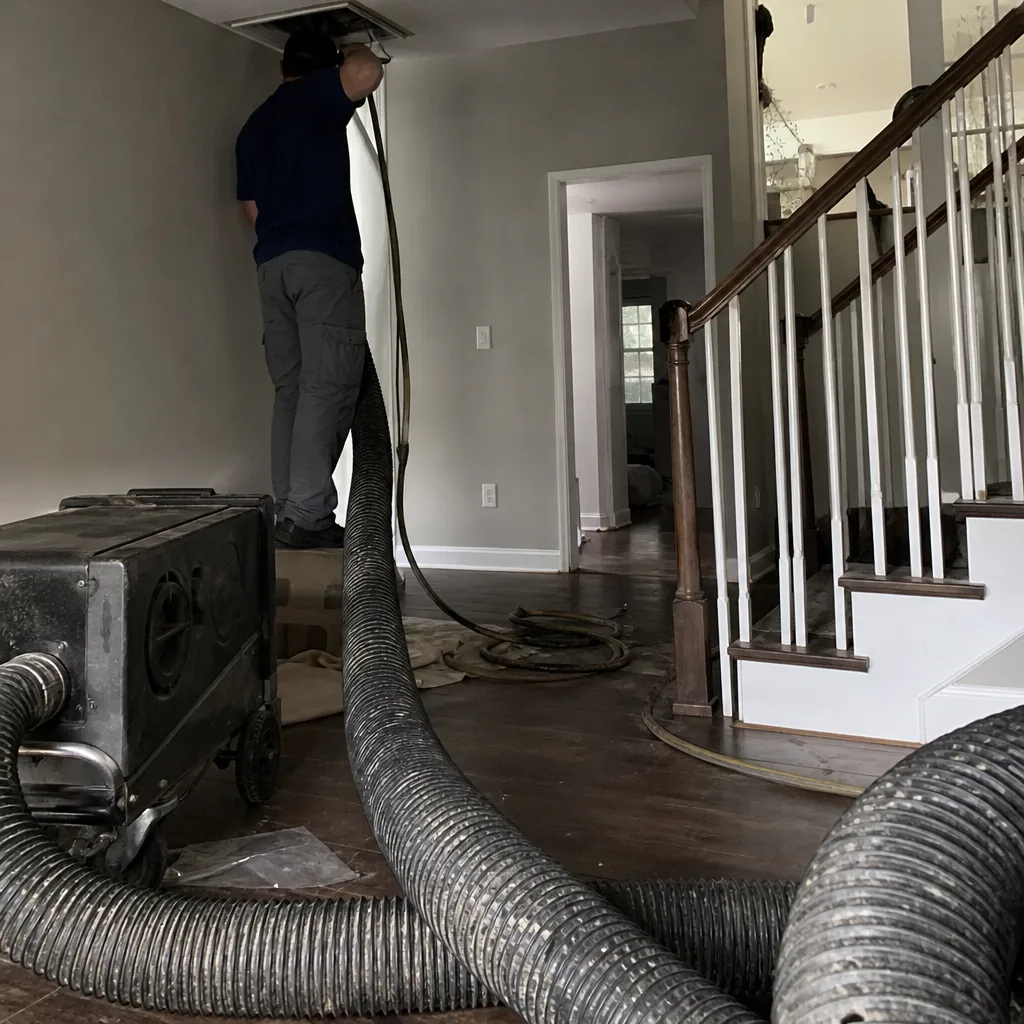 Before
 After
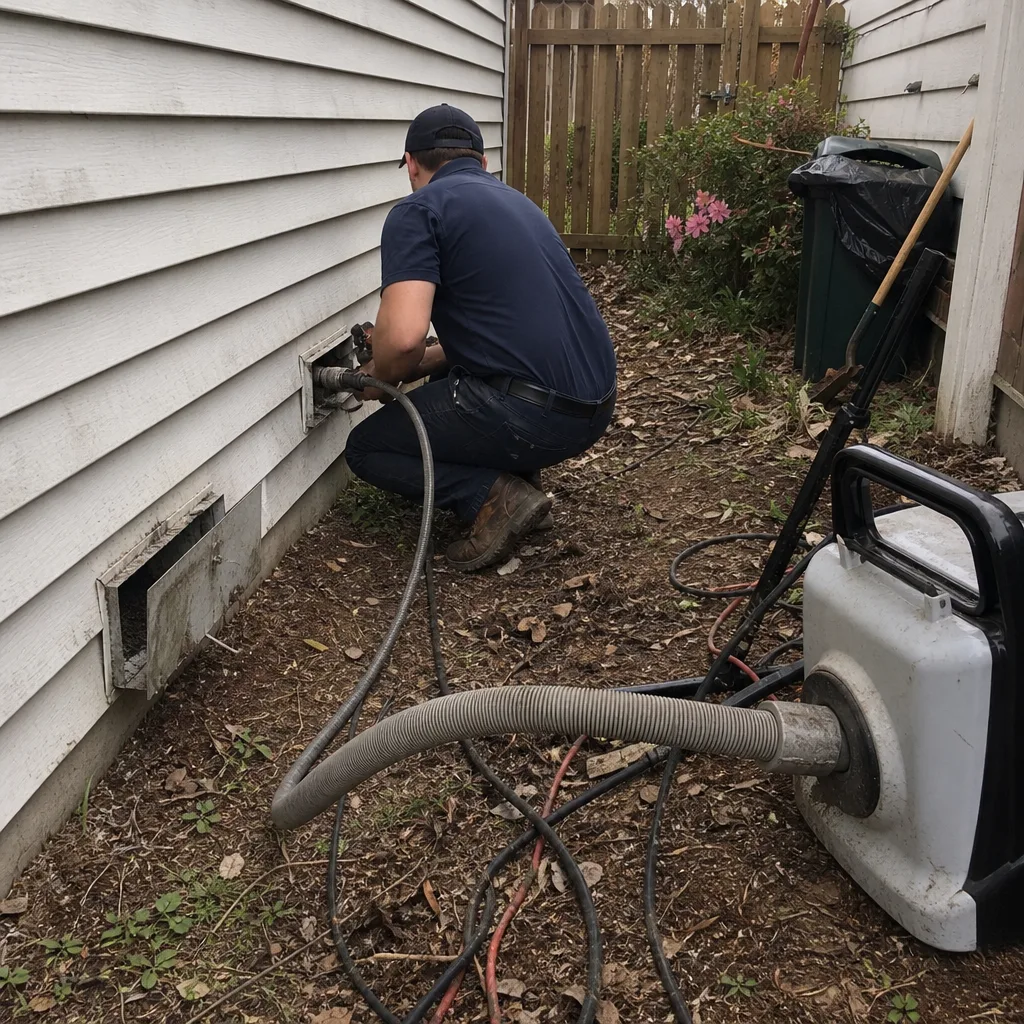 Before
 After