
Last updated November 15, 2026
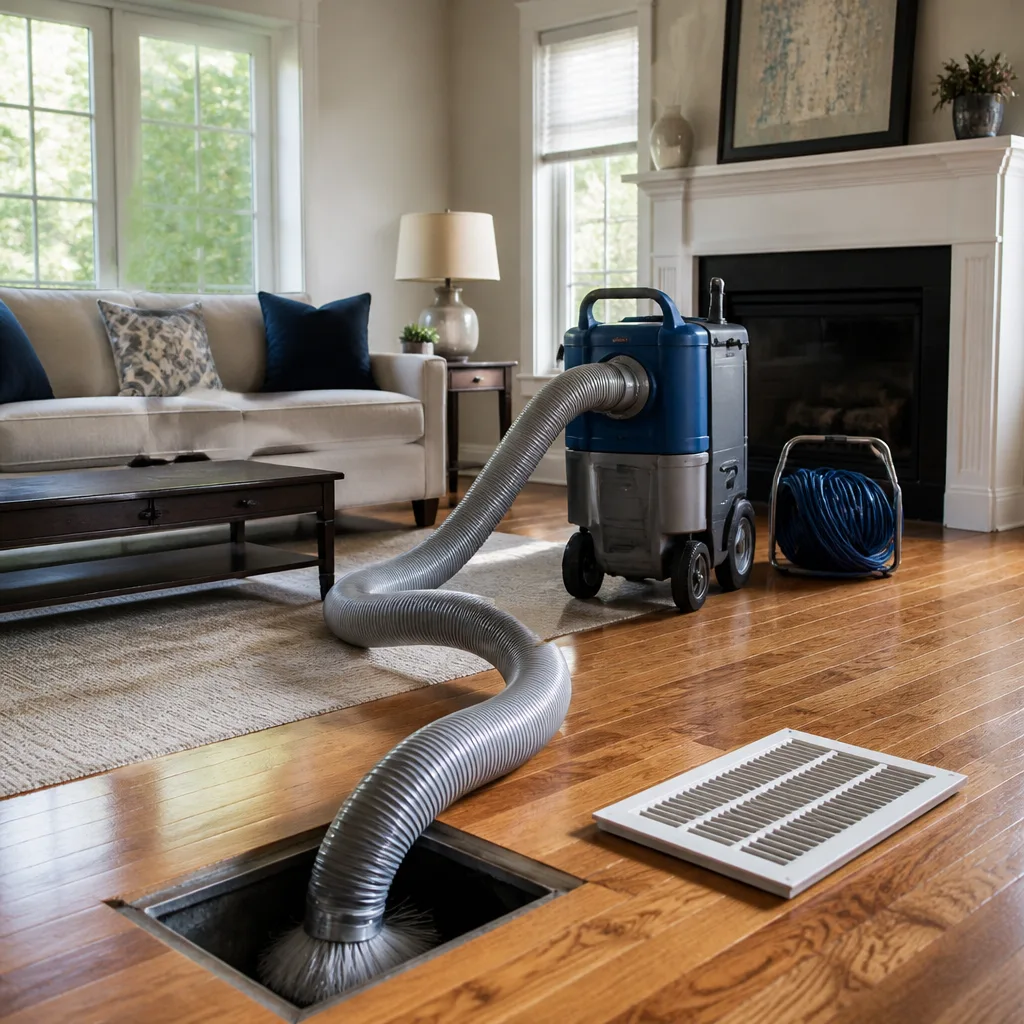 Whole-home duct cleaning
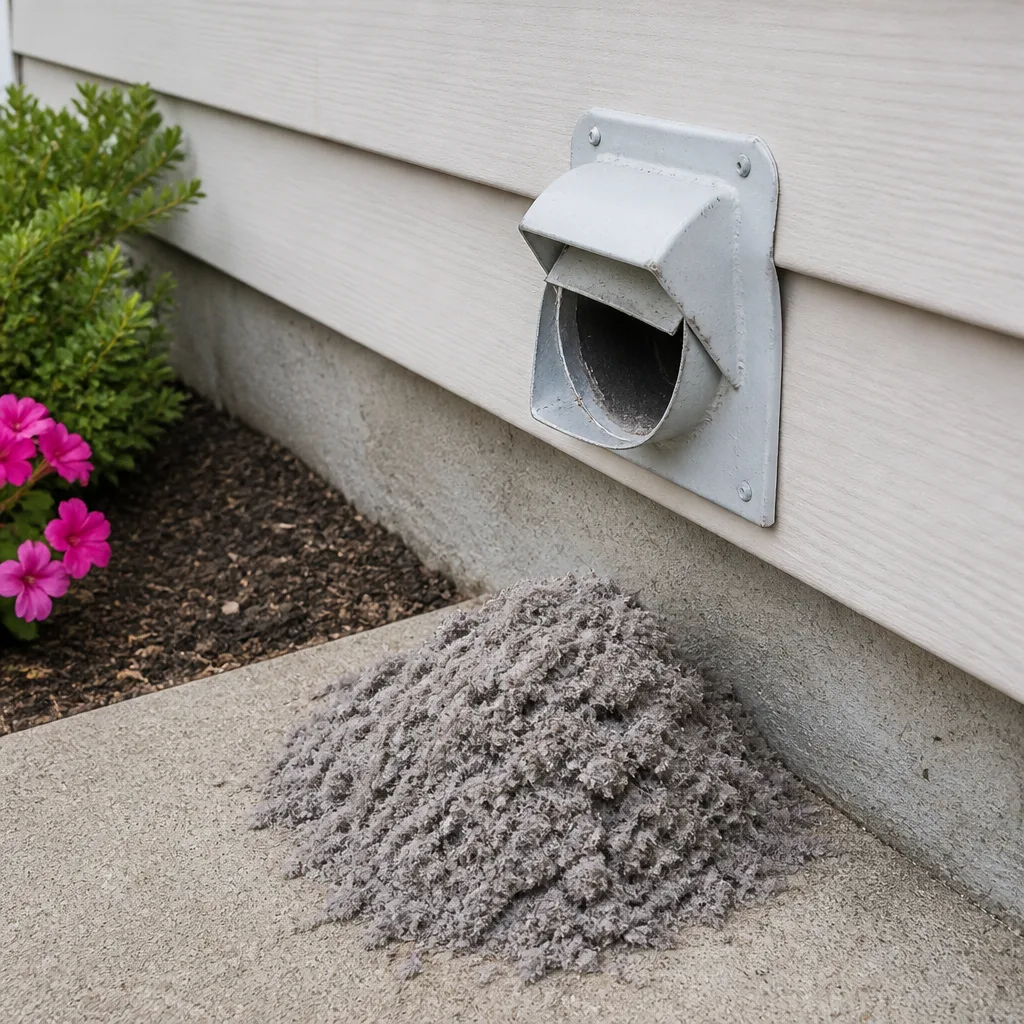 Dryer vent cleaning
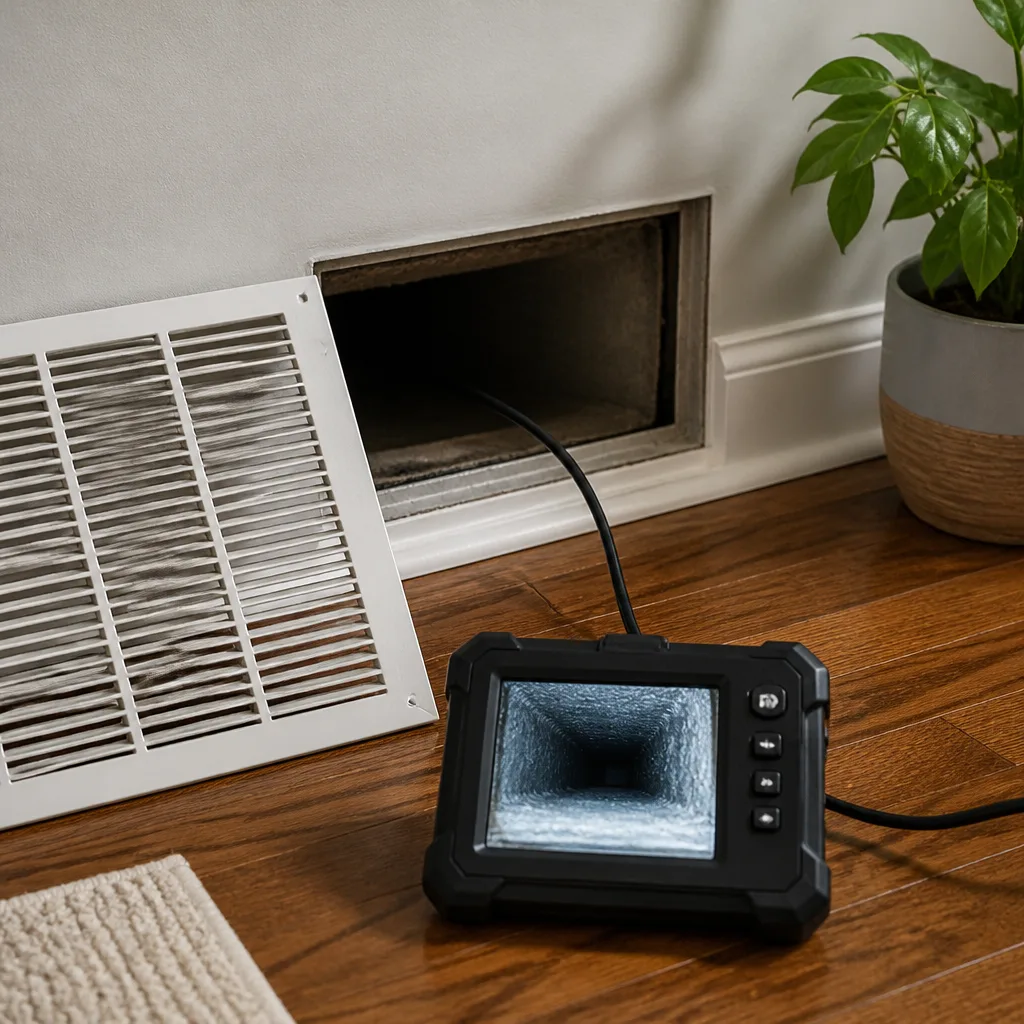 Camera inspection
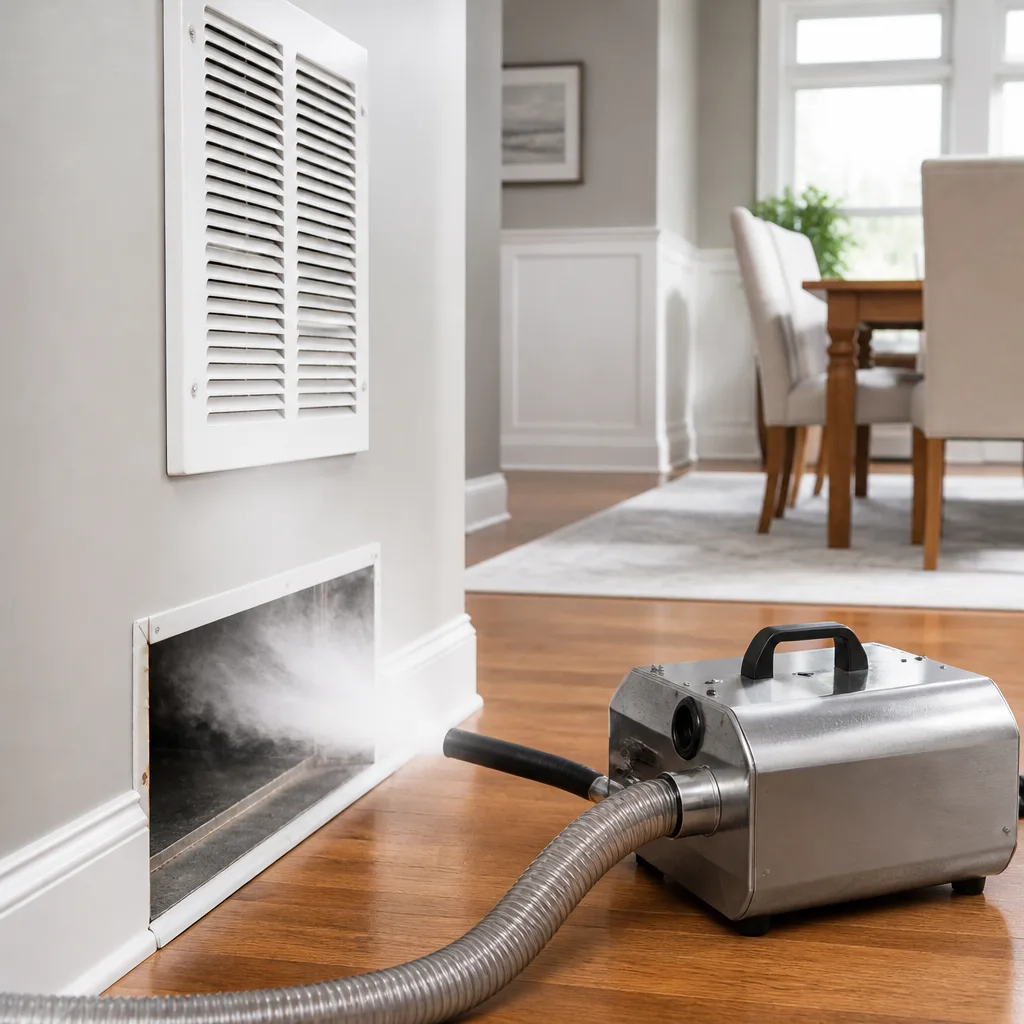 Sanitizing & deodorizing
Whole-system duct and dryer vent check with before-and-after photos - you see exactly what came out of your vents
That "$99 whole-house special" is a bait ad - the real number appears once they are in your hallway, or the "clean" is a shop-vac at the register. We photograph the inside of your ducts before and after instead.
The Complete Guide to Air Duct Cleaning in Durham
Most duct cleaning guides written “for Durham” were clearly written for nowhere in particular. They mention mold, they mention dust, and then they get to the pricing table and you realize the same article is running on a site in Phoenix with the city name swapped out. Durham is not a placeholder. It sits in the Piedmont, which means humid summers that push relative humidity high enough for biological growth to colonize duct surfaces within weeks, not years. It has a pollen season that runs from cedar in late winter through oak and pine in spring. And it has a housing stock where pre-1990 flex duct and older metal trunk-and-branch systems coexist in the same neighborhoods. Each of those facts changes what a proper cleaning actually involves. This guide covers the contamination patterns we actually see in Durham, how commercial-grade equipment differs mechanically from a shop vac, how to read a post-cleaning verification, and what to ask before anyone steps into your crawlspace.
Quick Answer
Air duct cleaning in Durham is a mechanical process that uses negative-pressure collection equipment and agitation tools to dislodge and capture accumulated debris from the entire duct system – not just the visible registers. A proper job runs 3 to 5 hours for a typical single-system home, uses commercial equipment like Rotobrush and Nikro rather than portable vacuums, and should end with before-and-after photographic documentation of what was actually removed. Durham’s humid summers and pollen-heavy springs mean most homes here need evaluation every 3 to 5 years, with the specific interior condition of the ducts determining the actual interval.
Styles & brands we work with
- Whole-home duct cleaning
- Dryer vent cleaning
- Camera inspection
- Sanitizing & deodorizing
Table of Contents
- Why Durham’s Climate Creates Specific Duct Problems
- Duct Materials in Durham’s Housing Stock
- What Negative Pressure Cleaning Actually Means
- The Crawlspace-to-Duct Pathway
- How to Read a Post-Cleaning Verification
- Dryer Vent Cleaning as Fire Prevention
- Air Duct Repair: What Cleaning Uncovers
- Connecting Cleaning to Long-Term Air Quality
Why Durham’s Climate Creates Specific Duct Problems
Durham sits in the humid subtropical band of the North Carolina Piedmont, which is a very different environment for ductwork than the coastal plain or the mountains. Summer relative humidity routinely runs above 70%, and the temperature differential between air inside a duct and air inside a crawlspace or attic creates condensation on any surface that sits below the dew point. That condensation is where biological growth starts.
The timeline matters. In an unconditioned space like an attic or a crawlspace, dust on a duct’s interior surface absorbs moisture from that condensation. Once the surface stays damp for a stretch of warm weather, mold and mildew colonization can begin within roughly 48 to 72 hours of sustained moisture. In Durham’s summers, that window opens repeatedly. By the time a homeowner notices the musty smell or the allergy symptoms that don’t clear up when they leave the house, the growth is often months old and well-established on the duct lining or joints.
Then spring arrives with a specific pollen sequence. Cedar peaks first in late winter, followed by oak in March and April, then pine in April and May. Durham consistently ranks among the top 10 U.S. metros for seasonal allergy severity, and the pollen load that enters through return-air intakes during that window is significant. A filter catches some of it. The rest settles into the return plenum, the trunk line, and the joints where flex duct sections meet.
By the time summer humidity returns, that pollen is a food source sitting on a damp surface. This is the Durham-specific cycle national guides miss: pollen loading in spring creates the substrate, and Piedmont humidity in summer creates the conditions for it to become biological growth. Cleaning in this market is not simply about dust removal – it’s about breaking that seasonal cycle before it restarts.
Duct Materials in Durham’s Housing Stock
Durham has neighborhoods built across nearly a century of different construction standards, and the material you find inside a duct system changes how it needs to be cleaned.
Older metal trunk-and-branch systems
Homes in neighborhoods like Northgate Park and other pre-1970 sections of Durham frequently still have the original galvanized sheet-metal trunk-and-branch systems. These are durable, but the joints are often wrapped in old mastic or foil tape that has dried and cracked over decades. The metal itself cleans well with contact agitation. The joints are what fail. A cleaner using high-pressure rotary tools without checking joint integrity first can separate a joint that was holding on by friction alone.
Flex duct from the 1980s and 1990s
Subdivisions built in the 1990s and early 2000s, including parts of Hope Valley, are dominated by flex duct – a corrugated plastic inner liner wrapped in insulation. Flex duct has a ribbed interior that traps debris in every groove, and the plastic liner is easy to damage. Cleaning flex requires lower-pressure contact tools and careful control. A cleaner using a shop vac or an aggressive rotary head on flex duct will abrade the liner and leave the system worse than before. This is one of the most common issues we find when inspecting a system that was previously cleaned by a low-bid operator.
What this means in practice
- Ask any cleaner what tools they will use on your specific duct material before they start.
- Flex duct should never be cleaned with a spinning brush without pressure control.
- Metal systems should be inspected at every joint for tape and mastic failure before cleaning.
- Homes with a mix of materials (metal trunk, flex branches) are common in Durham and need both techniques on the same job.
If you don’t know what you have, ask for air duct cleaning only after an inspection that identifies the materials and the condition of the joints.
What Negative Pressure Cleaning Actually Means
This is the single biggest technical difference between a real duct cleaning and a very expensive vacuuming of your registers, and most homeowners have never had it explained.
Negative pressure cleaning means the collection equipment is pulling a constant, high-volume vacuum on the duct system from a single connection point (usually the main trunk near the air handler) while the technician works through the branch lines with agitation tools. The entire duct system is under suction the whole time. Debris dislodged by the agitation tool travels toward the collection unit rather than escaping into the room.
The volume number is what matters. A residential shop vac pulls roughly 100 to 150 cubic feet per minute. Commercial duct collection equipment like a Nikro industrial vacuum maintains well over 2,000 CFM, which is what allows the system to maintain suction strength through a long trunk run even as branches are being worked. That’s roughly a 15-to-20x difference in air volume, which is the difference between capturing debris and simply stirring it.
Contact agitation tools – like a Rotobrush system – are the second half. Rotary brushes and whip lines travel through the duct and physically break debris free from the walls. High-volume vacuum without agitation leaves the wall, and agitation without high-volume vacuum redistributes the debris. Both together, with Abatement Technologies air scrubbers running in the work area to capture any displaced particulate, is the standard that commercial remediation projects require.
The step-by-step process
- Inspect and document the system: return and supply registers, trunk condition, branch condition, material type.
- Connect the collection unit at the air handler and verify negative pressure holds.
- Seal open registers not being actively worked to keep suction distributed.
- Run contact agitation tools through each branch while collection is running.
- Clean the return plenum and the air handler cabinet interior.
- Seal and inspect all joints and connections afterward.
- Photograph before-and-after conditions and review with the homeowner.
That’s what “commercial-grade equipment, residential pricing” actually means in a technical sense. It’s not a marketing phrase. It’s the CFM number and the tool set.
The Crawlspace-to-Duct Pathway
A significant portion of Durham’s housing stock is pier-and-beam or partial-crawl, especially in neighborhoods developed before the 1980s. That construction style has a specific consequence for ductwork that slab construction doesn’t: the duct system passes through, or sits directly above, an unconditioned and often damp crawlspace, and it is frequently connected to that space by more than proximity.
The pathway works like this. Air in the crawlspace carries soil moisture, soil gases, and debris. Return-air ducts running through that space can pull crawlspace air through failed joints, unsealed penetrations, or flexible connections where the tape has dried out. Even if the ducts are not visibly damaged, the vapor in the crawlspace air reaches the duct’s exterior insulation and outer wrap. That insulation absorbs moisture. Once the wrap is damp, it stops insulating, which increases condensation on the inner liner, which feeds biological growth inside the duct.
Why cleaning alone doesn’t fix it
Cleaning removes the current contamination. If the moisture source in the crawlspace is not addressed, the contamination returns on the same seasonal timeline. This is one of the most important things we tell Durham homeowners: a cleaning without a crawlspace assessment is a partial solution. If the vapor barrier is missing or deteriorated, or if there’s standing water or visible fungal growth in the crawlspace, that has to be dealt with as part of the same project.
The good news is that duct repair and duct cleaning can work together. Sealing failed joints and penetrations in the duct run – which is the repair part of the job – is what stops the pathway. Cleaning removes what got in. Repair closes the door. Doing both on the same visit is why duct cleaning in Durham on a crawlspace home needs a contractor who does both.
How to Read a Post-Cleaning Verification
Every duct cleaning should end with a documented verification, because the alternative is taking someone’s word for it. Here’s what a qualified technician should be able to show you and what an operator without the right equipment simply cannot.
What you should see
- Before-and-after photographic documentation of the same duct sections, taken from the same vantage points, not staged registers.
- Camera footage of at least one representative branch and the trunk before and after agitation.
- Photographs of the return plenum and air handler cabinet interior, which most cleaners skip entirely.
- Particulate readings or visual verification of the filter on the collection unit, showing what was pulled out.
- A written record of which materials were cleaned and what repair items were found.
- Documentation of any joint or seal failures discovered during the job, with recommendations.
What you will not see from a low-bid operator
A shop-vac-based cleaner can show you photographs of your registers being wiped. That’s what the equipment allows. They cannot show you trunk-line footage because the vacuum does not have the volume to keep the system under negative pressure while being worked, meaning the moment they open a register the debris goes into the room. And they cannot show you before-and-after of the return plenum, because the return plenum is where a shop vac gives out.
Ask upfront: “Will I receive before-and-after footage of the trunk and return plenum, and will you photograph the collection unit after the job?” A qualified operator will answer yes without hesitation.
Dryer Vent Cleaning as Fire Prevention
A dryer vent isn’t a maintenance item. It’s a fire-prevention item. Lint accumulates inside the vent run and restricts airflow, which raises the temperature in the dryer and the vent itself. That heat plus lint plus the ignition sources inside any dryer is the reason dryer vent fires remain one of the leading causes of residential house fires in the U.S.
Durham homes have a specific pattern that makes this worse. Many houses have dryer vent runs that route up through an interior wall and out through the roof rather than straight out through an exterior wall. Every transition in that run is a lint trap. Every elbow is a lint trap. Long vertical runs with warm-air cooling on the way up collect lint faster than short straight runs, which means the interval for a Durham home with a roof-vented dryer is shorter than the national average.
Signs the vent needs attention
- Clothes take noticeably longer than they used to in a single cycle
- The dryer or the exterior vent gets hot to the touch
- A burning smell during the cycle
- Visible lint around the exterior vent hood
- No measurable airflow at the exterior termination
Dryer vent cleaning is a separate service line from duct cleaning and uses different tools because the geometry is different: long, straight, narrow runs with a lint screen at the end. It’s scheduled as its own job and covered in more detail under dryer vent cleaning. If a Durham home is dryered through the roof and has not had the vent cleared in several years, that’s a call worth making before the next laundry load.
Air Duct Repair: What Cleaning Uncovers
Cleaning is diagnostic. A technician with the collection unit running, the agitation tool inside the duct, and the camera at the joint is going to find things. Failed tape at a branch takeoff. A disconnected flex run under a floor. A crushed section where a doorframe was added. A return duct that was never sealed at the plenum. These are the failures that drive contamination, energy loss, and pressure imbalance in the system.
The reason this matters in Durham is that the alternative is worse. If the cleaning contractor is not set up to repair, the homeowner gets a report of failures and then has to find a second contractor who specializes in duct repair, schedule around another visit, and re-open the same ductwork. That’s how duct problems get deferred for years.
We found it, we fix it. Duct repair during the same visit means:
- Failed joints are sealed with mastic or foil-rated tape rated for duct use.
- Disconnected flex runs are reconnected and mechanically secured.
- Crushed or collapsed sections are replaced.
- Penetrations into unconditioned space (crawlspace, attic) are sealed to close the vapor pathway.
- The system is pressure-tested again before final documentation.
Repair work on ducts is not the same trade as HVAC installation. We don’t service your air conditioner or your furnace. We repair the distribution system that delivers the air – and the system that makes that distribution possible is the ductwork. If you’re in Durham and want a duct system that holds pressure and stays clean, repair is part of the conversation.
Connecting Cleaning to Long-Term Air Quality
Cleaning is a single event. What happens after the cleaning determines whether the ducts stay clean for years or reload within a season.
Indoor air quality is a system problem, and it has a few components that matter more than others. Filtration catches what’s already circulating. Duct sealing closes the pathways where contamination enters. Media filtration and humidification/dehumidification control the environment that determines whether moisture-driven growth returns. That last part matters most in Durham, where humidity is the engine of the whole contamination cycle.
As an authorized supplier and installer for Honeywell and Aprilaire indoor air quality products, we connect the cleaning work to the equipment that keeps it in place: media filter cabinets that catch finer particulate than a standard 1-inch filter, whole-home dehumidifiers that keep indoor humidity in the range where biological growth can’t establish, and fresh-air ventilation systems that reduce the reliance on return air from unconditioned spaces.
Guardsman-grade protective treatment is a capability we bring to the job for cases where duct surfaces need a residual barrier after cleaning, extending the value of the visit beyond the day of the service. That’s the difference between a one-time cleaning and a long-term strategy for air quality in a Durham home.
Common Mistakes to Avoid
- Book on a coupon price without asking about equipment. A very low upfront figure usually means a shop vac and a wipe-down of registers. The price doesn’t change the job – it defines it.
- Cleaning ducts before assessing the crawlspace. In Durham’s pier-and-beam homes, the vapor source in the crawlspace is often the reason the ducts are contaminated. Cleaning without closing that pathway means the problem returns next summer.
- Using rotating brushes on flex duct without pressure control. Flex duct is common in Hope Valley and 1990s subdivisions. A rotary brush run at full power on flex liner abrades the interior and leaves debris where it can reenter the airstream.
- Skipping the return plenum and air handler cabinet. Most contamination sits downstream of the filter, not upstream. A cleaning that doesn’t address the plenum and cabinet has skipped the worst of it.
- Accepting photographs of registers as proof of cleaning. Registers are the easiest thing to clean and the least informative photograph. Ask for trunk, branch, and plenum footage.
- Treating dryer vent cleaning as optional housekeeping. In Durham’s roof-vented dryers with long vertical runs, the lint buildup reaches a hazardous level faster than the national standard interval.
- Fixing only half of what the inspection found. A joint that fails mid-cleaning and gets photographed but not repaired is a live pathway for crawlspace vapor. Repair on the same visit is what makes the cleaning hold.
See the difference
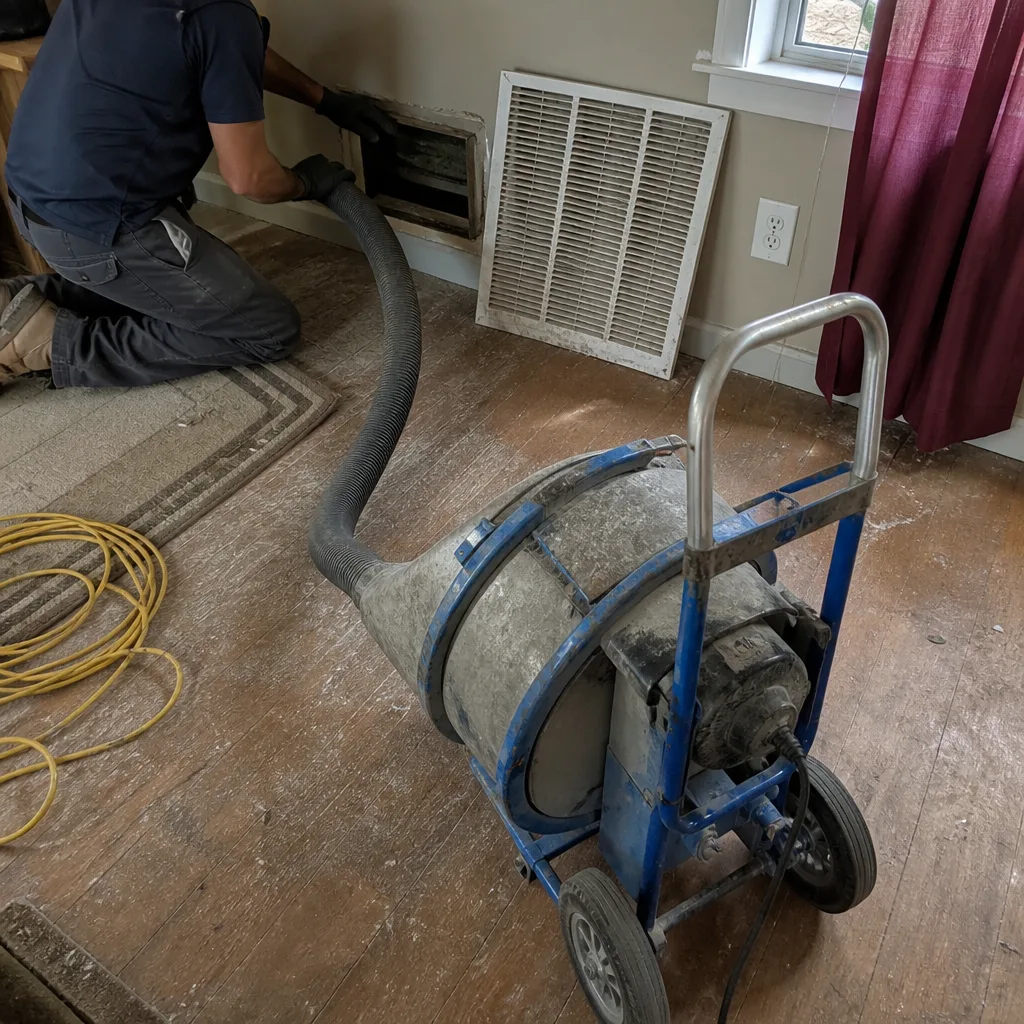 Before
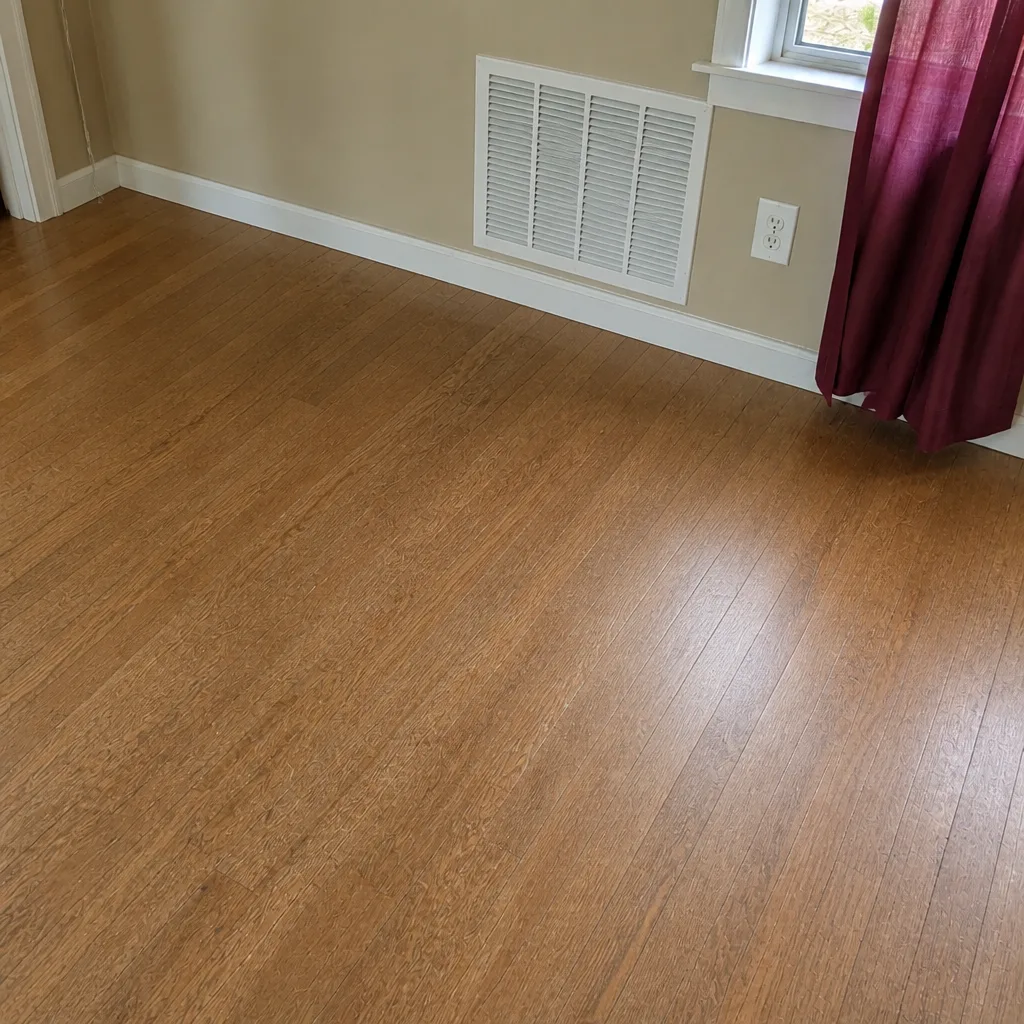 After
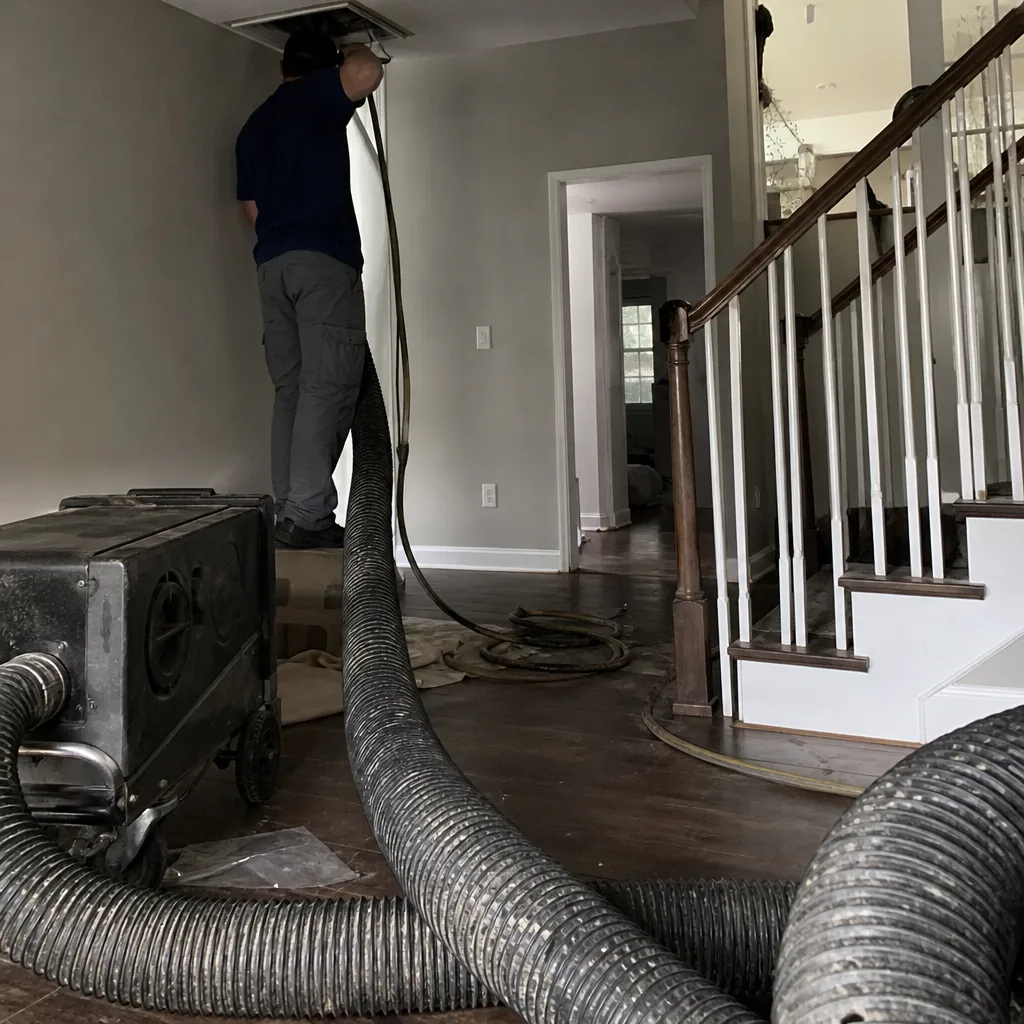 Before
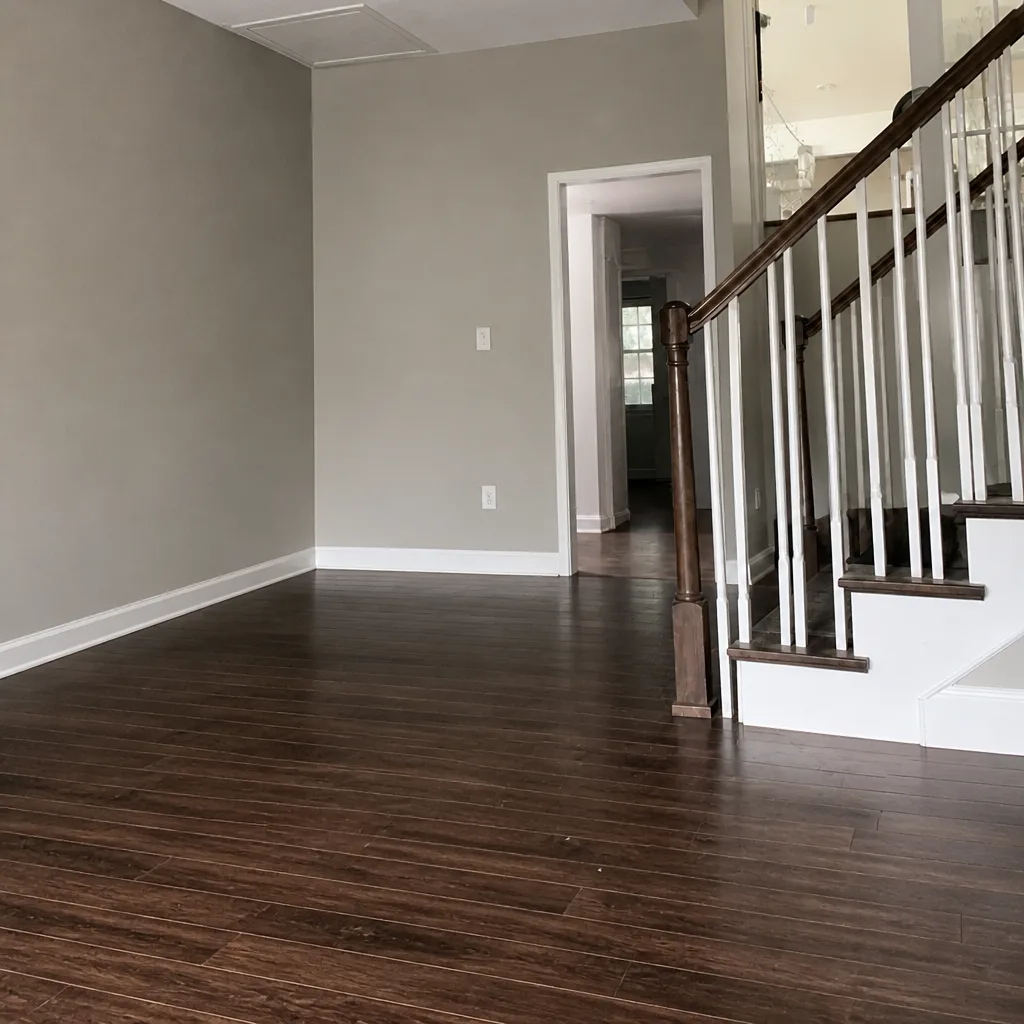 After
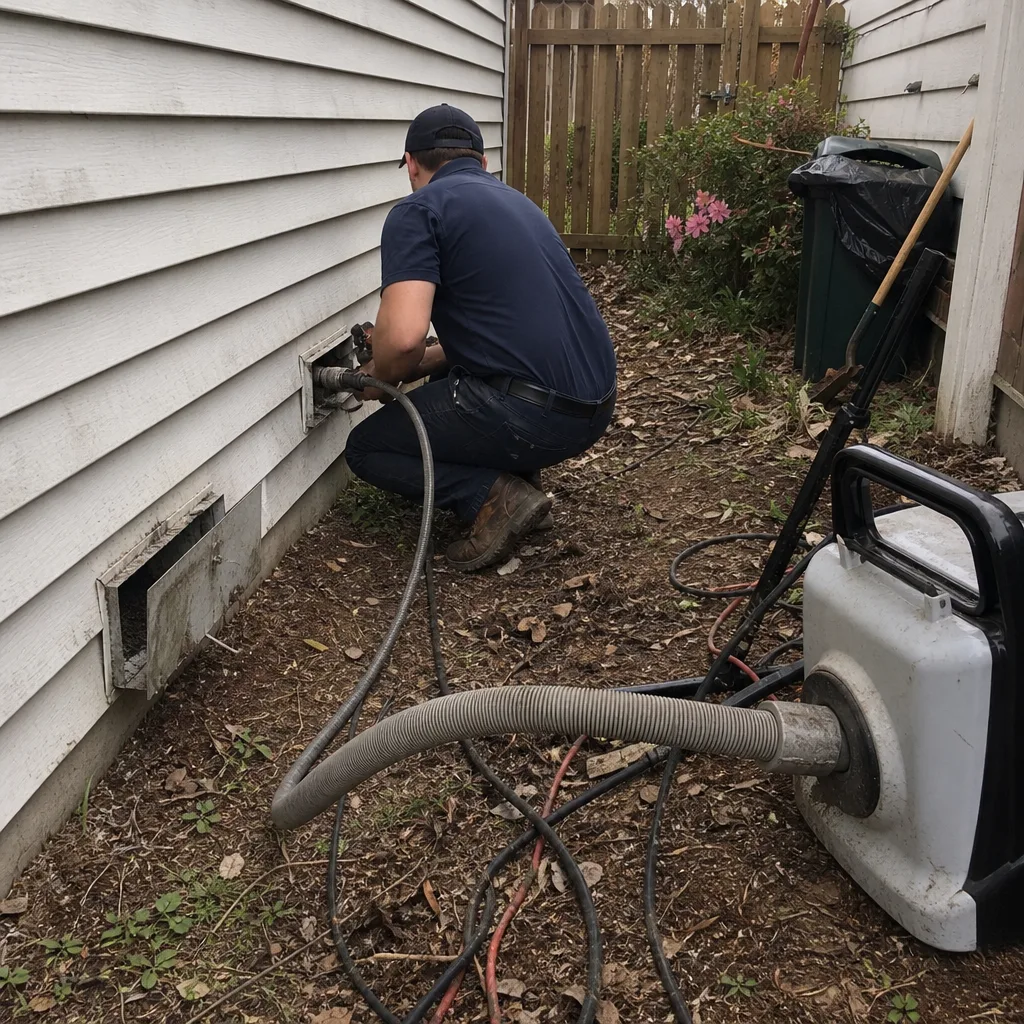 Before
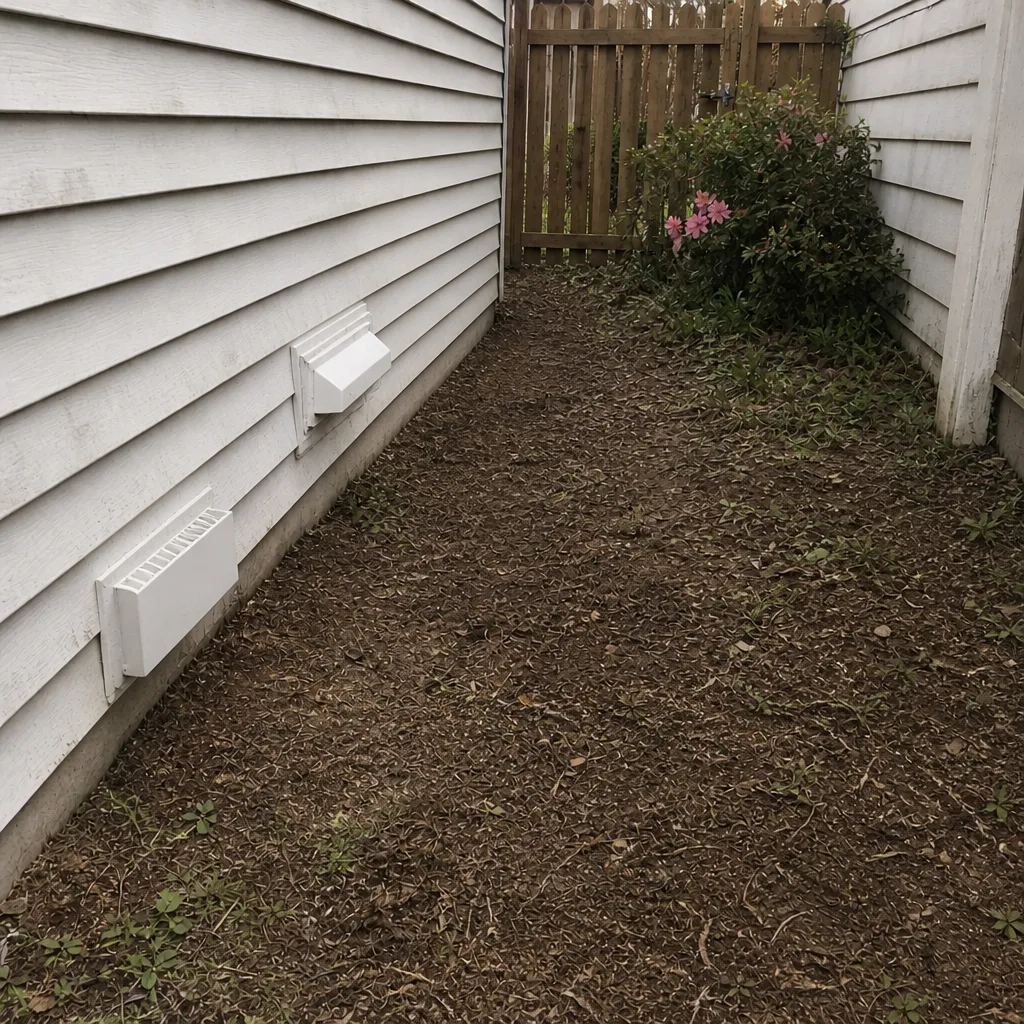 After
When to Call a Professional
Call a professional when you notice a musty smell that doesn’t clear when you leave the house, when allergy symptoms persist indoors while pollen season is over, when you see visible dust blowing out of a register on startup, or when a recent renovation or HVAC work left debris in the system. Call also if the ductwork is older than the last cleaning interval and the home sits on a crawlspace, where the vapor pathway makes the timeline shorter than a slab home’s. A duct run that has never been assessed for joint failure, or a roof-vented dryer that hasn’t been cleared in years, both deserve a call. Duct Cleaning Durham offers free estimates in Durham – call (866) 486-6152. We answer 24/7. Fast dispatch from 7am to 7pm, Sunday through Friday.
Frequently Asked Questions
Air duct cleaning in Durham is priced per system, by written estimate, with a typical range of $350 to $900 depending on the size of the home, the number of systems, and the condition of the ductwork. Whole-system pricing is what you should compare, not per-vent figures. The written estimate sets the final price before work begins, and estimates are free. Call (866) 486-6152 for an exact quote.
Cheaper quotes exist because the equipment is cheaper: a portable shop vac rather than a commercial collection system, no contact agitation tools, no air scrubbers, no return plenum cleaning, and no documentation. A shop vac pulls roughly 100 CFM against a Nikro commercial unit’s 2,000-plus, so a low-bid job puts debris in the air more than it removes it from the duct. The quote is lower because the job is smaller. Call (866) 486-6152 to compare a whole-system estimate.
You know because the technician shows you before-and-after footage of the same duct sections – trunk, branch, return plenum, and air handler cabinet – along with a photograph of what the collection unit pulled out. If an operator cannot provide that documentation, they cannot prove the work was done. Call (866) 486-6152 and ask what documentation the estimate includes.
Most Durham homes need evaluation every 3 to 5 years, with the actual interval depending on duct material, whether the home sits on a crawlspace, and whether anyone in the house has respiratory sensitivity. Homes with roof-vented dryers and crawlspace-adjacent duct runs shorten that window because of the humidity and lint pathways.
We can assess the duct system for failed joints and seal them as part of the same visit, which is the repair side of closing the crawlspace-to-duct pathway. If the crawlspace itself has a vapor barrier problem or standing water, that’s a separate scope and worth addressing with a crawlspace contractor so the duct cleaning actually holds. Call (866) 486-6152 to discuss what the estimate covers.
Guardsman-grade protective treatment is a residual surface treatment applied after cleaning to help duct surfaces resist re-contamination. It’s a capability we offer when the inspection shows duct surfaces that will otherwise reload quickly, such as flex duct in a high-humidity crawlspace home. It’s not a substitute for sealing the pathway; it’s an addition to it.
The Bottom Line
Durham’s duct problems are specific to Durham: the Piedmont humidity that drives growth inside ductwork, the cedar-oak-pine pollen load that seeds it, the pre-1990 flex duct and older metal systems that demand different cleaning techniques, and the crawlspace construction that connects the whole system back to soil moisture. A real cleaning addresses all of it with commercial equipment – a Nikro collection system, Rotobrush agitation, Abatement air scrubbers – and produces a documented verification. Anything less is equipment-limited. If your home has never had a proper assessment, call (866) 486-6152 for a free estimate. We answer 24/7. Fast dispatch from 7am to 7pm, Sunday through Friday. Repairs found during the cleaning get handled on the same visit, and the written estimate sets the price before any work starts.
Written by the team at Duct Cleaning Durham.