
Last updated November 15, 2026
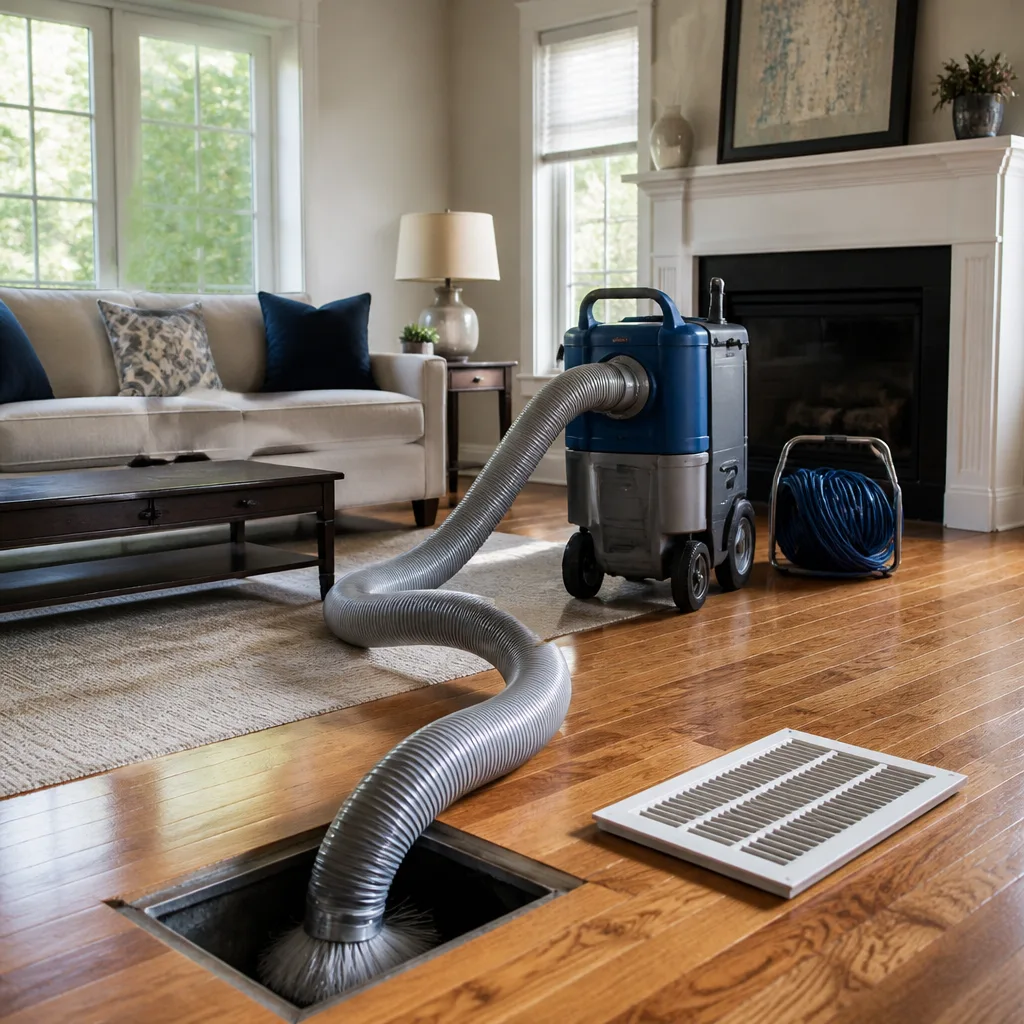 Whole-home duct cleaning
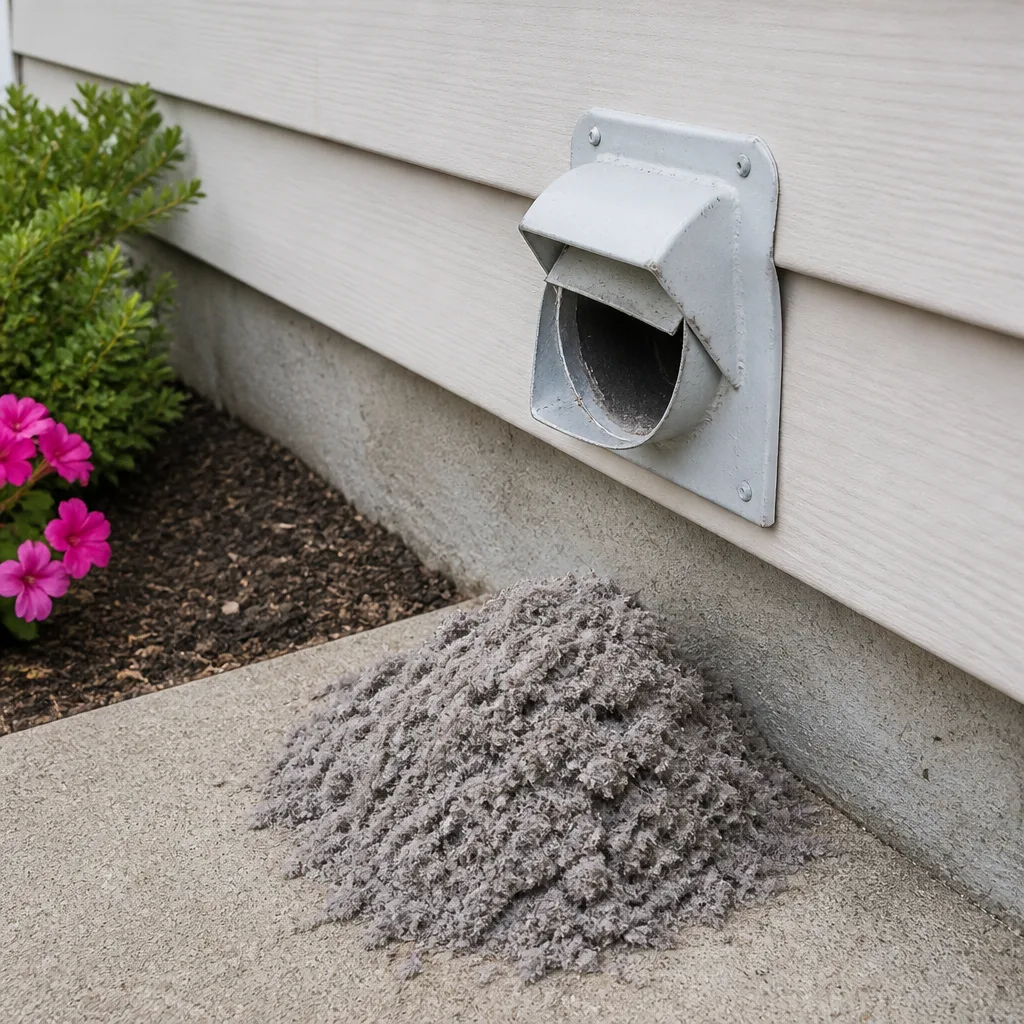 Dryer vent cleaning
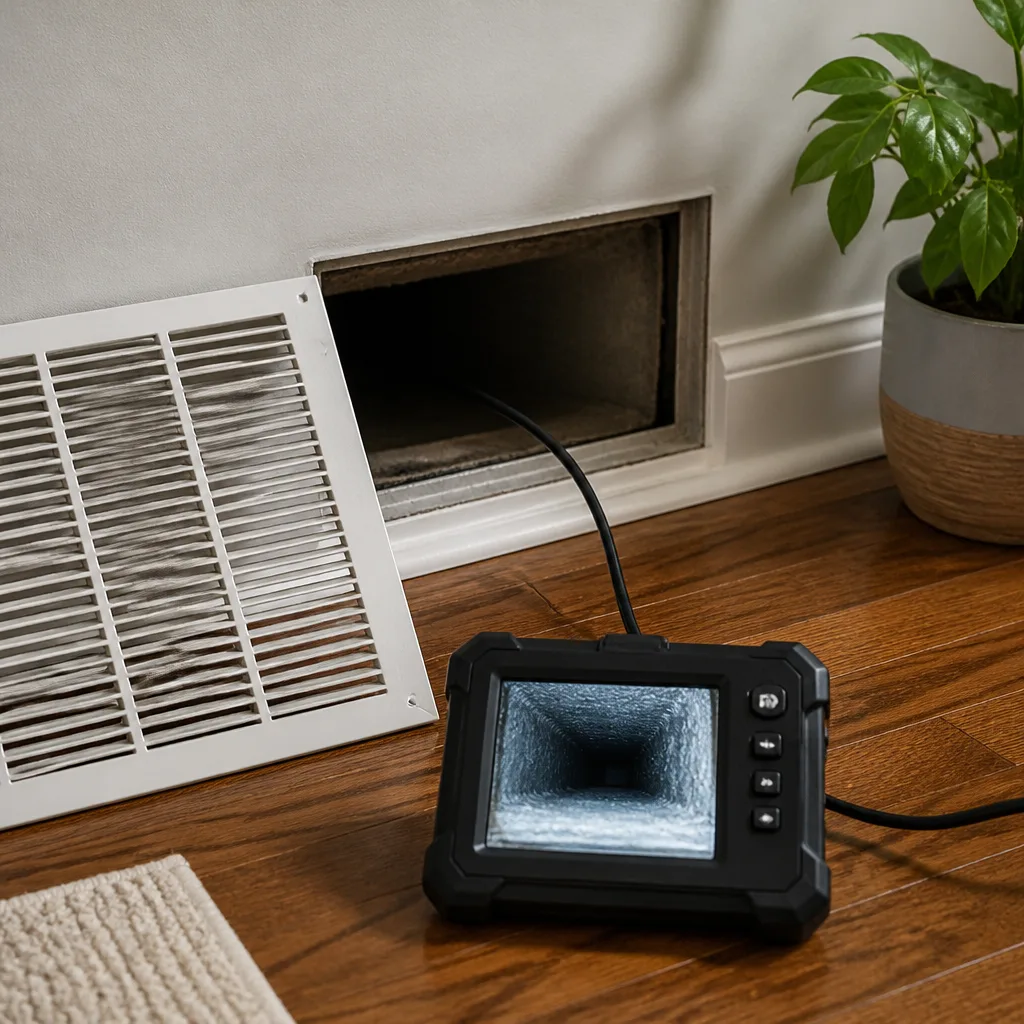 Camera inspection
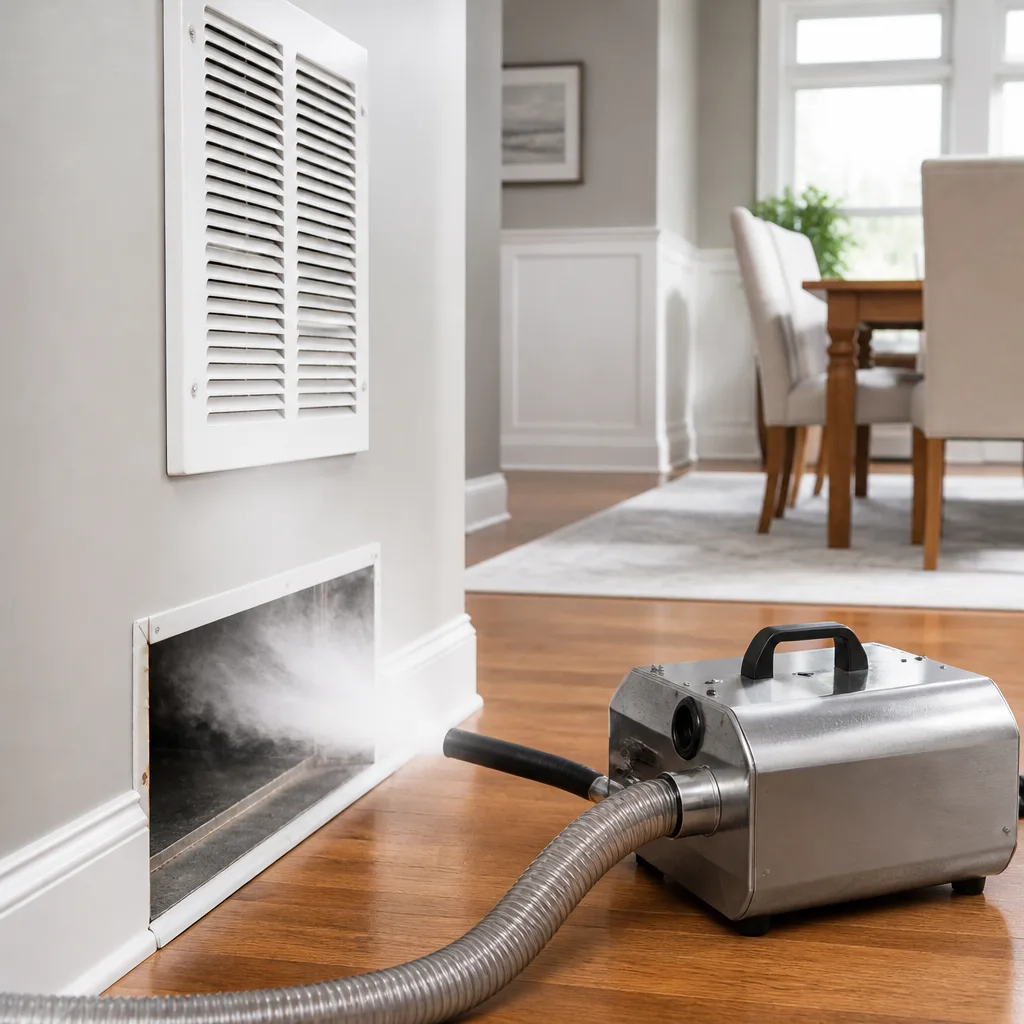 Sanitizing & deodorizing
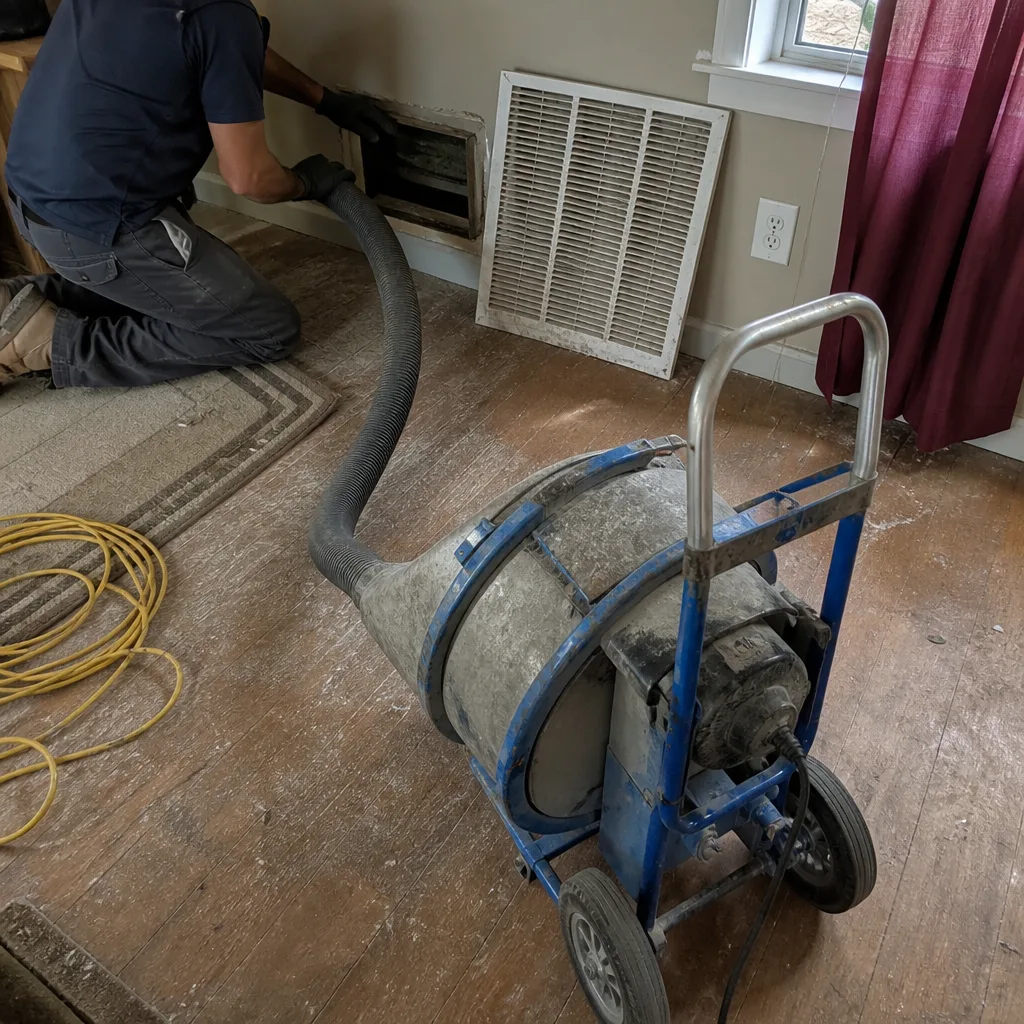
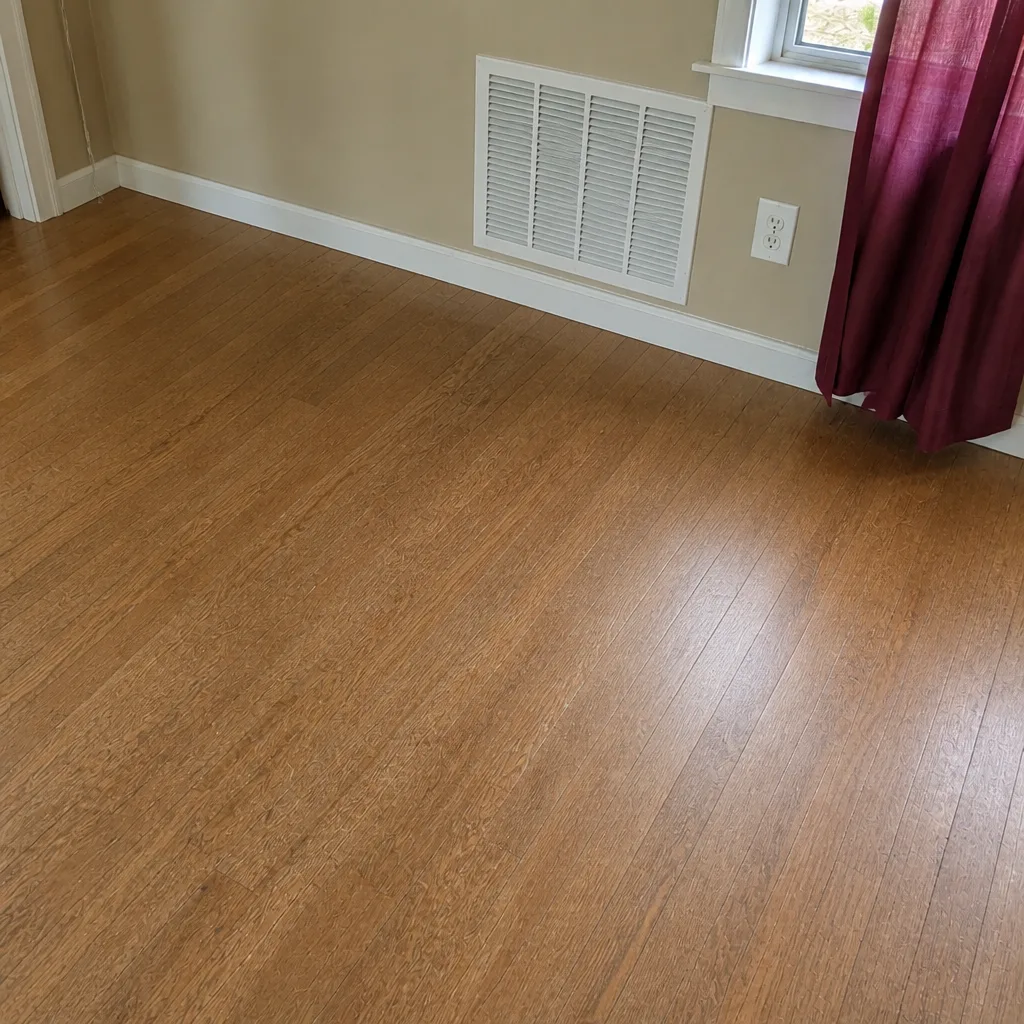
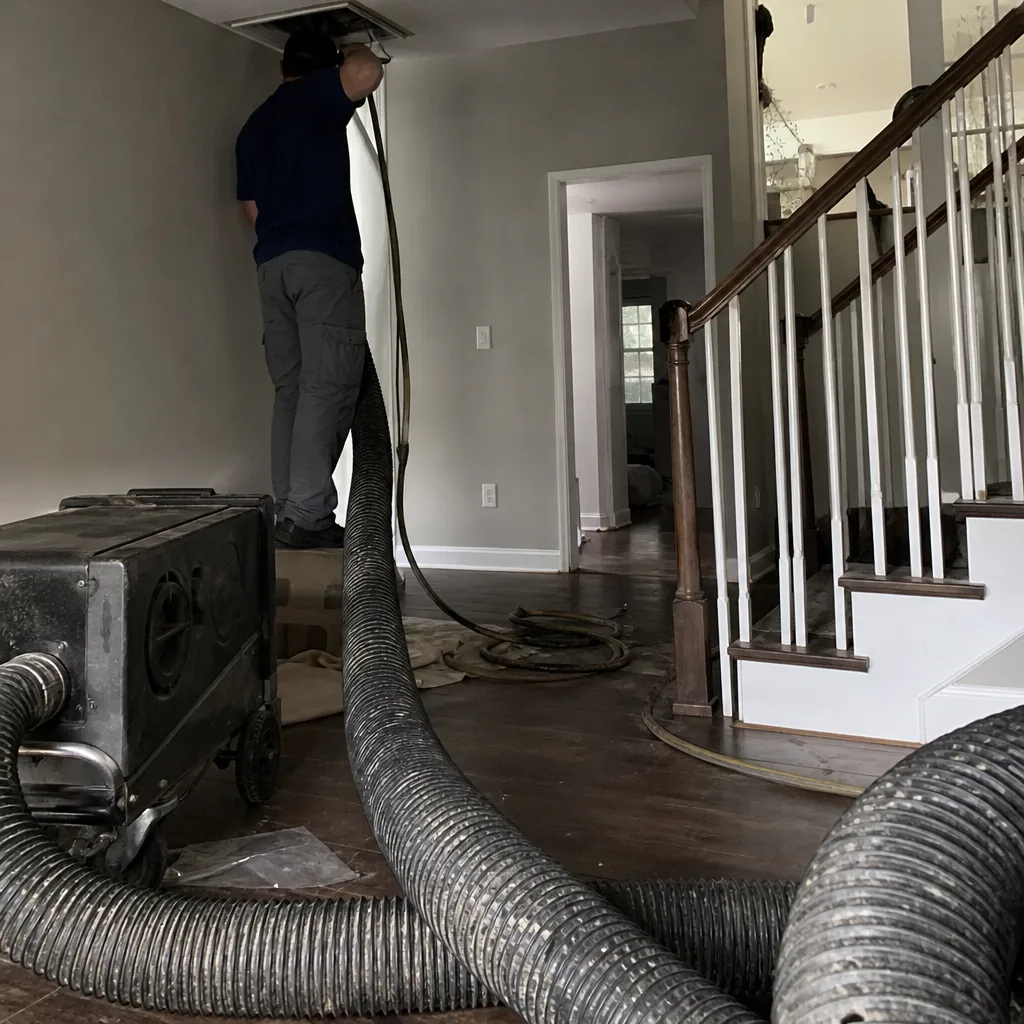
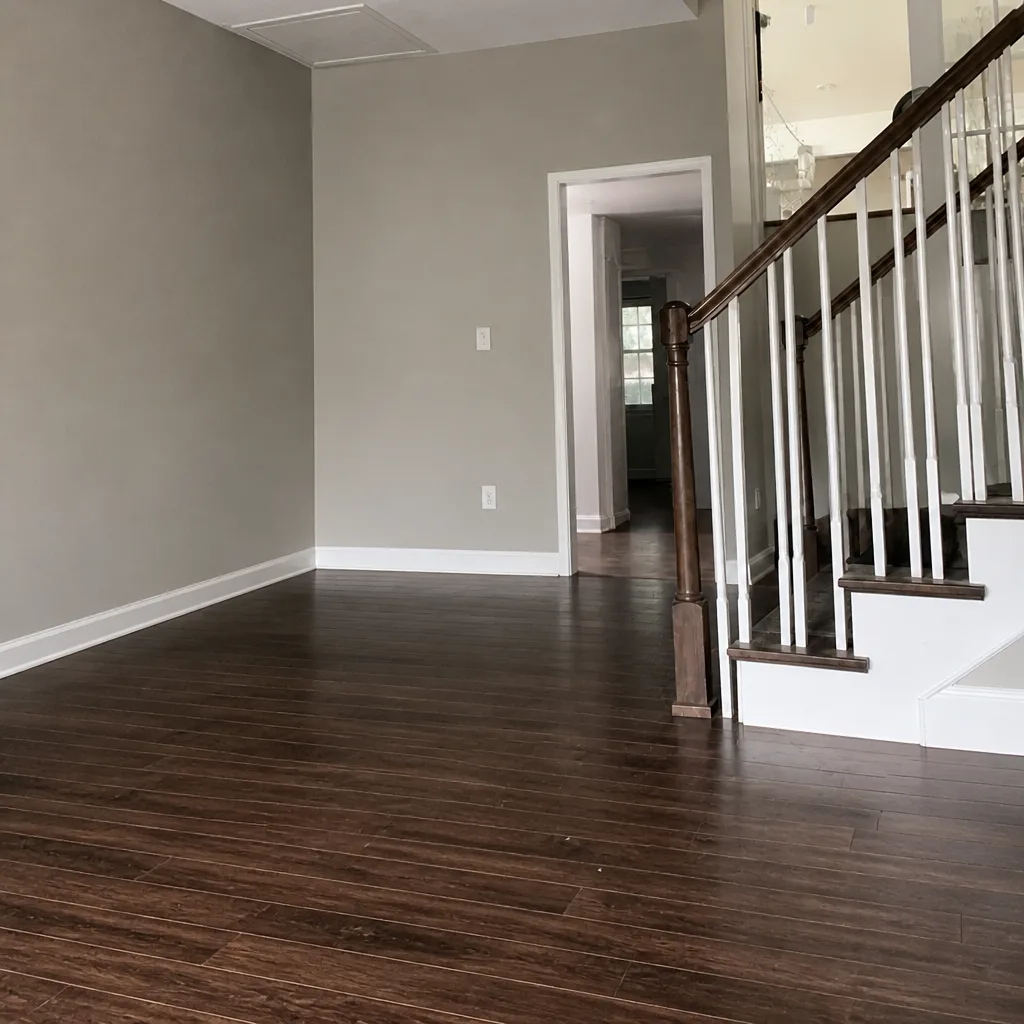
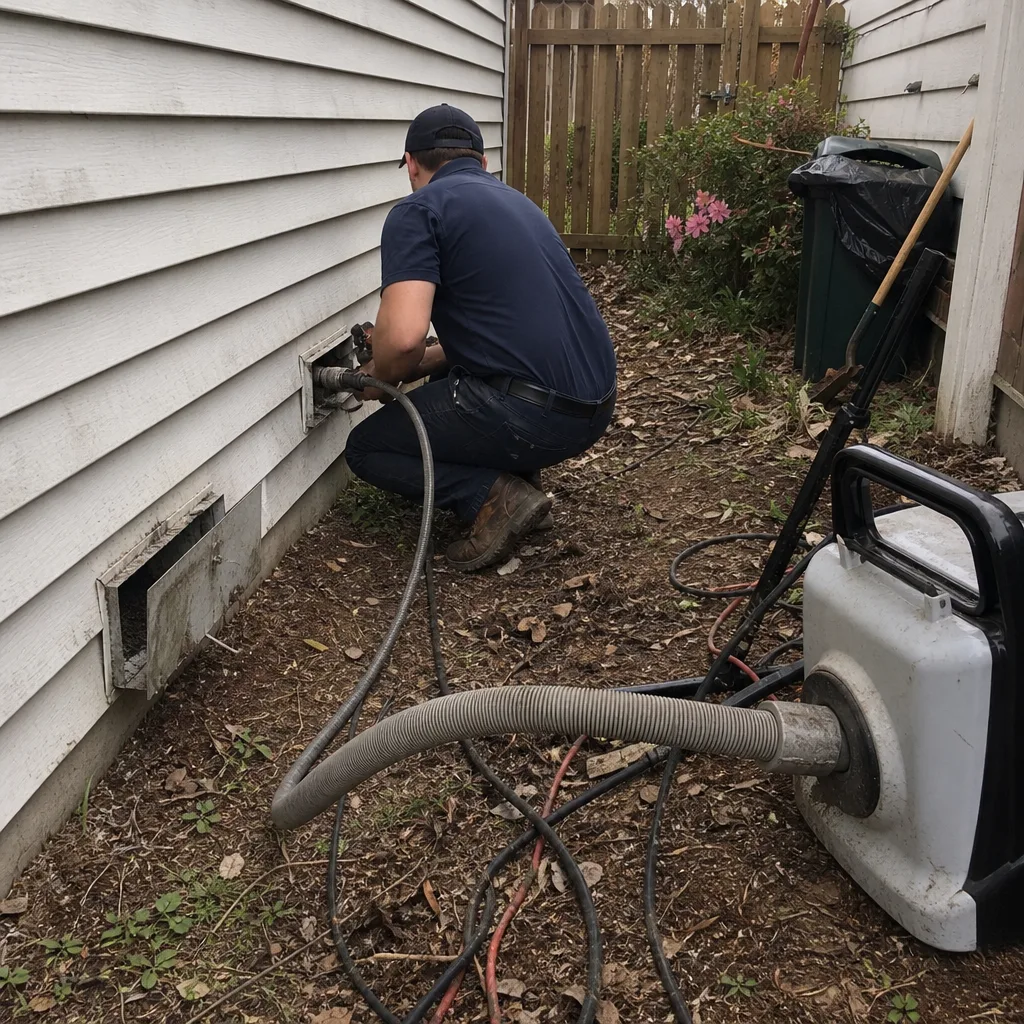
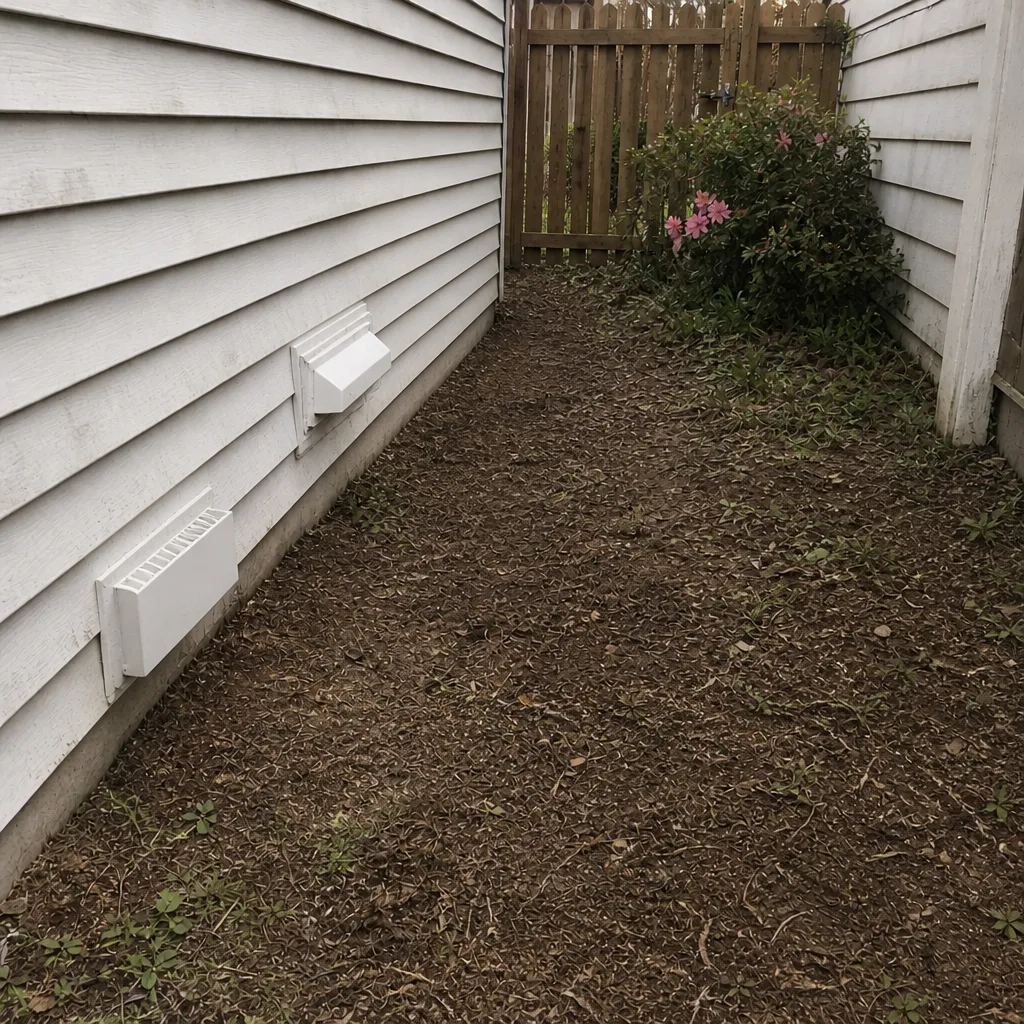
Whole-system duct and dryer vent check with before-and-after photos - you see exactly what came out of your vents
That "$99 whole-house special" is a bait ad - the real number appears once they are in your hallway, or the "clean" is a shop-vac at the register. We photograph the inside of your ducts before and after instead.
Choosing the Right Air Duct Cleaning Brand: A Buyer’s Guide for Durham
Most homeowners in Durham evaluating duct cleaning companies focus on the two signals everyone else is looking at: reviews and price. That is the mistake. Reviews can be curated over a weekend, and price is the most easily manipulated number on any quote sheet. The more reliable signal is the specific equipment a company names, because equipment is verifiable while everything else can be dressed up. A company that can reel off its collection unit and airflow rating is a company running a real system. A company that mumbles about “professional equipment” is telling you exactly what you need to know. This guide teaches you to read equipment as a capability signal, so you can tell which brands in Durham are equipped to do remediation-class work and which are running retail tools with a marketing department.
Styles & brands we work with
- Whole-home duct cleaning
- Dryer vent cleaning
- Camera inspection
- Sanitizing & deodorizing
Quick Answer
The right air duct cleaning brand for a Durham home is the one that can name its commercial-grade equipment (Rotobrush contact cleaners, Nikro HEPA vacuums, Abatement Technologies air filtration), show you how those tools contain debris rather than redistribute it, and back that with repair capability. If a company can’t tell you the make and airflow rating of its collection unit, treat that as a data point: it is very likely running consumer tools. Verifiable equipment is the clearest sign of which category of work a company is actually built to perform.
Table of Contents
- Why Equipment Is the Most Reliable Signal in Duct Cleaning
- What Rotobrush Systems Actually Do Mechanically
- Nikro, HEPA Collection, and Contaminated Environments
- Abatement Technologies and What Containment Really Means
- How to Verify Equipment Claims in Five Minutes
- What Equipment Investment Tells You About a Company
- Reading the Durham Market: Climate, Housing, and Air Ducts
- Common Mistakes to Avoid
- When to Call a Professional
- Frequently Asked Questions
- The Bottom Line
Why Equipment Is the Most Reliable Signal in Duct Cleaning
Equipment is the one thing on a duct cleaning quote that can be independently checked. You can look up a machine’s model number, read its rated airflow, and compare that against the negative pressure required during a proper cleaning. You cannot independently verify a five-star review, and you certainly cannot verify a low teaser price until the technician is in your hallway and the invoice is in your hand.
Most duct cleaners show up with a shop vac or a portable consumer unit rebranded as “professional.” Those machines have their place, but the category of work they can perform is far narrower than what commercial remediation equipment handles. When we talk about air duct cleaning in Durham, the equipment question separates two very different jobs: a light surface brush with a weak vacuum, and a full contact cleaning with contained collection. The two look similar in a before-and-after photo. They are not the same thing.
Here is what makes equipment a stronger signal than anything else on a quote:
- It is verifiable. Model numbers and airflow ratings are published by the manufacturers. You can look them up.
- It is expensive. Commercial remediation gear runs into the thousands of dollars per machine. That investment implies a different quality standard and a different target client.
- It dictates the possible outcome. A weak collection unit cannot capture what the brush agitates. The debris ends up where it started, or worse, redistributed into the living space.
- It is hard to fake convincingly. A company can copy a competitor’s marketing language, but it cannot easily buy a commercial system overnight.
This is the core of the buyer’s guide: learn what the named equipment can actually do, and you no longer have to trust the brochure.
What Rotobrush Systems Actually Do Mechanically
Rotobrush systems are contact-cleaning tools. The name matters less than the mechanical design. The brush head agitates the interior of the duct while the collection end of the same tool captures the loosened debris. Agitation and collection happen at the same point, in the same pass, which is very different from systems that agitate at one end and rely on a remote vacuum pulling air through the whole run to move debris back to the collection unit.
That distinction matters in a real Durham home because ductwork is rarely a clean straight shot. A house in a neighborhood like Forest Hills or Watts-Hillandale may have older galvanized sheet metal with turns, drops, and runs feeding different rooms. In remote-vacuum setups, debris has to travel the length of the duct to reach the collection point. In contact cleaning, the debris is captured where it is agitated, which is precisely what you want in a home with longer or more complicated runs.
In our experience, the choice between the two approaches comes down to the specific run:
- Short, straight, accessible runs can sometimes be handled with a remote setup, provided the vacuum is strong enough and the containment is solid.
- Long runs with multiple turns are more reliably served by contact cleaning, because the brush reaches the interior surface and the collection happens at the head rather than at the far end.
- Branched systems feeding many rooms benefit from a pass through each run, which contact cleaning makes straightforward.
- Compromised duct interiors, where you find deteriorated liner or heavy buildup, need the gentler control a contact tool gives you, so the surface is cleaned without damage.
Many companies own a Rotobrush-style unit. The meaningful question is whether they know how to use it on your specific duct layout, and whether the collection side of the machine is commercial-grade or a retail shell. A commercial-grade Rotobrush contact cleaner paired with proper containment is what allows a technician to clean a Durham home’s ducts without turning the living room into a dust storm.
Nikro, HEPA Collection, and Contaminated Environments
Nikro Industries builds HEPA-class collection equipment, and their commercial models pull substantial airflow with true high-efficiency filtration. That’s the same category of equipment used in hospital HVAC remediation and commercial remediation work. The reason it’s relevant to a residential job is biological contamination.
A light accumulation of household dust in ducts is one thing. A system with visible biological growth, musty odors, pest evidence, or water intrusion is a different category of problem, and it calls for collection equipment capable of trapping what it picks up rather than blowing it through a filter that doesn’t hold it. HEPA filtration is exactly what that requires.
Here is where retail-grade tools fall short:
- Filtration grade. A consumer vacuum’s filter is not HEPA, and the fine particulate it misses goes back into the room where you breathe it.
- Airflow and capacity. Commercial models are rated at airflow levels that can actually move and hold a full run’s worth of debris without the unit bogging down.
- Containment integrity. Commercial units are built for continuous operation and sustained negative pressure, which is what a full-system cleaning requires.
- Duty cycle. A retail unit will overheat on a job that requires sustained operation. Commercial units are built to run through the whole house.
When a Durham home shows signs of biological contamination in the ducts, the honest answer is that retail equipment is not the right tool for that job. Commercial HEPA collection is the tool you want.
Abatement Technologies and What Containment Really Means
Containment in residential duct cleaning is not the same thing as containment on a full remediation project, but the principle is identical: keep what you pull out of the system from becoming airborne in the space you are trying to clean. Abatement Technologies negative air machines and HEPA vacuums are built to create the pressure differential that makes proper collection possible. In a residential job, that means the work area is held at slightly negative pressure so airborne particulate moves toward the collection equipment instead of away from it.
Without that pressure differential, debris you pull from a duct can settle on furniture, get pulled into the HVAC return, or lodge in the carpet. The cleaning is no longer improving the air in the home. It’s redistribution.
What containment looks like in practice:
- Seal the openings. Supply registers, returns, and access points are sealed before cleaning begins.
- Attach the collection unit. The vacuum is connected to the system so the entire duct run is under negative pressure.
- Set the pressure differential. The air filtration machine maintains the pressure gradient throughout the job.
- Clean under pressure. Contact cleaning proceeds while the system is held under negative pressure, so loosened debris travels to the collection unit.
- Verify and photograph. The system is inspected before registers are resealed, and before-and-after photos of your own ducts document the work.
The key point for a Durham homeowner: containment is a process, not a single machine. A company can own a piece of Abatement equipment and still not run containment correctly. Ask how they set up pressure, and listen for whether they explain it clearly. If they can’t, that is a real answer.
How to Verify Equipment Claims in Five Minutes
Verification is simple, and it is the step most homeowners skip. You don’t need any technical background. You need to ask three questions, then look up what you’re told.
- Ask for the specific make and model of the collection unit. Not the brand category. The model number.
- Ask for the rated airflow in CFM. Any commercial unit has a published figure. If the answer is “I’d have to check,” treat it as a data point.
- Look up the model. The manufacturer’s page will confirm the class of the machine. You’ll know within a minute whether you’re looking at commercial equipment or a consumer shell.
- Ask how negative pressure is maintained during the cleaning. A knowledgeable technician can describe the containment setup.
- Ask about before-and-after photos of your own ducts. This is a documentation question, but it also tells you whether the company has a verification habit.
The NADCA ACR standard is the industry reference for how duct cleaning should be performed, and it requires maintaining negative pressure during the cleaning. You don’t need to memorize the standard, but you can reference it when you talk to a company and see whether the response is fluent or deflecting. A company comfortable with the technical standard is a company running the equipment to match it.
This is also where the brand story becomes a genuine due-diligence advantage for property managers in Durham. When you are hiring on behalf of tenants, the equipment question is one you can hand to a board or a compliance officer and get a documented answer.
What Equipment Investment Tells You About a Company
A company running commercial remediation equipment has a different cost structure than a company running retail tools. The machines cost more, they require more training, and the jobs they’re suited to are longer and more involved. That shapes the kind of client the company is set up to serve, and it shapes the quality standard they hold themselves to.
Here is the practical translation for a Durham homeowner:
- Accountability. A company that has invested in commercial gear is unlikely to walk away from a problem its equipment can solve. Repair capability becomes part of the job, not a referral out.
- Outcome quality. The cleaning that actually happens inside the duct is governed by the equipment. Better equipment means more of the duct surface is contacted and more of the debris is captured.
- Scope. Companies that run commercial equipment are usually set up to handle the full duct ecosystem: cleaning, dryer vent cleaning, and repair. The same equipment handles different jobs.
- Pricing shape. Commercial equipment implies a per-job price, not a per-vent teaser. That is actually a good sign for the homeowner, because it forces a scope conversation before the work begins.
What we’ve found in our own work is that the price question answers itself once the equipment question is settled. When a company prices one flat price per system, agreed before work starts, you get a written estimate that reflects the actual job. When a company leads with a coupon price and a per-vent rate, you should expect to see that price change.
Reading the Durham Market: Climate, Housing, and Air Ducts
Durham’s climate affects duct systems more than many homeowners realize. Hot, humid summers mean the air conditioning runs hard for a long stretch of the year, and a duct system that is moving conditioned air through a hot attic or crawl space has to work against real temperature and moisture loads. That combination is what makes seasonal duct condition something worth checking. A slightly compromised return in a Durham home doesn’t just leak air. It pulls humid air into the system, and that is what feeds dust accumulation and, in the worst cases, biological growth.
Housing stock in Durham varies widely. Older homes in Trinity Park or Old West Durham can have ductwork that was retrofitted or reworked over the decades. Newer construction in parts of South Durham can have tighter systems but more complex layouts feeding multiple zones. Neither is automatically a problem, but the layout is one reason a skilled technician asks about the run before quoting.
If you are comparing a company with a commercial system against one with consumer tools on a Durham home with a mixed-age system, the equipment question is not academic. It is the difference between a cleaning that reaches the surfaces and one that doesn’t. Our technicians have up to 13 years of experience, and the majority of that experience is learning which tool is right for which run.
Common Mistakes to Avoid
- Choosing on price alone. The lowest quote is usually the lowest because the equipment and the scope are smaller. A per-vent teaser price in Durham often becomes a much larger invoice once the technician is in the house. Treat a low price as a question, not an answer.
- Not asking for equipment names. Reviews can be curated, but commercial equipment is a documented fact. If the company can’t name its collection unit and airflow rating, that is information you needed.
- Assuming a shop vac is a duct cleaning machine. A retail vacuum and a commercial HEPA system are in different categories. They look similar in photos and they are not remotely the same tool.
- Skipping the containment question. Without a proper pressure differential, the dust you paid to have removed ends up back in the room. Ask how negative pressure is maintained before the work begins.
- Ignoring the dryer vent. A clogged dryer vent is a residential fire hazard, and it’s often skipped because it’s not visible in the main duct system. A dryer vent isn’t a maintenance item; it’s a fire-prevention item.
- Deferring repairs to a second contractor. When a cleaning turns up a damaged run or a failed connection, the right move is to fix it in the same visit. Finding the problem and then scheduling a second company is how small issues become larger ones.
- Not asking for before-and-after photos of your own ducts. A photo of someone else’s ducts proves nothing about your job. Ask for photos of the work done in your home, and expect them.
When to Call a Professional
Some duct problems are obvious: visible dust plumes from a register, musty odors when the system runs, pest evidence in a return, or a dryer that takes noticeably longer to dry a load. Others show up as symptoms rather than causes: unexplained allergies through the cooling season, a system that seems to be pushing less air, or a room that never gets as cool as the rest of the house.
If you’re not sure whether your ducts need attention, that’s exactly when a professional assessment helps. An inspection can confirm whether the problem is duct-related, and it can catch the smaller issues that are easier to fix before they compound. Duct Cleaning Durham offers free estimates in Durham: call (866) 486-6152. We answer 24/7. Fast dispatch from 7am to 7pm, Sunday through Friday.
Frequently Asked Questions
Air duct cleaning in Durham is priced per system, not per vent, and the written estimate you get before work begins is the final price. Whole-system pricing depends on the number of runs, the layout, and the condition of the ducts, so a quote over the phone without a look at the system is a guess. Ask for the flat price and the written estimate before scheduling. Call (866) 486-6152 for an exact quote: estimates are free.
Cheap quotes usually reflect cheaper equipment and a narrower scope. A low teaser price is often a per-vent rate that grows once the technician is on site, and the work that follows a consumer-grade vacuum is not the same work as commercial contact cleaning with HEPA collection and containment. The two quotes are not for the same job. Call (866) 486-6152 to compare an estimate that reflects the equipment and the scope.
Ask for before-and-after photos of your own ducts, not a sample from another job. You should also be able to see the containment setup and hear how negative pressure is maintained during the cleaning. Documentation is what separates a verifiable job from a claim. Call (866) 486-6152 to talk through what we document on a job.
There’s no single right answer for every home, but there are clear triggers: visible dust or odor at the registers, water intrusion, pest evidence, a renovation that produced heavy dust, or a system that hasn’t been checked in a long while. A household with allergies or a humid Durham cooling season may want to check more often. If you’re unsure, an inspection is the way to find out. Call (866) 486-6152 for a free estimate.
We use commercial-grade equipment including Rotobrush contact systems, Nikro HEPA vacuums, and Abatement Technologies air filtration on residential and light-commercial jobs alike. The same category of equipment is used in hospital HVAC remediation, and it is the right tool for a home with biological contamination or a complicated duct layout. You can ask for the make and model before you book. Call (866) 486-6152 for specifics on a job.
Yes. When a cleaning turns up a damaged run or a failed connection, our capability includes the repair, so the problem can be resolved in the same visit. That means fewer jobs deferred to a second contractor and fewer surprises after the work is done. Call (866) 486-6152 to talk through what a repair would involve in your home.
The Bottom Line
Equipment is the most reliable signal on a duct cleaning quote because it is the one thing you can verify. Rotobrush contact systems, Nikro HEPA collection, and Abatement Technologies air filtration represent commercial remediation-class capability. Consumer tools dressed up as professional gear represent a different, narrower category of work. Ask for the make and model. Ask about airflow. Ask how negative pressure is maintained, and ask for before-and-after photos of your own ducts. A company that answers those questions fluently is a company you can hold to a flat price per system agreed before work starts. That’s the standard we build our Duct Cleaning Durham work around, and it’s what a Durham homeowner deserves to expect.
Call (866) 486-6152 for a free estimate. We answer 24/7. Fast dispatch from 7am to 7pm, Sunday through Friday.
Written by the team at Duct Cleaning Durham.
See the difference
 Before
 After
 Before
 After
 Before
 After