
Last updated November 15, 2026
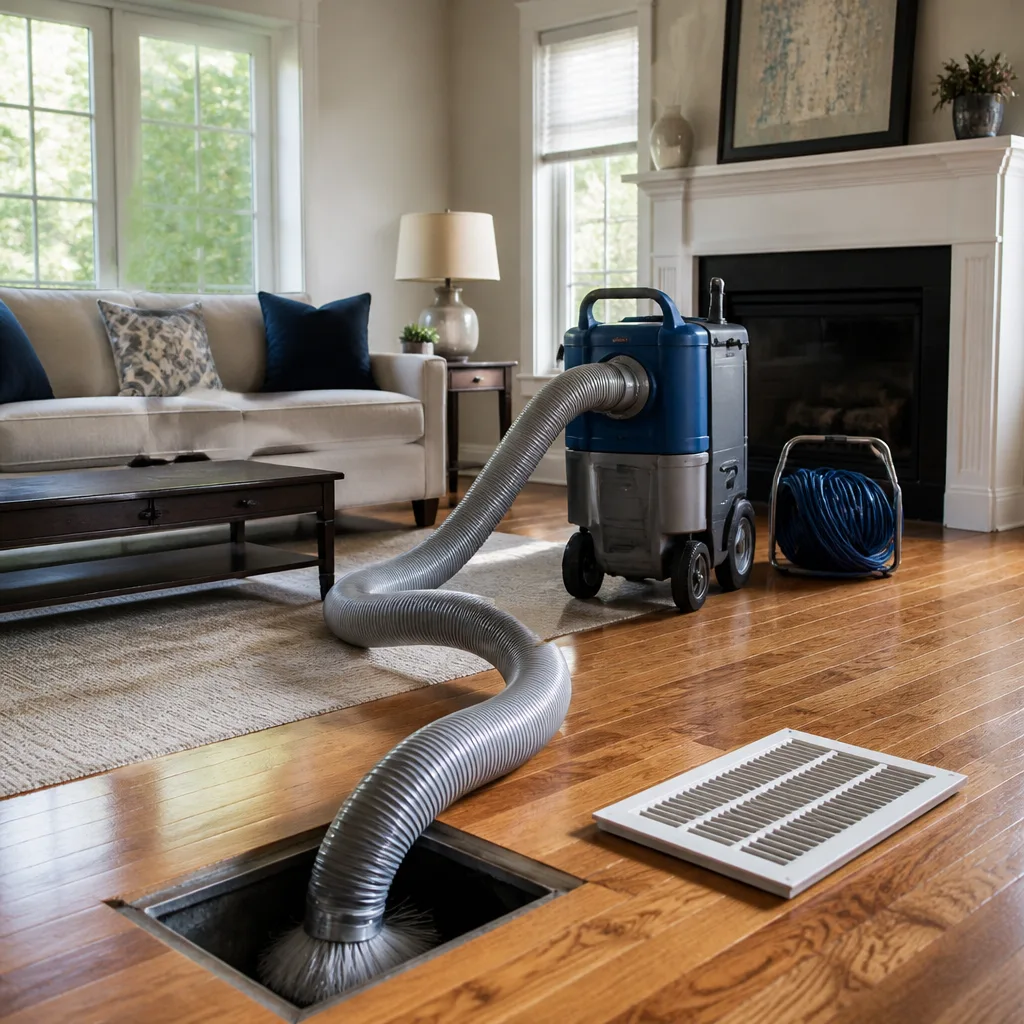 Whole-home duct cleaning
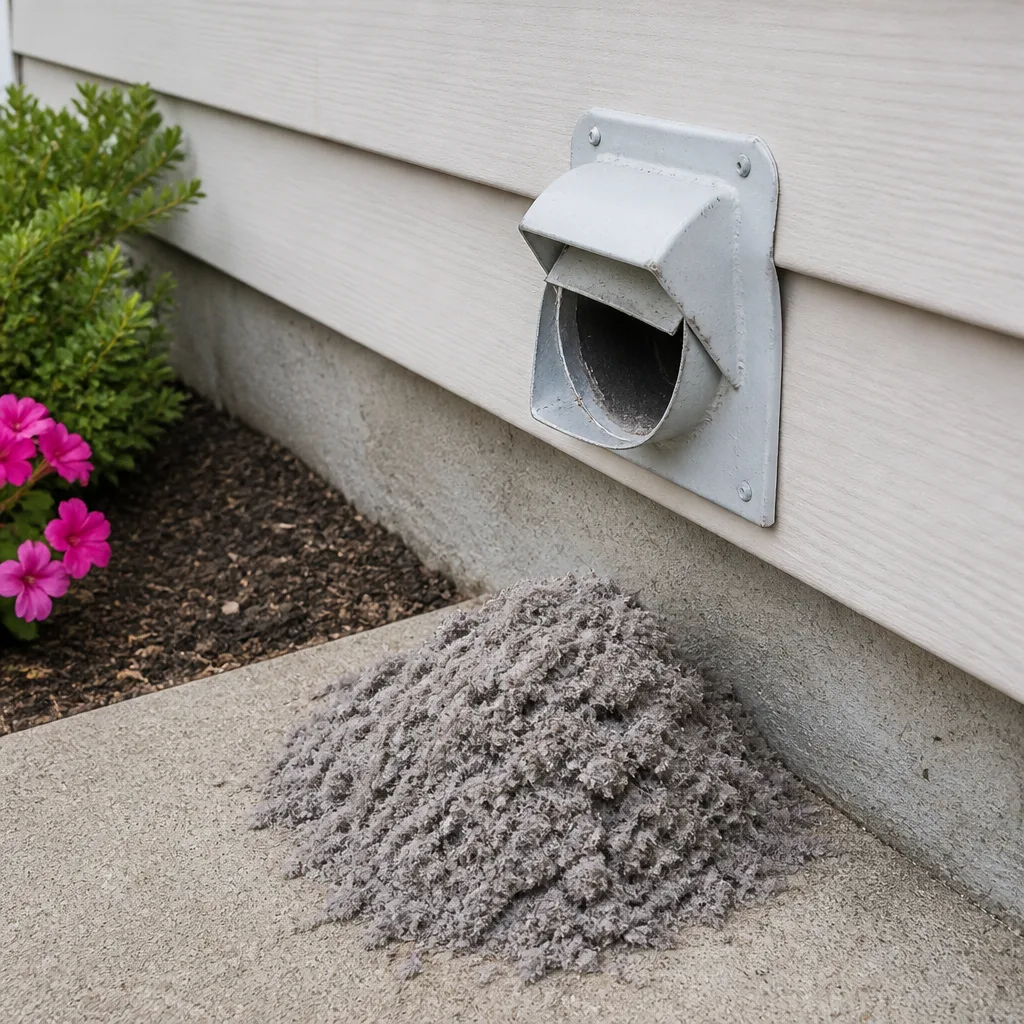 Dryer vent cleaning
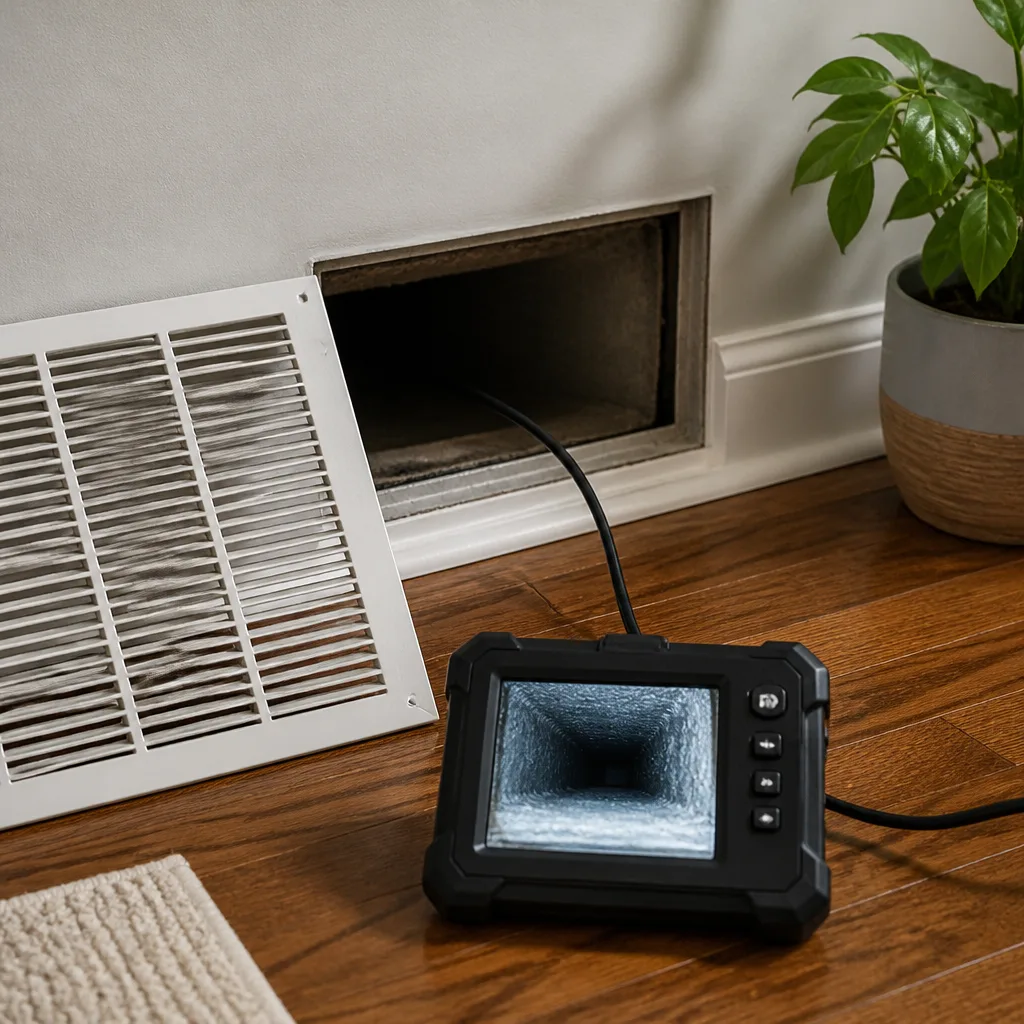 Camera inspection
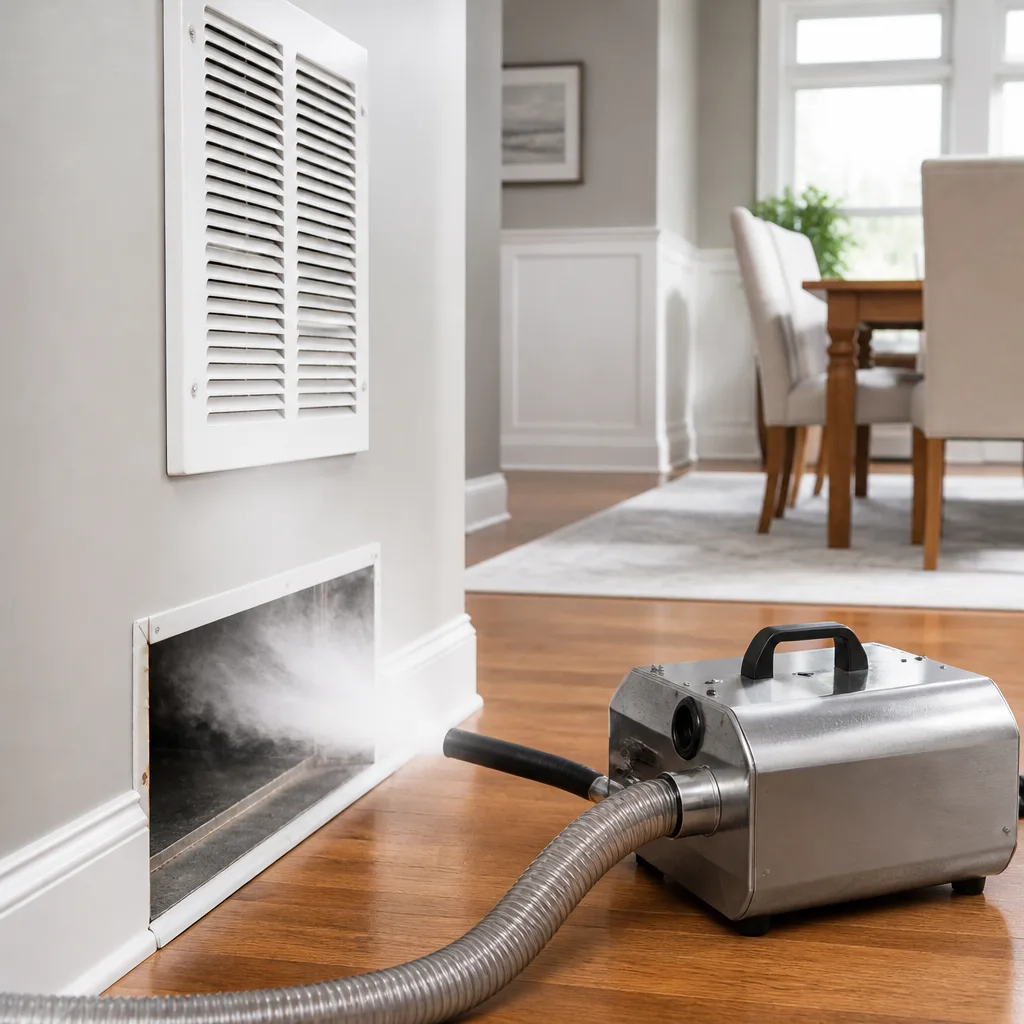 Sanitizing & deodorizing
Whole-system duct and dryer vent check with before-and-after photos - you see exactly what came out of your vents
That "$99 whole-house special" is a bait ad - the real number appears once they are in your hallway, or the "clean" is a shop-vac at the register. We photograph the inside of your ducts before and after instead.
Air Duct Cleaning Cost Breakdown: The Durham Homeowner’s Reference for 2026
A $99 duct cleaning quote and a $450 duct cleaning quote in Durham are not the same service at different price points. They’re categorically different processes, run with equipment that differs by an order of magnitude in collection capacity. Comparing them on price alone is like comparing a pressure washer to a garden hose: both move water, but only one does the job you’re actually paying for. This guide breaks a Durham duct cleaning bill into its real components, explains what each dollar buys in mechanical terms, and shows you how to read a quote against deliverables instead of against the other guy’s number.
Quick Answer
Air duct cleaning in Durham typically runs $350 to $600 for a standard 1,500 to 2,500 sq ft home with central HVAC, or roughly $30 to $45 per register on a per-register basis. Camera inspection usually adds $75 to $150, and dryer vent cleaning as a separate scope runs $125 to $225. The final price is set by a written estimate after someone looks at your actual system, not by a phone special.
Styles & brands we work with
- Whole-home duct cleaning
- Dryer vent cleaning
- Camera inspection
- Sanitizing & deodorizing
Table of Contents
- What are you actually paying for? The real cost components
- Why per-register pricing beats flat pricing in Durham
- 2026 Durham price ranges by job type
- Add-ons with real cost justification vs. upsells without
- The remediation escalation path
- How to read a duct cleaning quote
- How to verify the work was actually done
- How often does it really need doing?
What Are You Actually Paying For? The Real Cost Components
A legitimate duct cleaning price isn’t a labor rate multiplied by hours. It’s the sum of four physical costs that any operator running commercial-grade equipment has to carry, and those costs don’t shrink just because a competitor quotes less. Here’s where a typical Durham job’s money goes.
1. Equipment transport and setup
The equipment is the biggest invisible line item. A Rotobrush contact-cleaning system paired with a Nikro industrial vacuum and an Abatement Technologies air scrubber is not a shop vac with a hose. Commercial collection units weigh in the hundreds of pounds and need a dedicated setup: vacuum connection to the trunk line, negative-pressure containment in the work area, and air filtration running before a single register is touched. That setup is 30 to 60 minutes of a two-person job that produces zero visible progress. Cheap quotes skip it because cheap equipment doesn’t require it.
2. Technician labor per register
Every supply and return register is its own small job: access, seal, agitate the duct walls, pull the debris back to the collection unit, then verify. A 10-register home and a 22-register home are not close to the same amount of work. This is the component that scales most directly with your house.
3. Video inspection time
Running a camera through supply runs, the trunk, and the return plenum takes time and a trained eye to interpret. It’s also the only way to find out whether you’re buying routine maintenance cleaning or walking into a bigger problem.
4. Debris disposal
Everything collected has to be bagged, sealed, and disposed of properly. It’s not glamorous, but it’s real, and it’s the reason a contained job with commercial equipment costs more than blowing dust into the living room.
When you add those four together, the floor on a legitimate job becomes obvious. Our technicians have up to 13 years of experience, and in that time the pattern hasn’t changed: quotes far below the market floor almost always mean one or more of those components was removed.
Why Per-Register Pricing Beats Flat Pricing in Durham
Durham’s housing stock is not uniform. A 1,400 sq ft ranch with a simple trunk-and-branch layout might have 10 registers. A 2,800 sq ft two-story near Hope Valley or in the older neighborhoods closer to downtown could easily run 22, with a longer trunk run, more turns, and a second floor’s worth of branch ducts. A whole-home flat price treats those two houses as identical, which means one of them is subsidizing the other. Usually the smaller house.
Per-register pricing is more transparent for exactly this reason. You can count your own registers before you call. Walk the house with a notepad:
- Count every supply register (the ones blowing air into a room) on each floor.
- Count every return grille (the larger ones pulling air back).
- Note any registers in finished basements, additions, or converted garages, which often have separate or extended runs.
- Ask the estimator whether that count drives the estimate.
A per-register quote lets you check the math yourself. A flat quote with no register count attached is a quote you can’t audit. Ask for the count, and understand whether it includes returns.
2026 Durham Price Ranges by Job Type
These are typical ranges for the Durham market. Your written estimate is what actually sets your price.
- Base air duct cleaning, 1,500 to 2,500 sq ft with central HVAC: $350 to $600
- Per-register equivalent: $30 to $45 per register, returns included
- Camera inspection add-on: $75 to $150
- Dryer vent cleaning (separate scope): $125 to $225
- Minor duct repair found during cleaning: quoted per job after inspection
- Light-commercial, small office or retail space: quoted per job after a walkthrough
Durham’s climate context matters here. Our long, humid summers mean the cooling coil and the return side run wet for months, which is where dust binds into the sticky film that a light vacuum can’t lift. Winters are mild enough that heating runs don’t dry the system out the way they do further north. That humidity cycle is a big part of why Durham homes often need contact cleaning rather than a simple vacuum pass, and contact cleaning is what the Rotobrush system is built for.
Add-Ons with Real Cost Justification vs. Upsells Without
Some add-ons are worth the money. Others are a fog machine and a receipt. The dividing line is simple: does the add-on produce a measurable result you can see or verify?
Legitimately justified
- Video documentation. Before-and-after footage of your own ducts. It’s the only way to confirm the work happened, and it’s worth paying for if it’s offered as an option.
- Coil cleaning. The evaporator coil sits downstream of the return. A dirty coil restricts airflow and shortens equipment life. If it’s accessible and fouled, cleaning it has a real effect.
- Dryer vent cleaning. This is a separate scope and a separate safety service, not a duct cleaning add-on. A dryer vent isn’t a maintenance item, it’s a fire-prevention item. Lint accumulation in the vent run is a leading cause of residential house fires, and it doesn’t get addressed by cleaning the HVAC ducts.
- IAQ products with a name on them. We’re authorized to supply and install Honeywell and Aprilaire indoor air quality products, and the reason we offer them is that filtration and humidity control are the long-term lever on duct contamination. A whole-home media filter or a properly sized dehumidifier changes what ends up in the ducts in the first place.
Upsells without a measurable outcome
- Generic “sanitizer” foggers. Fogging without source removal just coats the film. The material is still there.
- Ozone treatments on an uncleaned system. Ozone doesn’t remove debris. It treats air, not surfaces, and source removal has to come first.
- “Antimicrobial” sprays with no documentation. Ask what product, what active ingredient, and what it’s approved for. If the answer is vague, so is the outcome.
The Remediation Escalation Path
Here’s the part of the cost conversation that rarely gets explained up front. A routine cleaning quote is a quote for a system with ordinary dust and debris. If inspection turns up active biological growth on duct surfaces, the job changes category. That’s not a sales tactic, it’s a mechanical reality: you can’t pull wet, colonized material through a standard collection setup without containing it properly, and you can’t leave it in place and call the job clean.
An escalated job typically involves:
- Isolation. The work area gets sealed off so nothing migrates into occupied rooms.
- HEPA-grade containment. Abatement Technologies-class equipment running on-site for the duration, capturing displaced contaminants rather than redistributing them.
- Contact cleaning of affected surfaces. Rotobrush contact cleaning and Nikro collection, worked section by section.
- Protective treatment. Guardsman-grade treatment capability, applied after the surfaces are actually clean, to extend the value of the visit beyond the day of service.
- Verification. Camera confirmation that the surfaces are clean before containment comes down.
That’s a materially larger job than a cleaning, and it costs more. The dollar value of catching it early is straightforward: cleaning a system before contamination escalates avoids paying for containment, treatment, and verification later. This is why the $75 to $150 camera inspection is the best-value line on the estimate for a home that hasn’t been opened up in years.
Worth being clear on scope: this is duct cleaning, dryer vent service, and duct repair. We don’t perform mold remediation as a standalone specialty, and we don’t install HVAC systems. If inspection turns up something outside that scope, we’ll tell you.
How to Read a Duct Cleaning Quote
Put two Durham quotes side by side and most of the difference is in what’s missing from the cheaper one. Work through this list before you sign anything.
- Is there a register count? A quote without one can’t be verified or compared.
- Are returns included? The return side is often the dirtiest part of the system.
- What equipment is named? “Professional equipment” means nothing. Ask for the brand. Rotobrush, Nikro, and Abatement Technologies are names you can look up.
- Is there containment? If the answer is no, ask where the dust goes.
- Will you get before-and-after photos? Of your ducts, not stock images.
- Is the price flat for the scope described? One flat price per system, agreed before work starts, with no per-vent surprises once the technician is on site.
- Can they fix what they find? Duct repair capability means problems found during cleaning get resolved in the same visit instead of deferred to a second contractor.
If you want to see how the full scope is structured before you call, start with Duct Cleaning Durham and read through what a complete visit involves.
How to Verify the Work Was Actually Done
The most common fear about this industry is deserved: a low coupon price that becomes a much larger invoice once the truck is in the driveway, with no proof the ducts were touched at all. You close that gap with documentation requirements, agreed before the visit.
- Ask for before-and-after photos of your own ducts and get the commitment in writing or in the estimate email.
- Confirm a register count is on the invoice.
- Ask whether camera footage is available. On a system that’s been opened up, it’s the clearest confirmation of surface condition.
- Look at the collection setup when the technician arrives. If there’s no containment and no commercial vacuum, the process is not what you’re paying for.
Our approach is one flat price per system agreed before work starts, with before-and-after photos of your ducts as standard. That’s a different sales model from a per-vent coupon, and it costs more up front because it delivers a different process.
How Often Does It Really Need Doing?
Most Durham homes with central HVAC fall somewhere between every three and every five years for a full cleaning, but the honest answer is that it depends on the house, not the calendar. A few local factors push you toward the shorter end:
- Pet hair and dander. Heavy shedding multiplies the load on the return side.
- Recent renovation. Drywall dust and construction debris settle deep into branch runs and don’t come out with a household vacuum.
- An older system that’s never been cleaned. The first cleaning on a never-serviced duct system is a bigger job than a maintenance pass.
- Visible dust at the registers, or dust settling quickly after cleaning the house. That’s a sign the ducts are the source, not the furniture.
- Humidity-driven film on the coil and return. Durham’s summers make this more common than the calendar alone would suggest.
Dryer vent cleaning runs on a different interval and deserves its own attention regardless of what the ducts need. The lint load builds every cycle, and the risk isn’t gradual dust, it’s a fire. Treat it as a safety item with a schedule, not a convenience add-on. You can read more about that scope on the dryer vent cleaning page.
If you’re not sure which category your home is in, a camera inspection answers the question in under an hour, and that answer is worth more than a guess.
Common Mistakes to Avoid
- Comparing a coupon price to a full-scope quote. A $99 special covers a fraction of the registers or a fraction of the process, and the invoice grows once the technician is inside. Ask what the coupon price actually includes before you treat it as a quote.
- Not asking about containment. In a Durham home with a crawlspace or a tight mechanical closet, an uncontained vacuum can push displaced dust into living space. Ask what captures it.
- Accepting “sanitizer” as a substitute for cleaning. Fogging an uncleaned system doesn’t remove the source. It’s the mechanical equivalent of spraying air freshener in a dirty room.
- Hiring a duct cleaner who can’t do repairs. When cleaning turns up a disconnected joint or a crushed branch run, you want it fixed on the same visit. A single-service operator has to hand you off to someone else.
- Skipping the dryer vent because the ducts were cleaned. They’re separate systems with separate risks. The duct cleaning doesn’t address the vent run at all.
- Paying for a whole-home flat price on a small house. Count your registers first. A 10-register ranch shouldn’t carry the same price as a 22-register two-story.
- Believing the number without the photo. Documentation isn’t a nicety in this trade. It’s the only way to know whether the work happened.
See the difference
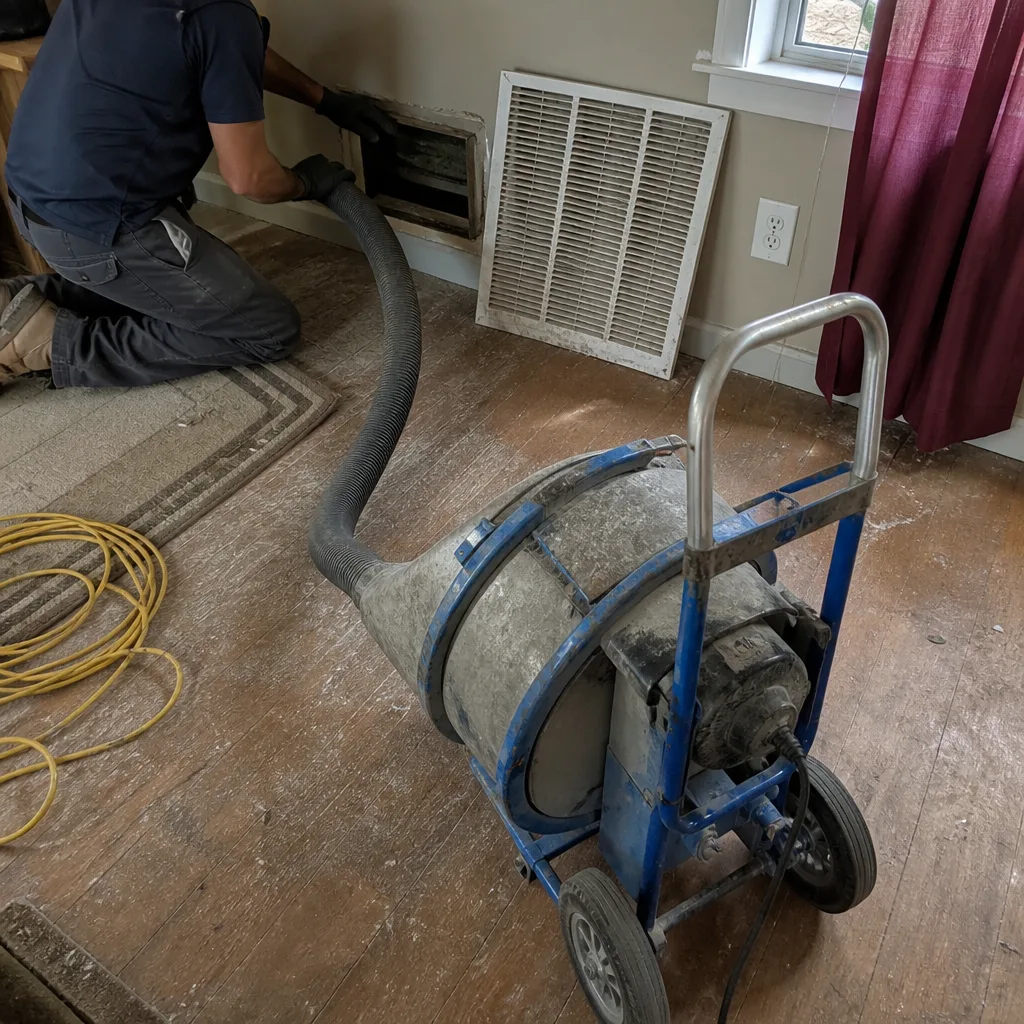 Before
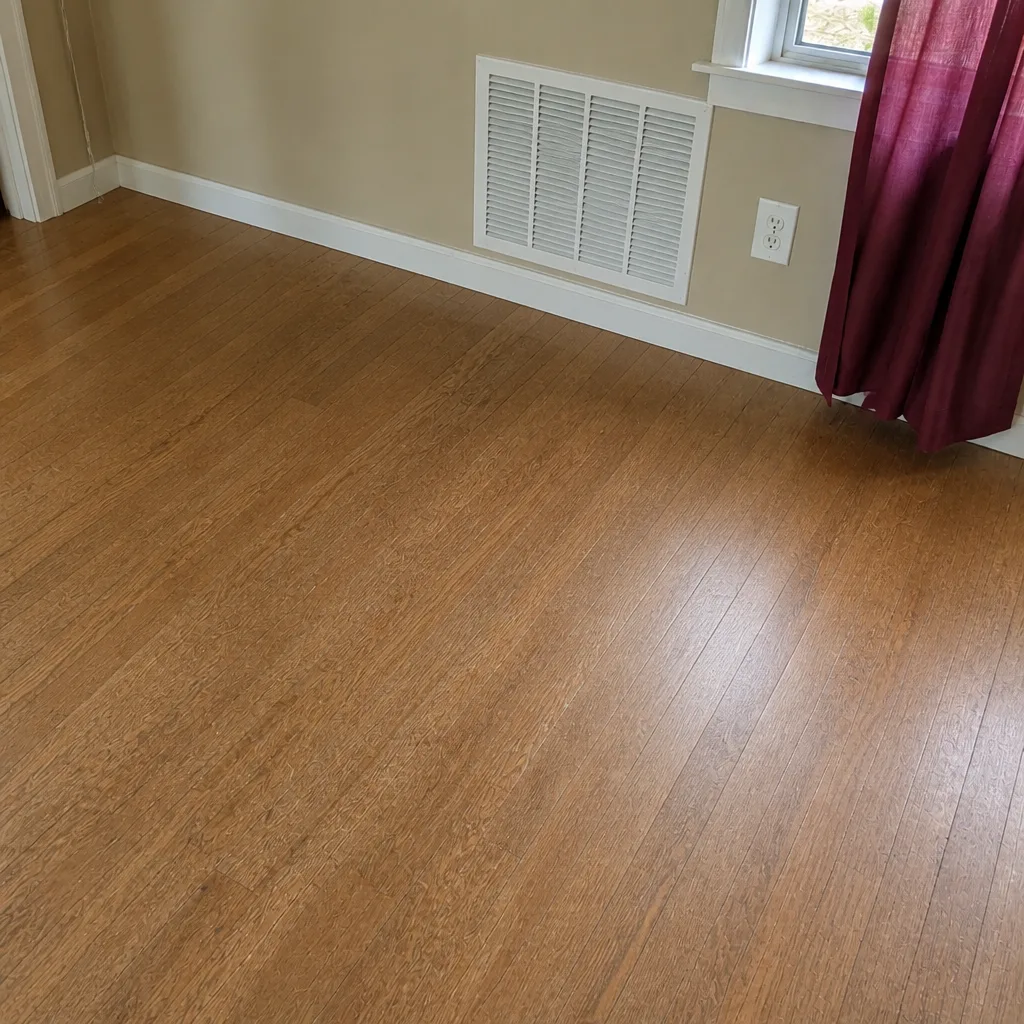 After
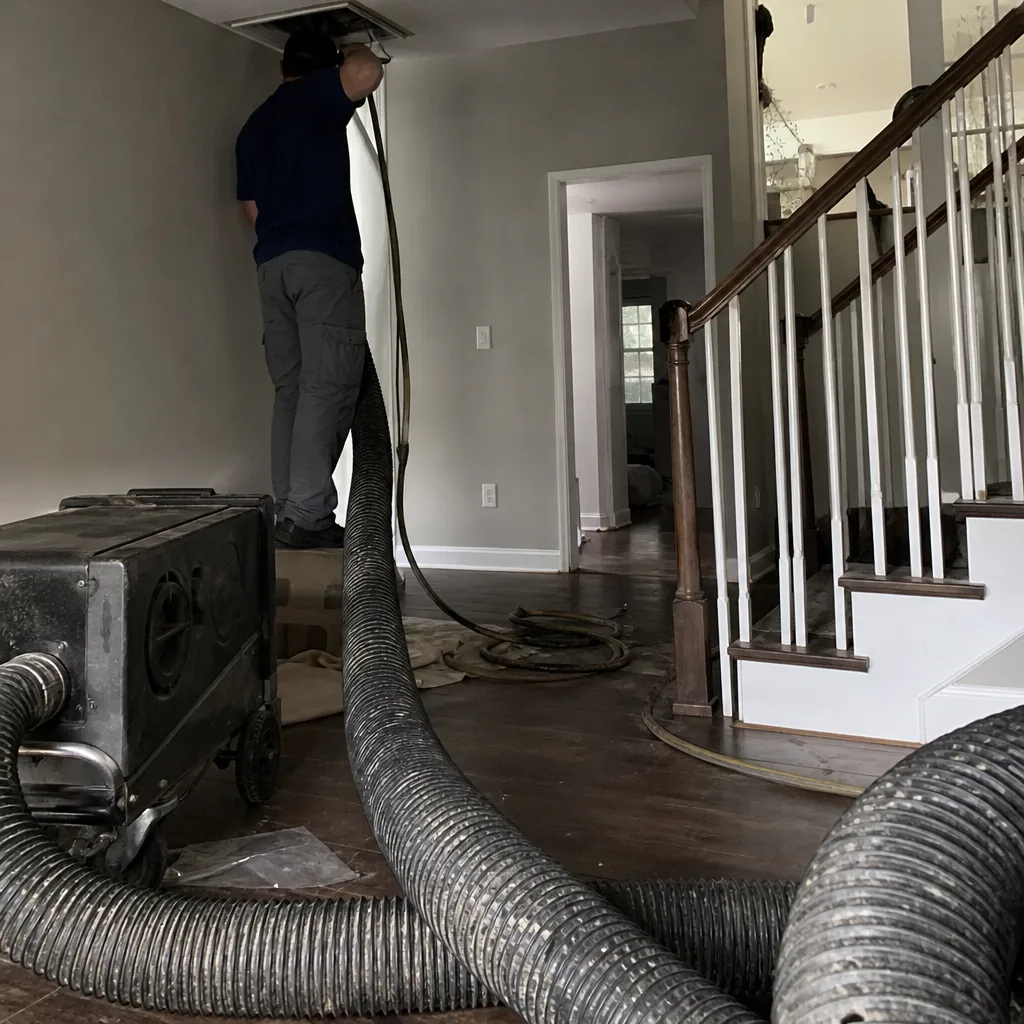 Before
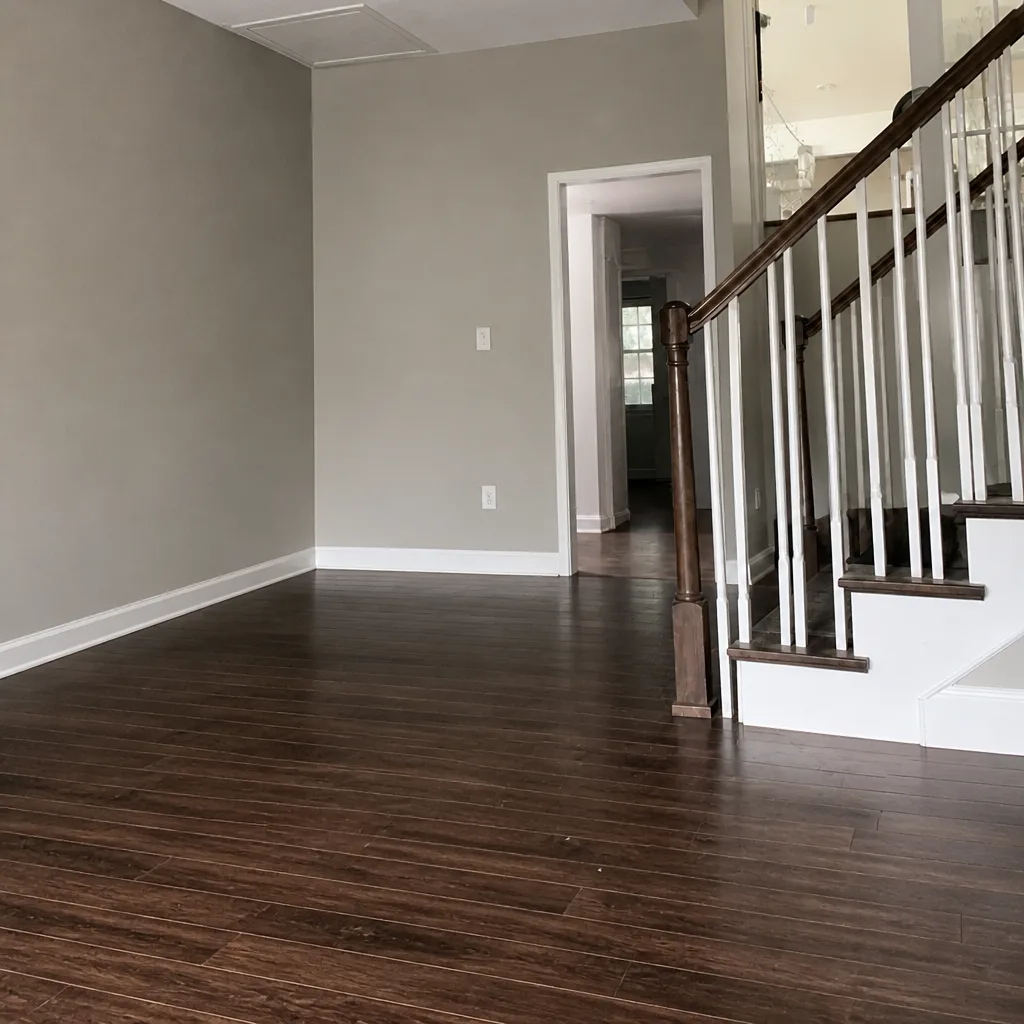 After
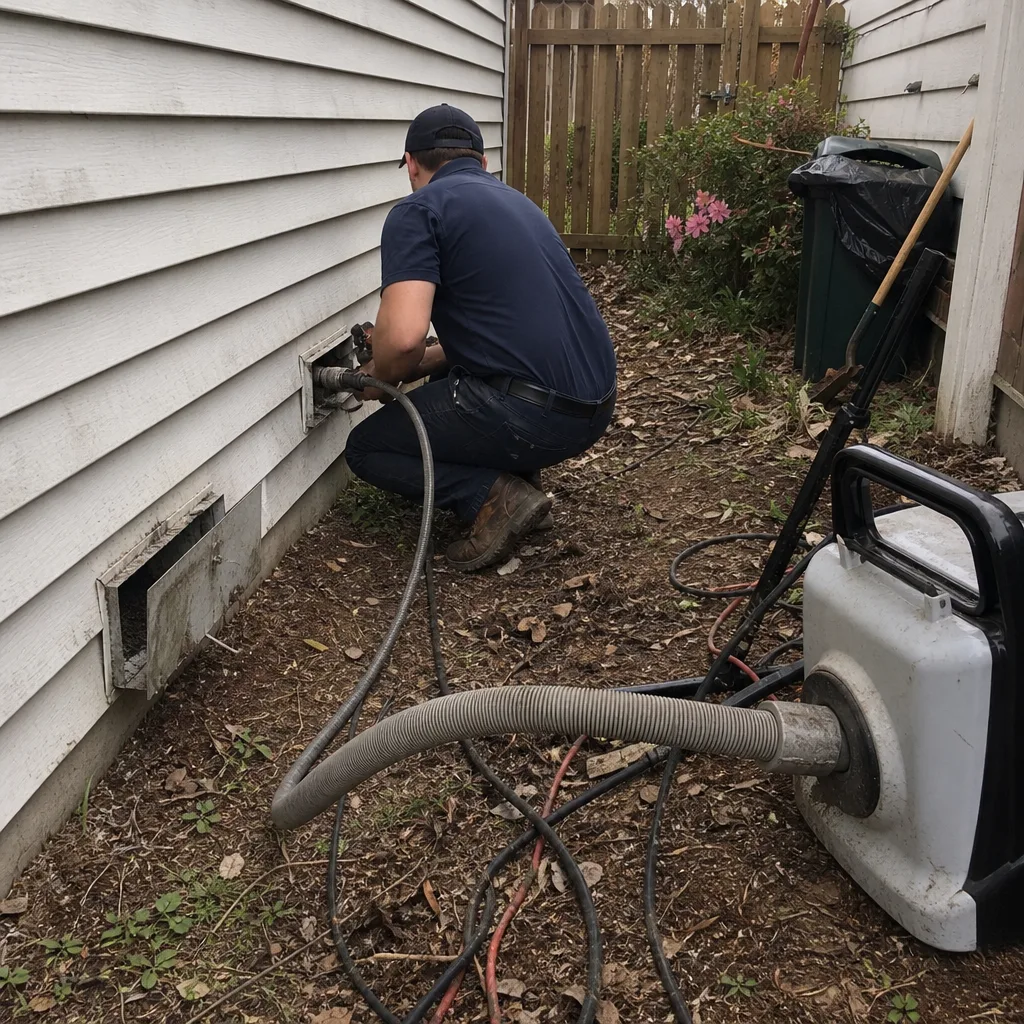 Before
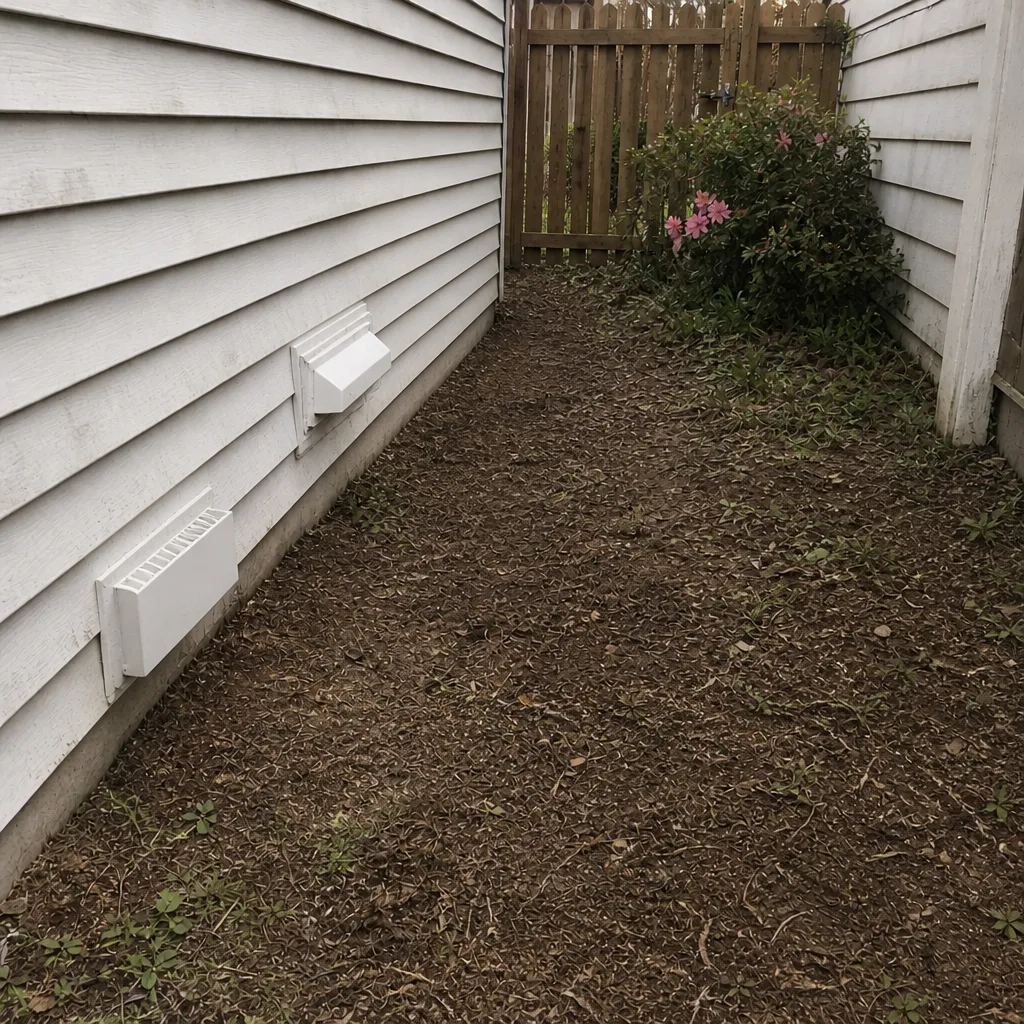 After
When to Call a Professional
Call a professional when you can see dust at the registers within days of cleaning the room, when the house has just come through a renovation that put drywall dust into the air, when there’s visible accumulation at the return grille, when the dryer is taking longer than usual to finish a load, or when the duct system has never been opened up and inspected. Those are all signs the problem is inside the system, where a household vacuum can’t reach and where commercial collection equipment is the difference between removing debris and moving it around. Duct Cleaning Durham offers free estimates in Durham: call (866) 486-6152. We answer 24/7. Fast dispatch from 7am to 7pm, Sunday through Friday.
Frequently Asked Questions
For a typical 1,500 to 2,500 sq ft Durham home with central HVAC, expect $350 to $600 for full cleaning, or $30 to $45 per register on a per-register basis. The written estimate sets the final price. Call (866) 486-6152 for an exact quote – estimates are free.
Cheap quotes usually remove one or more of the real cost components: commercial collection equipment and its setup time, containment, per-register labor, or verification. A light portable vacuum and a shop vac aren’t the same process as a Rotobrush and Nikro system with Abatement Technologies filtration running. Call (866) 486-6152 to compare what a full-scope estimate includes.
You ask for before-and-after photos of your own ducts and a register count on the invoice, and you confirm the equipment on site shows up. Our process includes before-and-after photos as standard, and one flat price per system agreed before work starts. Call (866) 486-6152 for a free estimate.
For a home that hasn’t had the ducts inspected in years, the $75 to $150 camera inspection is the highest-value line on the estimate, because it’s the only way to know whether you’re buying routine cleaning or looking at a larger problem. Skip it on a newer system you’ve had verified recently. Call (866) 486-6152 to talk through your situation.
No. They’re separate systems, separate scopes of work, and separate risks. Dryer vent cleaning addresses lint accumulation in the vent run, which is a fire-prevention service. It runs $125 to $225 in Durham as a separate visit. Call (866) 486-6152 for a free estimate.
Most homes land between every three and every five years, but the interval depends on pets, renovations, humidity exposure, and whether the system has ever been cleaned. Visible dust returning fast at the registers is the clearest signal. Call (866) 486-6152 for an inspection-based recommendation.
The Bottom Line
The price spread on duct cleaning in Durham is real, and it tracks equipment capability more than it tracks margin. Cheap quotes are cheap because the collection capacity, containment, and per-register labor aren’t there. A full-scope job in the $350 to $600 range for a typical Durham home buys commercial-grade equipment, containment on every job, verification photos, and the ability to fix what turns up while the system is open. Compare quotes on deliverables, not on the number at the top. Read more about the full process on our air duct cleaning page, or call for a free estimate. We answer 24/7. Fast dispatch from 7am to 7pm, Sunday through Friday.
Call (866) 486-6152 for a free estimate on air duct cleaning, dryer vent cleaning, or duct repair in Durham. One flat price per system, agreed before work starts, with before-and-after photos of your ducts.
Written by the team at Duct Cleaning Durham.