
Last updated November 15, 2026
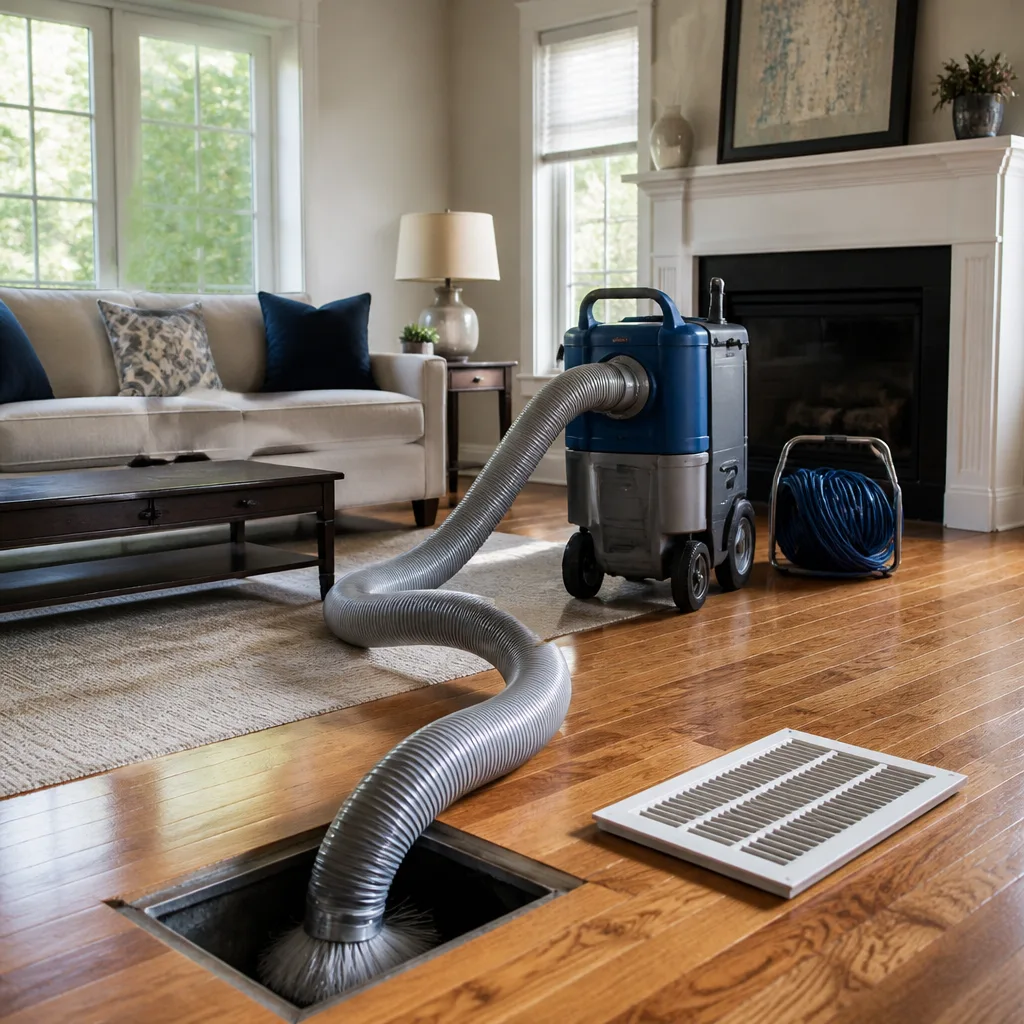 Whole-home duct cleaning
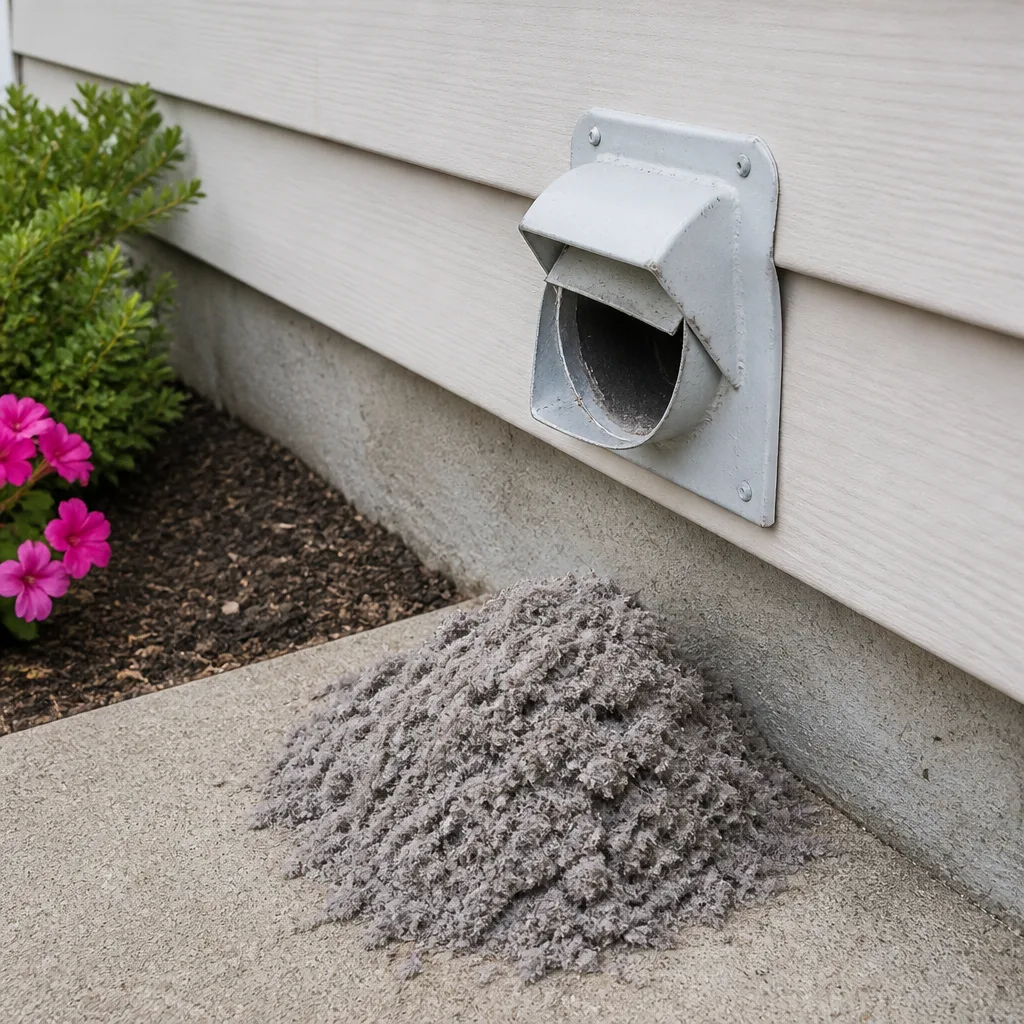 Dryer vent cleaning
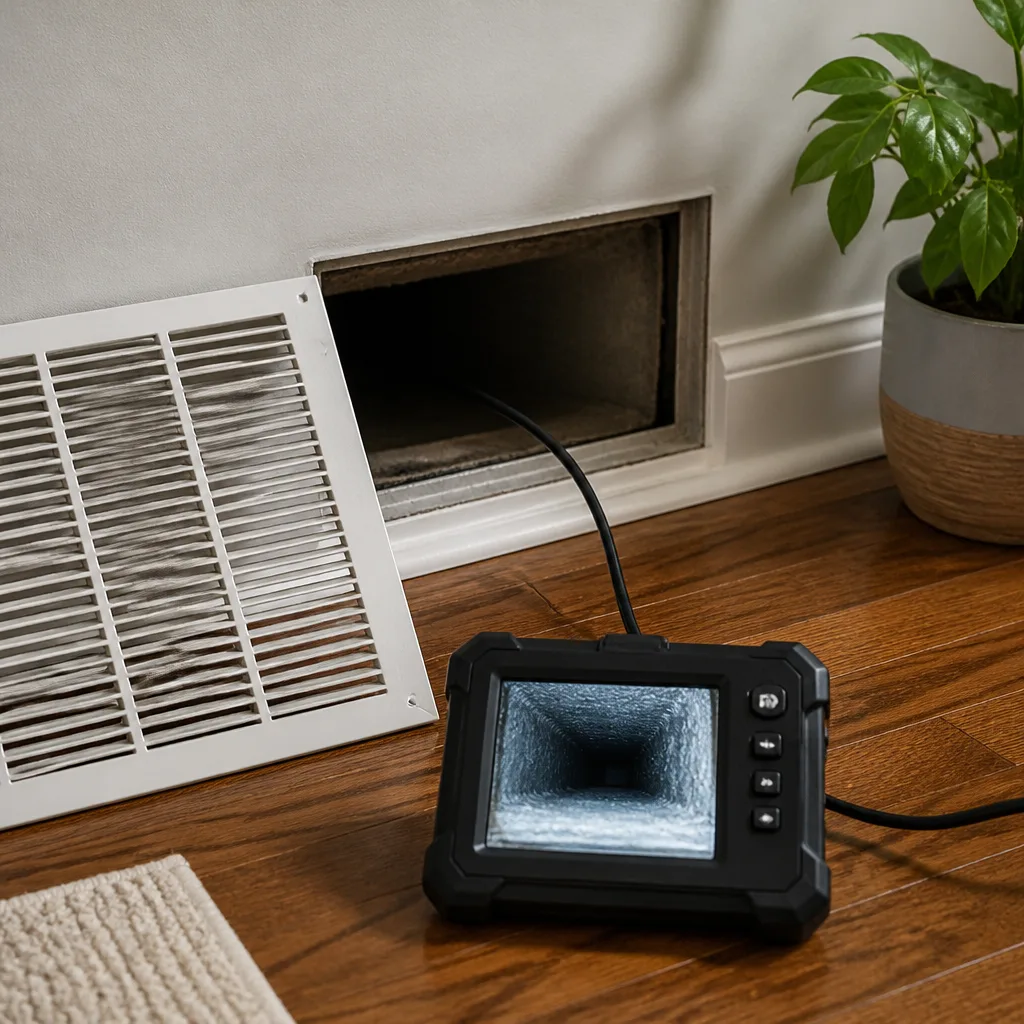 Camera inspection
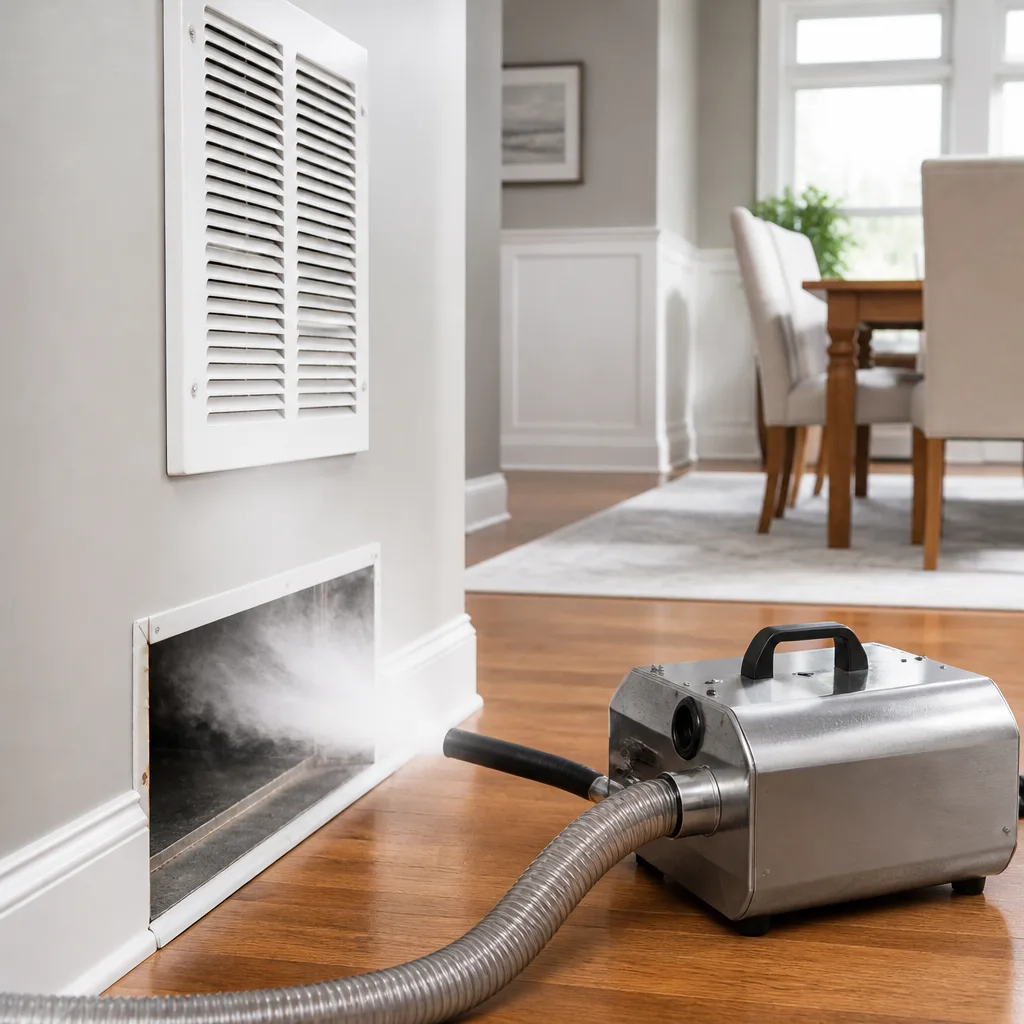 Sanitizing & deodorizing
Whole-system duct and dryer vent check with before-and-after photos - you see exactly what came out of your vents
That "$99 whole-house special" is a bait ad - the real number appears once they are in your hallway, or the "clean" is a shop-vac at the register. We photograph the inside of your ducts before and after instead.
Air Duct Cleaning Warning Signs: A Durham Homeowner’s Reference Guide
Most warning sign lists are vague enough to describe anything. “Your house smells funny” is not actionable, and “you notice more dust” could mean a dirty filter, a leaky return, or a houseguest who sheds. The symptom matters, but so does the shape of it: there’s a real difference between a musty smell that appears the moment the AC kicks on and a sulfurous smell coming from one register on the east wall of a single room. The first might be surface mildew on a wet evaporator coil. The second might be a disconnected return duct running through a crawlspace. This guide maps specific observable symptoms to specific mechanical causes, so you can describe what you’re seeing precisely when you talk to a technician in Durham.
Quick Answer
The warning signs that most reliably point to a real duct problem are register-specific airflow changes, three distinct odor categories (biological, combustion, intrusion), and visible residue patterns at the register face. The sign homeowners most often overlook is the absence of any symptom at all in homes with crawlspace return ductwork and no vapor barrier, where biological growth can be well advanced before anything smells or looks wrong.
Styles & brands we work with
- Whole-home duct cleaning
- Dryer vent cleaning
- Camera inspection
- Sanitizing & deodorizing
Table of Contents
- One Register or All Registers? Why the Distinction Matters
- The Three Odor Categories and What Each One Points To
- What You Can See at the Register Face
- Symptom Escalation: Sudden Onset vs. a Slow Accumulation
- The Durham Crawlspace Warning: When No Symptom Is a Symptom
- A Step-by-Step Walkthrough for Mapping Your Own Duct Symptoms
- The Other Duct in Your House: Dryer Vent Warning Signs
- What to Tell a Technician So the Diagnosis Goes Faster
One Register or All Registers? Why the Distinction Matters
Where reduced airflow shows up tells you more than the fact that it showed up at all. A single weak register is a localized problem. Weak airflow everywhere is a system-level restriction. Those two things call for completely different diagnostics, and mixing them up wastes time. Here’s how the patterns break down.
One register, or one room, weak while the rest of the house is fine. In our experience, this usually traces to a branch problem: a flex run that has partially collapsed, a run that was disconnected at a takeoff fitting, a damper that’s been closed or has drifted closed, or debris blocking a single branch line. Sometimes a register boot was never properly sealed to the floor or wall opening, so the air is dumping into a wall cavity instead of the room. You’ll often find the room runs slightly hotter or cooler than the rest of the house as a secondary clue.
Every register weak, or weak on the second floor while the first floor is weak too. This is a whole-system airflow problem. The usual suspects, roughly in order of how often we run into them:
- A clogged filter that hasn’t been changed recently enough for the household’s dust load.
- A restricted evaporator coil, which is a cleaning problem, not a duct problem.
- A main trunk line that’s crushed, sagging, disconnected at a joint, or oversized/undersized for the system.
- A blower or return air path that’s undersized for the amount of air the system is trying to move.
Pressures matter here. A duct system runs under negative pressure on the return side and positive pressure on the supply side. A duct that looks perfectly sealed from the outside can be pulling unfiltered attic or crawlspace air into the return stream at a joint you can’t see. That’s why a plain visual check isn’t enough; a technician will use a pressure and airflow reading to separate a return-side leak from a supply-side restriction. A register-specific symptom is the one case where you can often help by describing exactly which rooms are affected and whether the change came on gradually or after some event.
The Three Odor Categories and What Each One Points To
Smell is the most-reported duct complaint, and the least usefully described. “It smells musty” gets a homeowner a generic answer. Describing the odor accurately narrows the diagnostic path considerably. Three categories cover almost everything we encounter.
Biological odors: musty, earthy, wet-basement
These smell like damp soil, a wet towel left in a bag, or a basement that hasn’t dried out. Mechanically, this points to moisture sitting on a surface where it shouldn’t: the evaporator coil, the drain pan, the insulation on a duct’s interior, or a section of duct that runs through a damp space. A biological smell that appears when the fan starts suggests the fan is moving air across a colonized surface. Coil and drain pan moisture is the first thing to rule out. If that’s clean, duct interior surfaces become the next suspect. A musty smell that’s stronger in one room can point to a specific branch duct passing through a high-humidity zone like a crawlspace.
Combustion odors: burnt, metallic, hot
These smell sharp and hot, and they are the ones to take seriously. A burnt smell in the supply air can indicate a degrading duct liner near the heat exchanger, a furnace problem, or combustion byproduct finding its way into the airstream. A metallic edge to the smell might point to a deteriorating metal component. We want to be clear: combustion odors are a call-now situation, not a watch-and-see situation. Get a qualified HVAC technician to check the heat exchanger and combustion path before anything else.
Intrusion odors: organic decay, ammonia, animal
These smell like a dead animal, old droppings, or a stale ammonia note that doesn’t fit the rest of the house. Rodents use duct systems as highways. A dead animal in a branch duct or a buildup of droppings near a takeoff can produce a smell that comes through one register or a small group of them. A pest intrusion isn’t only an odor issue: it means there’s a physical breach in the duct envelope somewhere, and unfiltered air is likely moving through a space it shouldn’t. Sealing that breach and cleaning the affected section is the fix. Replacing the smell with a plug-in air freshener is not.
What You Can See at the Register Face
Before you ever call anyone, the register face and the first few inches of visible duct tell a story. Take the grille off and look with a flashlight. What you’re looking for is residue pattern, not dust quantity: every home has dust, and a fine even film isn’t automatically a problem.
Dark gray rings around the register collar or filter frame. These rings are the signature of high-velocity airflow pushing past a loose seal. A filter that’s clogged or the wrong size lets air sneak around its edges, and the accelerated air picks up dust on the way through. If you see a clean center on the filter with a heavily soiled border, the filter isn’t seating properly, or the system is restricted enough to be pulling air around it.
White, chalky powder along the duct interior or on the coil. This is often degraded fiberglass duct liner or insulation breaking down. Liner degradation means the duct’s internal acoustic and thermal surface is shedding, and those particles go where the air goes. Fiberglass liner in older duct systems is common in Durham homes, and once the facing fails, cleaning without repair only buys time.
Black or very dark particulate, especially near a return. Black particulate suggests combustion byproduct bypass or a heavy soot deposit. If the return grille near a furnace or air handler shows dark streaking, get the combustion side checked before anything else.
Rust staining or water lines inside a duct section. Water inside a duct usually means a coil drain problem, a roof or plumbing leak tracking along the duct, or condensation on an uninsulated run in a humid space. Any of those is a moisture source that has to be found and corrected. A cleaning removes the current growth; it doesn’t stop the water.
Symptom Escalation: Sudden Onset vs. a Slow Accumulation
When a symptom started matters nearly as much as what the symptom is. There are two very different stories a duct complaint can tell, and the timeline tells you which one you’re in.
A slow accumulation looks like this: “It’s always been a little musty in here.” In a home that hasn’t had duct service in five years or more, a low-grade musty smell that the family has simply gotten used to usually points to a gradual biological buildup on coil surfaces and duct linings. Everyone in the house has adapted to it, so nobody registers it as a problem until a guest walks in and says something. This pattern rarely indicates an acute event. It indicates that the system has been doing its job with a coating of biological growth on the wet parts.
Sudden onset is a different animal. An odor, a dust bloom, or an airflow drop that appears over days or weeks rather than years almost always points to an acute trigger. The usual ones:
- A water event: flooding, a burst pipe, a roof leak, or an AC condensate overflow that soaked a return duct or the plenum.
- A pest intrusion: a rodent or squirrel chewed through a flex duct, nested in the plenum, or died in a branch run.
- An HVAC component failure: a blower failing, a coil freezing and then thawing, a heat exchanger developing a crack or a partial blockage.
- A recent renovation or move that introduced a new dust or moisture source.
Sudden onset is an investigation case. A cleaning is often the last step, after the source is located and corrected. If a smell has appeared over the last few weeks and doesn’t match anything you’ve changed in the house, describe the timeline precisely to whoever you call. It changes the diagnostic path.
The Durham Crawlspace Warning: When No Symptom Is a Symptom
Durham’s older neighborhoods sit on a lot of crawlspace HVAC configurations. Sticking a return duct and part of the supply trunk through a vented crawlspace was a common approach, and it works fine in a dry crawlspace. The trouble starts when that crawlspace has no vapor barrier and the Piedmont’s humid summers do their thing. A crawlspace without a vapor barrier can hold moisture through the cooling season, and a duct system sitting in that environment spends months pulling humid air across surfaces that are running cold. Condensation on the duct exterior, in the insulation, and around the takeoff fittings is common in this configuration. Once the duct’s insulation is wet, the interior surface stays wet, and biological growth starts.
Here’s the part that matters for a symptoms guide: homes in this configuration often show no obvious warning signs until growth is well advanced. There may be no smell in the living space, no visible residue at the registers, and no complaint from the occupants. The return air is largely drawn from the house, the supply side runs through the conditioned envelope, and the crawlspace section just quietly gets wet and stays wet. That’s why we treat a crawlspace return without a vapor barrier as a risk indicator in its own right, independent of symptoms. If you’re in an older Durham home and you don’t know whether your ductwork runs through a vented crawlspace, that’s a question worth answering even if the house smells fine.
The other Durham-specific pressure is the long cooling season. Our climate keeps the AC running hard from late spring through early fall, which means the coil stays wet for months and the return-side ducting spends months in a high-humidity environment. That’s a lot of wet-surface hours for the system to accumulate growth on, and it explains why regular air duct cleaning in Durham homes with crawlspace ductwork is worth doing on a schedule rather than reactively.
A Step-by-Step Walkthrough for Mapping Your Own Duct Symptoms
You can do useful diagnostic work before anyone shows up. None of it involves opening the system, removing duct sections, or reaching into an air handler. It’s observation and record-keeping, and it makes the professional visit more productive.
- Walk the house register by register with a tissue or a thin strip of paper. Hold it against the grille and note which registers move it strongly, which barely move it, and which feel like nothing. Write down the room name for each. A pattern will emerge.
- Locate your return grilles (usually one large central return or one per floor) and compare their airflow to the supply registers. A strong supply but a weak return suggests a return-side restriction or leak.
- Note the smell, not just the presence of one. Is it earthy? Burnt or metallic? Organic? Does it appear at fan start, or only in one room? Does it disappear when the system is off?
- Look at the register faces with a flashlight. Note dark ring patterns, white powder, black particulate, or rust staining.
- Pull and inspect the filter. A clean center with soiled edges means the filter isn’t sealing. A badly loaded filter means the system has been running restricted.
- Note the timeline. Did the symptom appear gradually over years, or over the past few weeks? Was there a water event, a pest sighting, or a renovation in between?
- Check whether your ductwork runs through the crawlspace and whether a vapor barrier is present. If the answer to either is uncertain, note that. It changes the conversation.
Bring that written list to the call. A technician who hears “weak airflow at the two registers on the north wall of the second floor, strong everywhere else, started about six weeks ago” can zero in on a branch problem fast. A technician who hears “some rooms are cold” starts from scratch.
The Other Duct in Your House: Dryer Vent Warning Signs
One duct in your home doesn’t move conditioned air, and its warning signs are a different set. A dryer vent is a fire-prevention item, not a maintenance item. Lint is combustible, and a dryer vent that’s restricted raises the temperature of the dryer’s exhaust path well beyond its design. The signs to watch for:
- Clothes take noticeably longer to dry, or a second cycle is needed for a normal load.
- The dryer itself gets hot to the touch on top or at the door.
- The exterior vent flap doesn’t open much, or lint is visible around it.
- A burning or scorched smell near the dryer after a cycle.
- The lint filter catches very little lint, which can mean lint is going elsewhere in the run.
Long, flex-duct, or multi-elbow dryer runs clog faster than short straight runs, and older Durham homes with the dryer set well back from the exterior wall often have longer runs than the dryer’s rating assumes. That’s why we treat dryer vent cleaning as a safety service rather than an optional add-on. Prolonged lint buildup in the vent run is a leading cause of residential dryer fires.
What to Tell a Technician So the Diagnosis Goes Faster
The purpose of mapping your symptoms is a more precise conversation. When you call about Duct Cleaning Durham, a few details change the whole visit.
- Which registers are affected, by room and location in the room.
- The odor category: biological, combustion, or intrusion. And when it appears.
- What you saw at the register face: rings, white powder, black particulate, rust.
- The timeline: sudden onset with a suspected trigger, or gradual accumulation over years.
- Crawlspace configuration, if you know it: return in the crawlspace, vapor barrier present or absent.
- Recent water events: flooding, leaks, condensate overflow, or storm intrusion.
- The history of the system: when the filter was last changed, whether the ducts have been serviced at all in the past five years, and whether any recent repair was done.
If you see signs of a combustion issue, get that check scheduled before anything else. Combustion byproducts aren’t a duct cleaning problem; they’re a furnace and heat exchanger problem, and a trained HVAC technician needs to confirm the combustion path is intact. We don’t handle that side of the system. What we do is handle the ducts themselves, using commercial-caliber equipment: Rotobrush contact cleaning systems and Nikro industrial vacuums, with Abatement Technologies air filtration running on every job so the contaminants we pull out get captured in the work area rather than redistributed through the house. We also supply and install Honeywell and Aprilaire indoor air quality products when the diagnosis points to a long-term fix rather than a one-time cleaning.
What a professional actually does with this information
A trained technician takes the symptom map and narrows it. Register-specific airflow plus a localized dark ring usually means a branch restriction, and a scope of the branch reveals whether the flex run has collapsed or disconnected. System-wide weakness plus a loaded filter typically means a whole-system restriction that runs back to the coil or the main trunk. An odor with no visible cause points to a camera inspection of the return side. Once the source is located, the cleaning is targeted: the problem section gets the attention, and the rest of the system gets the standard treatment. If a disconnected duct or a degraded liner shows up, we fix it as part of the same visit rather than recommending a second contractor. Finding it and fixing it are the same appointment.
Common Mistakes to Avoid
- Treating every smell as a cleaning problem. A burnt or metallic smell is a combustion issue and demands a qualified HVAC technician on the heat exchanger before anything else. Cleaning the ducts first wastes time and misses the actual risk.
- Ignoring a single weak register because the rest of the house is fine. One weak register is the single most actionable symptom in the whole system. It points to a specific branch, and a branch problem is usually faster and cheaper to fix than a system-wide one.
- Assuming a “great price” quote covers the system. The low-bid duct cleaning market is real. Ask exactly what equipment the crew will run, whether they’ll contain the dust with an air scrubber, and what the written price covers. If the answer is vague, walk.
- Cleaning without fixing the moisture source. If a return duct runs through a wet crawlspace with no vapor barrier, cleaning buys you a few clean months and then the growth comes back. The moisture source has to go first.
- Skipping the dryer vent because the ducts were just cleaned. A dryer vent is a separate run with its own fire risk, and lint accumulates on its own schedule. It’s not covered by the duct cleaning.
- Assuming no symptom means no problem in a crawlspace return home. In older Durham homes with a crawlspace return and no vapor barrier, the absence of a smell is not evidence that the duct interior is clean. It’s often evidence that the problem is out of sight.
- Letting a plug-in air freshener do the diagnosis. Masking an odor removes the only data point you have. Find the source before deciding what the source means.
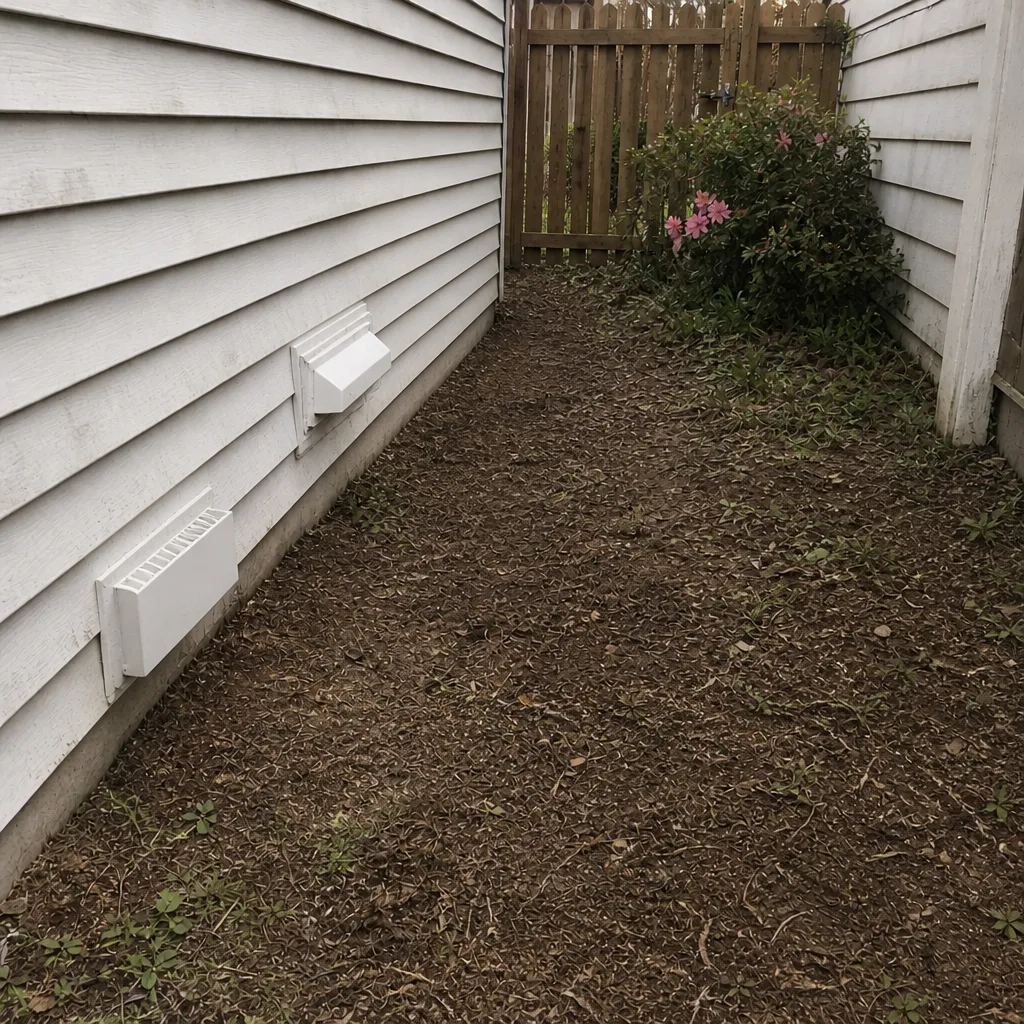
See the difference
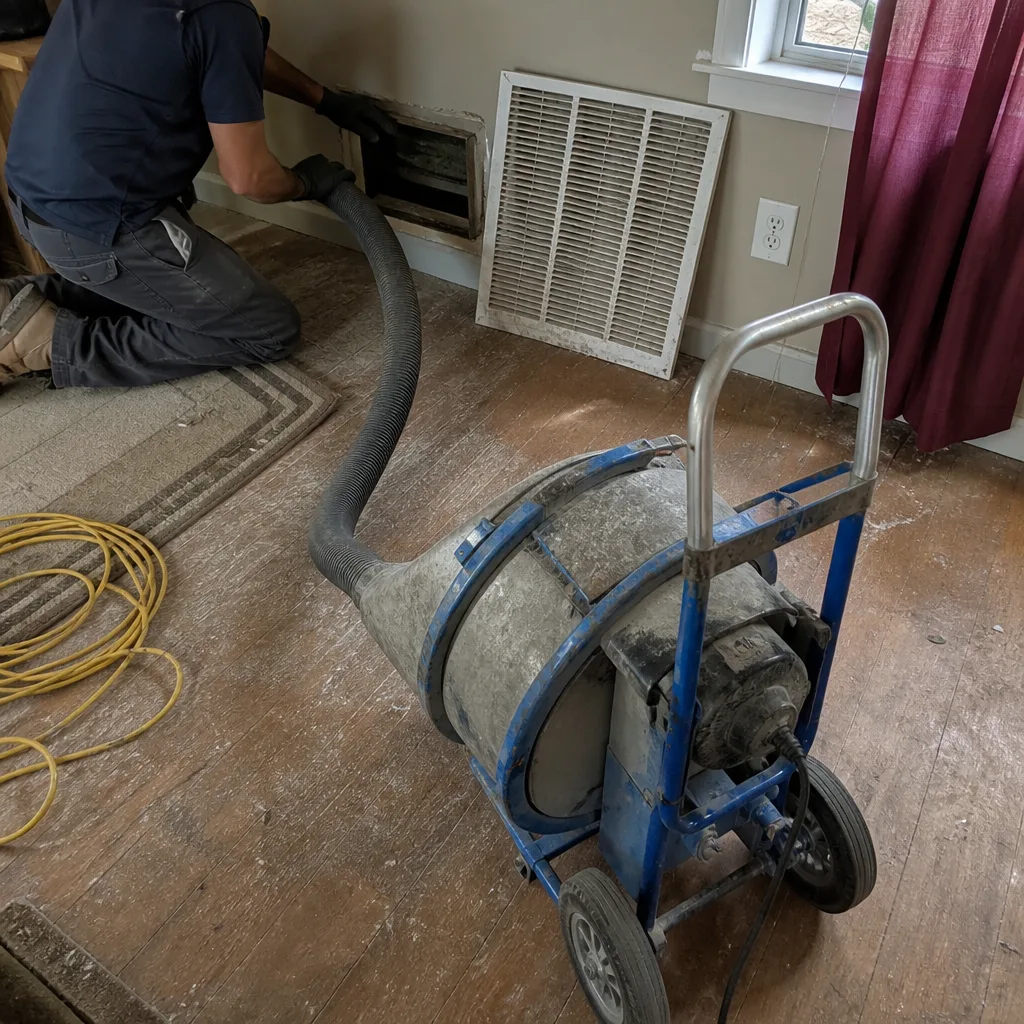 Before
 After
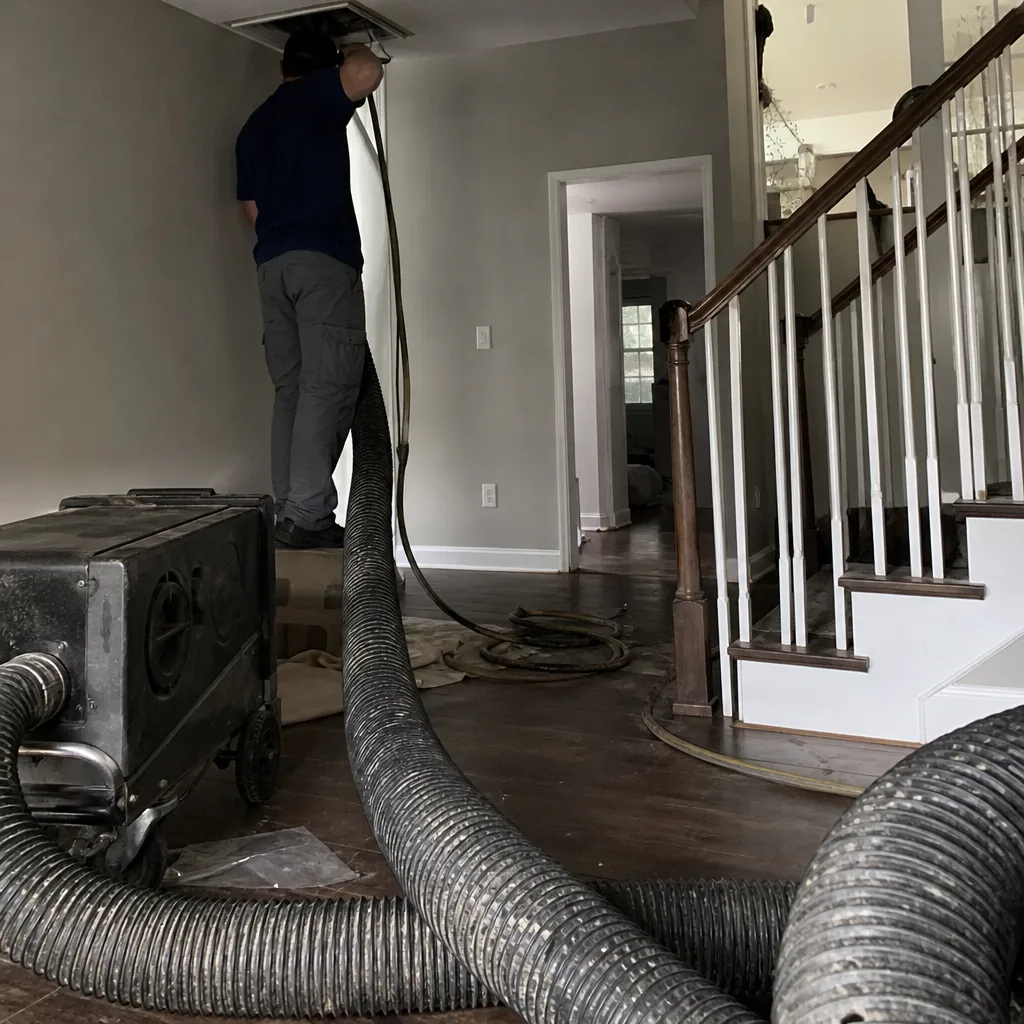 Before
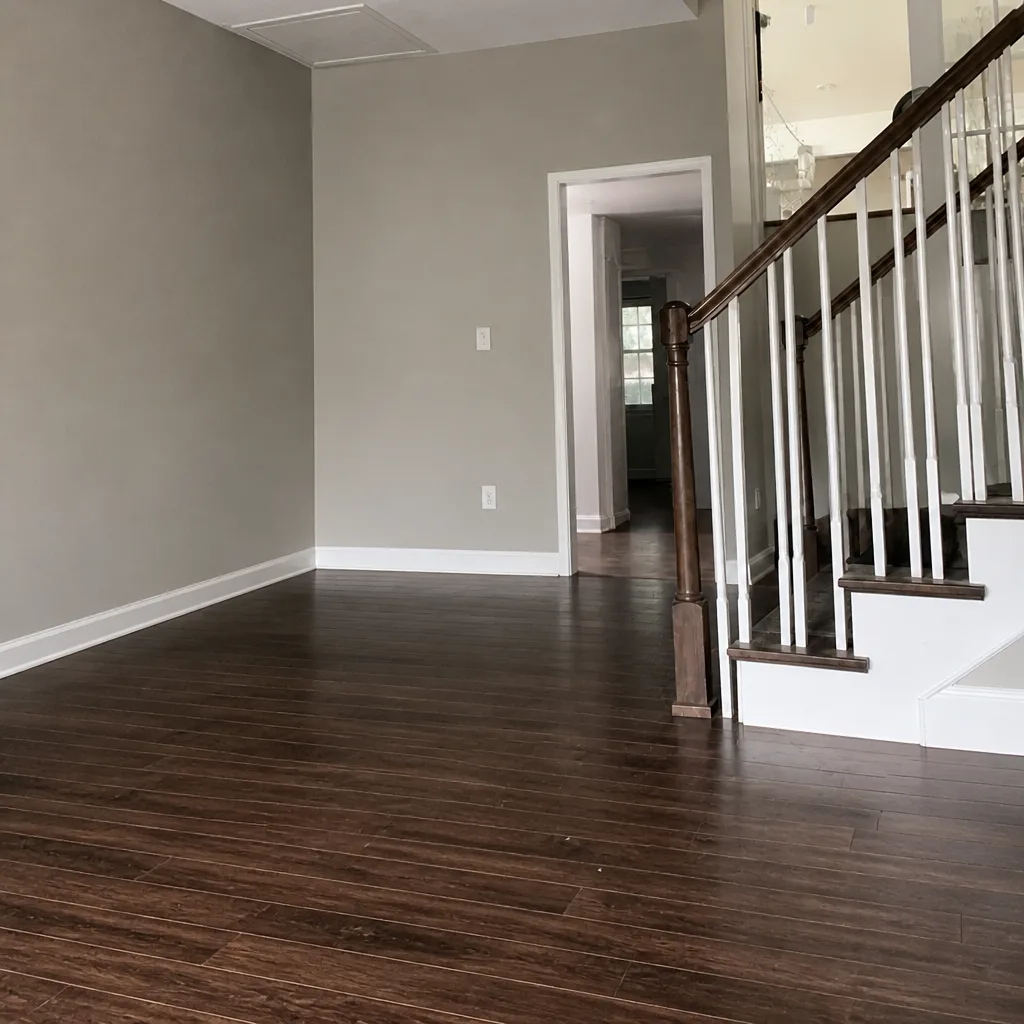 After
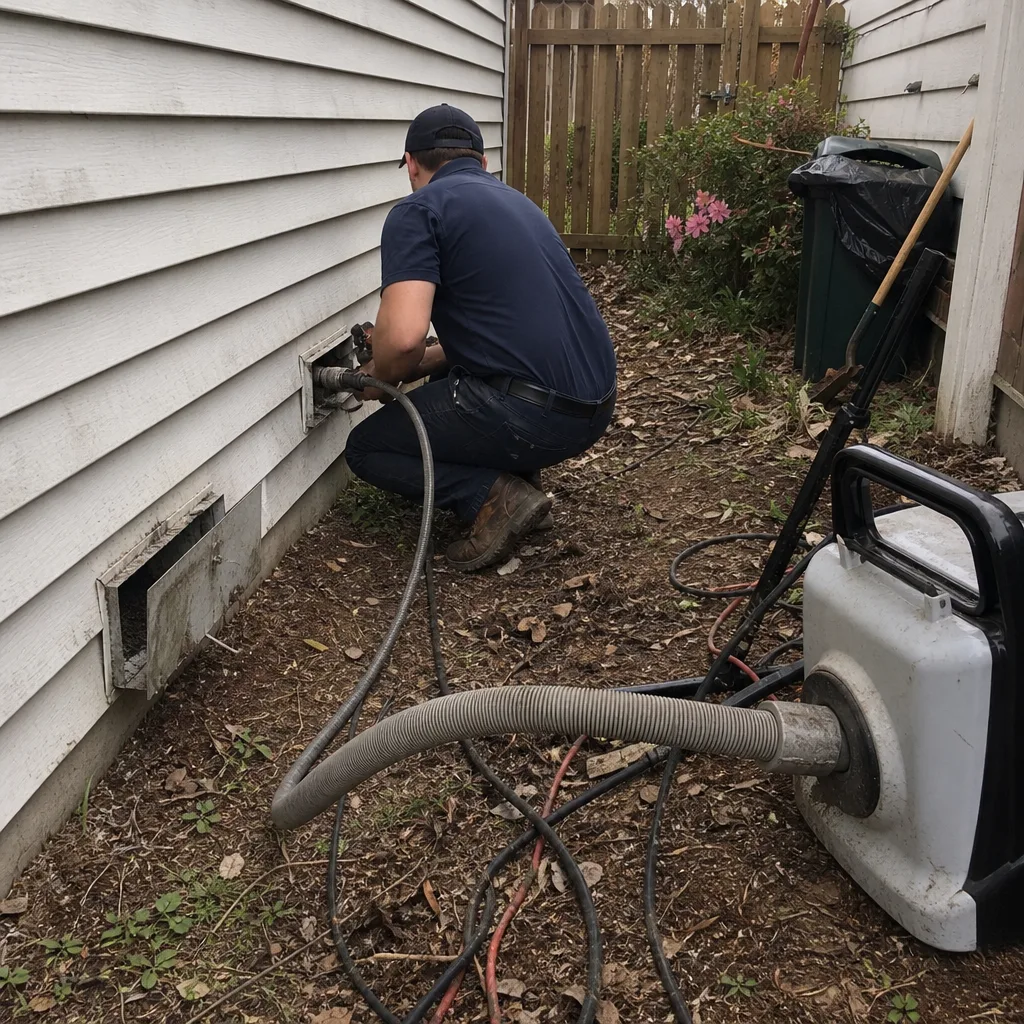 Before
 After
When to Call a Professional
Call a professional when a symptom has a pattern. A smell that appears at fan start every time. A single register that’s weak relative to its peers. Dark rings around multiple register collars. A burnt or metallic odor, which should go to an HVAC technician immediately. A dryer vent that’s showing heat or lint at the exterior flap. And any crawlspace-return home that hasn’t been serviced in five years or more, regardless of symptoms.
Duct Cleaning Durham offers free estimates in Durham for all three of our service lines, and we’ll tell you what we find and what it will take to fix it. Our technicians have up to 13 years of experience with commercial-grade equipment on residential systems, and we price each job by a written estimate agreed before any work starts. If the diagnosis is a duct repair, we do the repair in the same visit. Call (866) 486-6152. We answer 24/7. Fast dispatch from 7am to 7pm, Sunday through Friday.
Frequently Asked Questions
You need a duct cleaning when a symptom maps to a pattern: a specific register that’s weak while the rest are fine, an odor that appears at fan start, visible white powder or dark rings at multiple registers, or a crawlspace-return home without a vapor barrier that hasn’t been serviced in five years. A single isolated symptom often means a targeted inspection rather than a full cleaning. Call (866) 486-6152 for a free estimate, and bring your written symptom list to the call; it speeds the diagnosis.
A musty, earthy smell from the vents almost always points to moisture on a surface in the air path, either the evaporator coil, the drain pan, a duct interior lining, or a duct section running through a damp space. The coil and drain pan are the first suspect because they’re wet every time the system runs. If those check out clean, the next step is a scope of the duct interior. Cleaning without locating and correcting the moisture source just resets the clock. Call (866) 486-6152 to get the source located first.
Weak airflow in one room points to a branch-level problem: a collapsed or disconnected flex run, a closed or drifted damper, a blocked register boot, or a takeoff fitting that’s leaking into a wall cavity. It’s usually a localized fix, and it’s often found and repaired in one visit. Weak airflow from every register is a different diagnosis (filter, coil, or main trunk) and takes a different inspection. Call (866) 486-6152 for an estimate on the branch problem.
A burnt or metallic smell from the supply vents should be treated as a combustion safety concern, not a duct cleaning problem. It can indicate a heat exchanger issue or degrading duct liner near the furnace, and a qualified HVAC technician needs to check the combustion path before anything else happens. We don’t handle heat exchanger work. If the ductwork itself is degraded once the combustion check clears, we handle the duct side. Call (866) 486-6152 after the combustion check.
A typical Durham home with a conditioned-space duct system benefits from cleaning every few years, and homes with crawlspace return ductwork and no vapor barrier generally benefit from more frequent service because the ducts spend more time in a humid environment. Homes with pets or allergy concerns also benefit from a shorter interval. The right answer depends on your configuration, and an inspection is the only way to know. Call (866) 486-6152 for a free estimate.
Cheap duct cleaning quotes usually reflect one of three things: consumer-grade equipment dressed up as professional, no dust containment during the job, or a price that covers a fraction of the system and expands on-site. We run Rotobrush contact cleaning systems and Nikro industrial vacuums, with Abatement Technologies air scrubbers containing the dust during service, and we price the whole system by a written estimate agreed before we start. If the price is vague, ask what exactly it covers. When you want a written, whole-system number, call (866) 486-6152.
The Bottom Line
Warning signs are only useful if they point somewhere specific. A single weak register points to a branch. System-wide weakness points to a filter, coil, or main trunk. An earthy smell points to moisture on the coil or duct lining. A burnt smell points to combustion, which is a different trade. An organic smell points to a pest breach. Dark rings point to a filter or airflow issue, white powder points to liner degradation, and in a Durham crawlspace-return home the absence of any symptom is itself a signal worth investigating. A written symptom map is the most useful thing you can bring to a technician. Call (866) 486-6152 for a free estimate. We answer 24/7. Fast dispatch from 7am to 7pm, Sunday through Friday.
Written by the team at Duct Cleaning Durham.